
Short answer: A clinical laboratory SOP is a written, director-approved procedure that staff follow every time. CLIA requires nonwaived labs to keep a procedure manual covering every test (42 CFR 493.1251), plus written policies for quality, personnel, safety and records. This library gives you 136 free lab SOP templates in fillable PDF and Word format to adapt and approve.
Last reviewed November 26, 2026. Primary sources: 42 CFR Part 493, OSHA 29 CFR 1910.1030, CDC waived testing resources.
These templates are free, general starting points, not legal or regulatory advice. Every template must be reviewed and approved, signed and dated by your laboratory director, and adapted to your lab's instruments, test systems and the manufacturer's instructions, your state rules and your accreditation organization's standards before use.
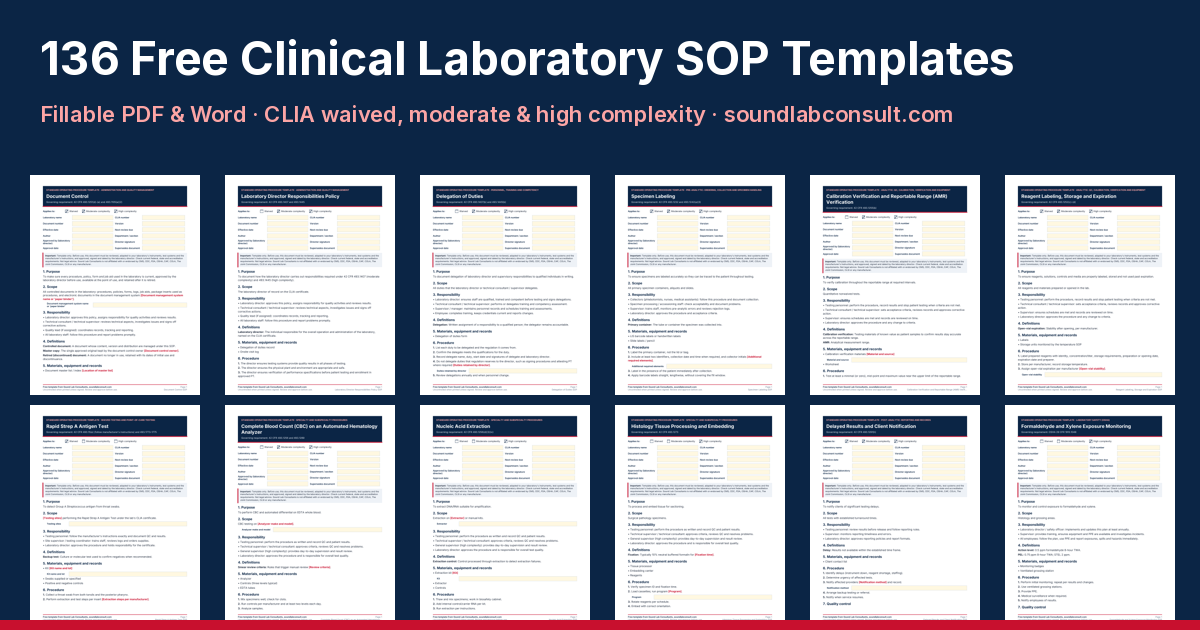
Browse and download the SOP templates
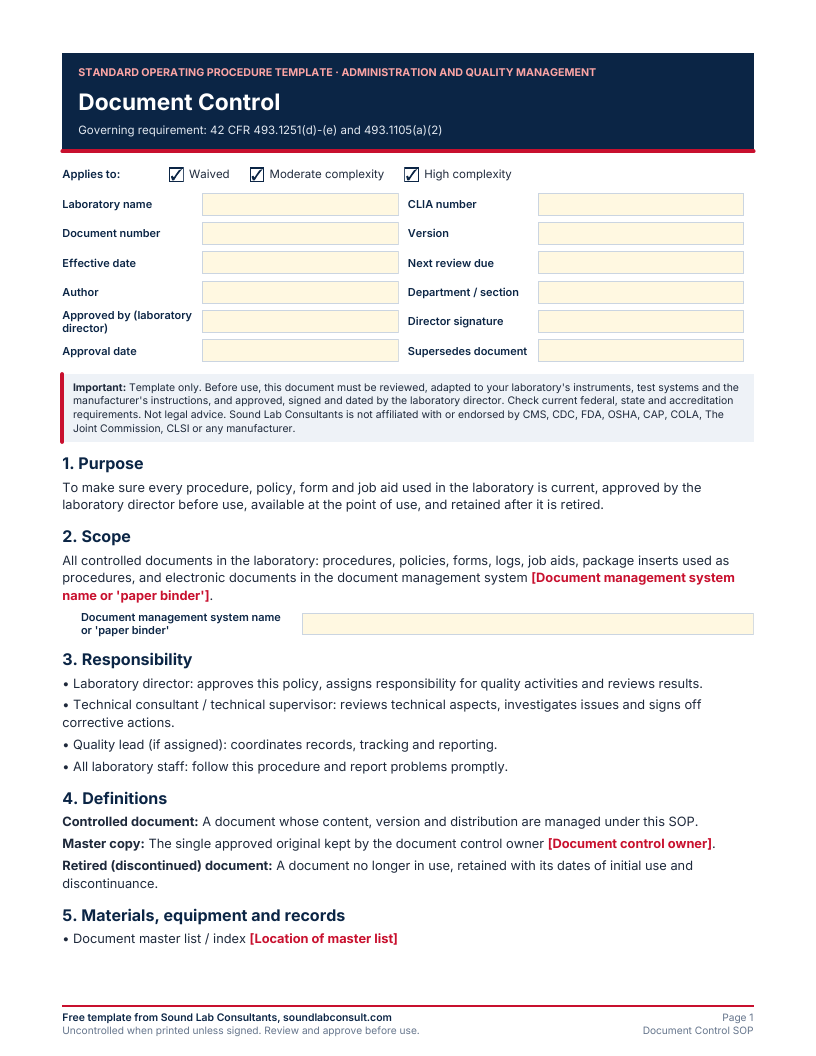
Document Control
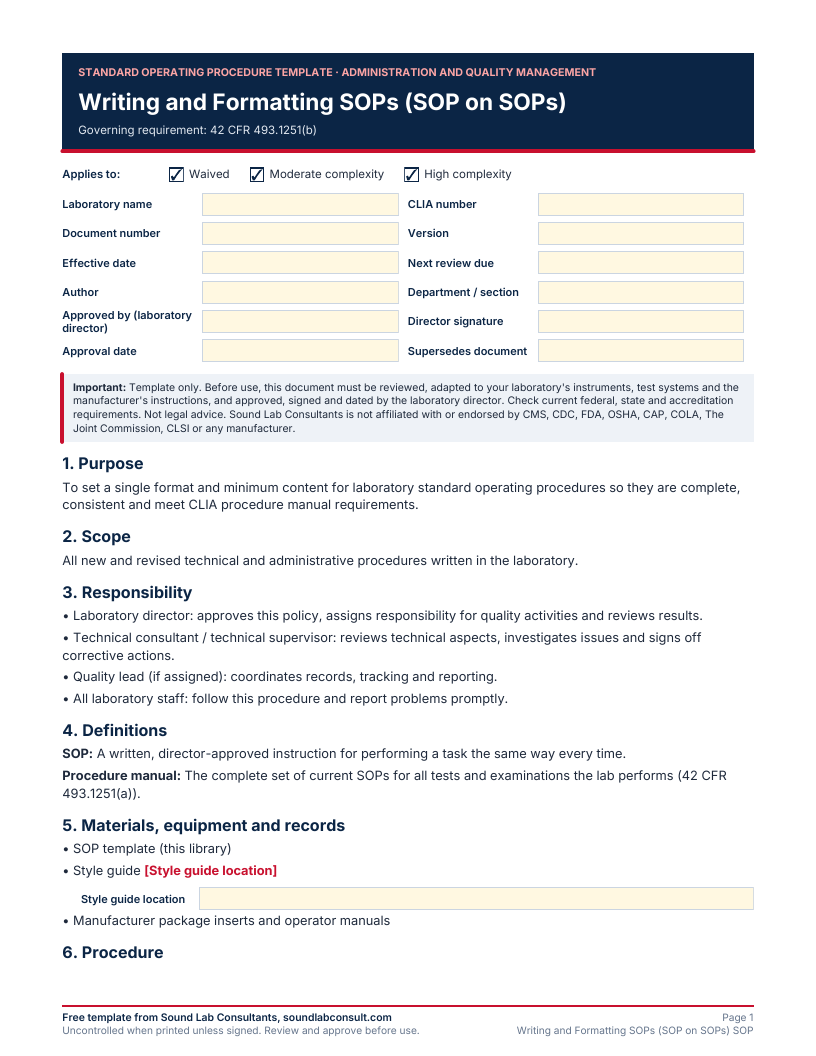
Writing and Formatting SOPs (SOP on SOPs)
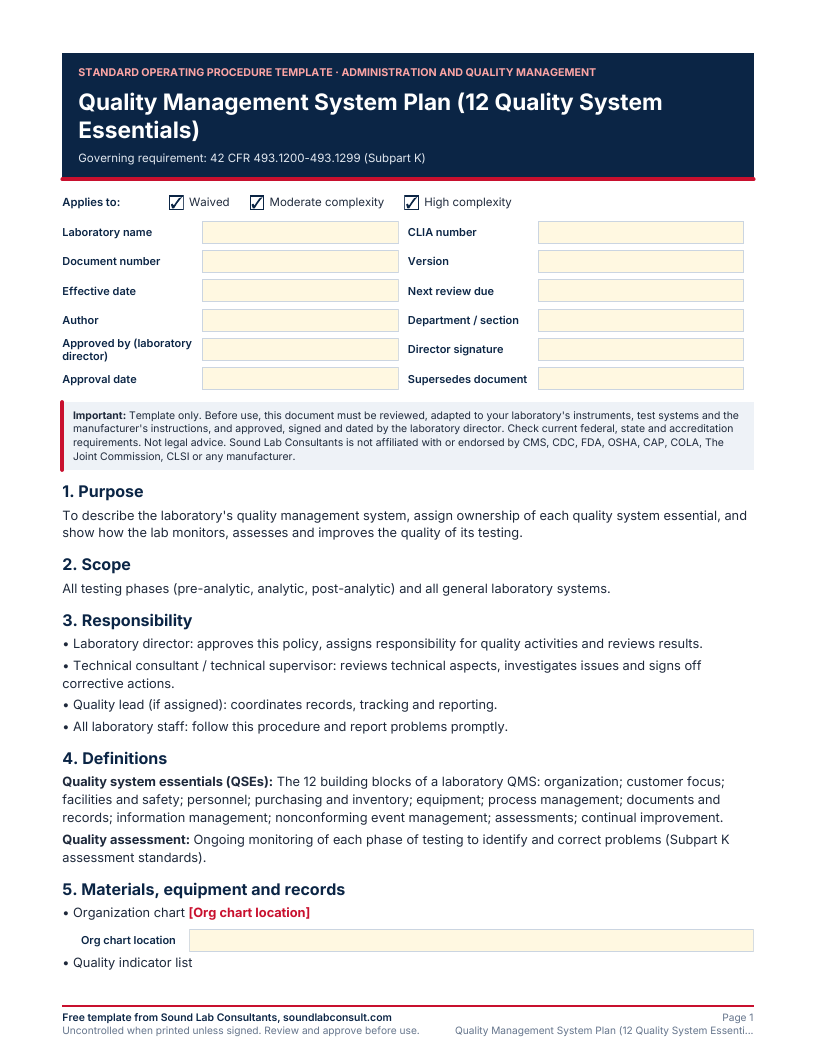
Quality Management System Plan (12 Quality System Essentials)
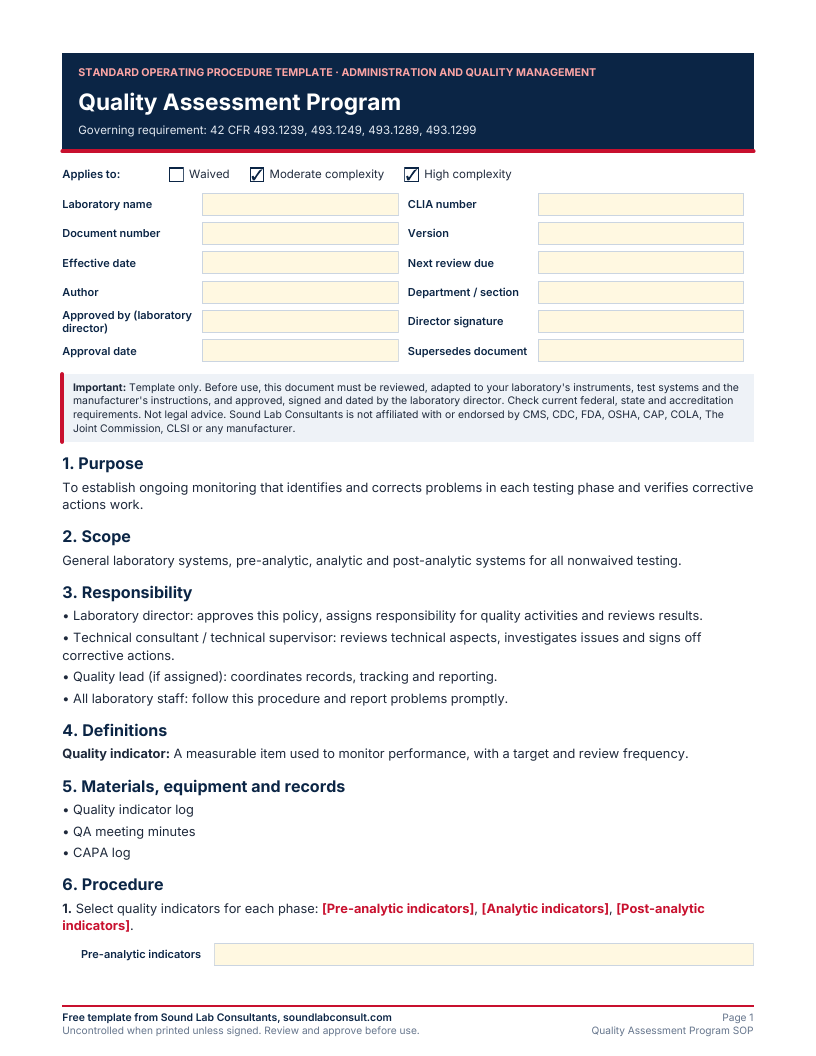
Quality Assessment Program
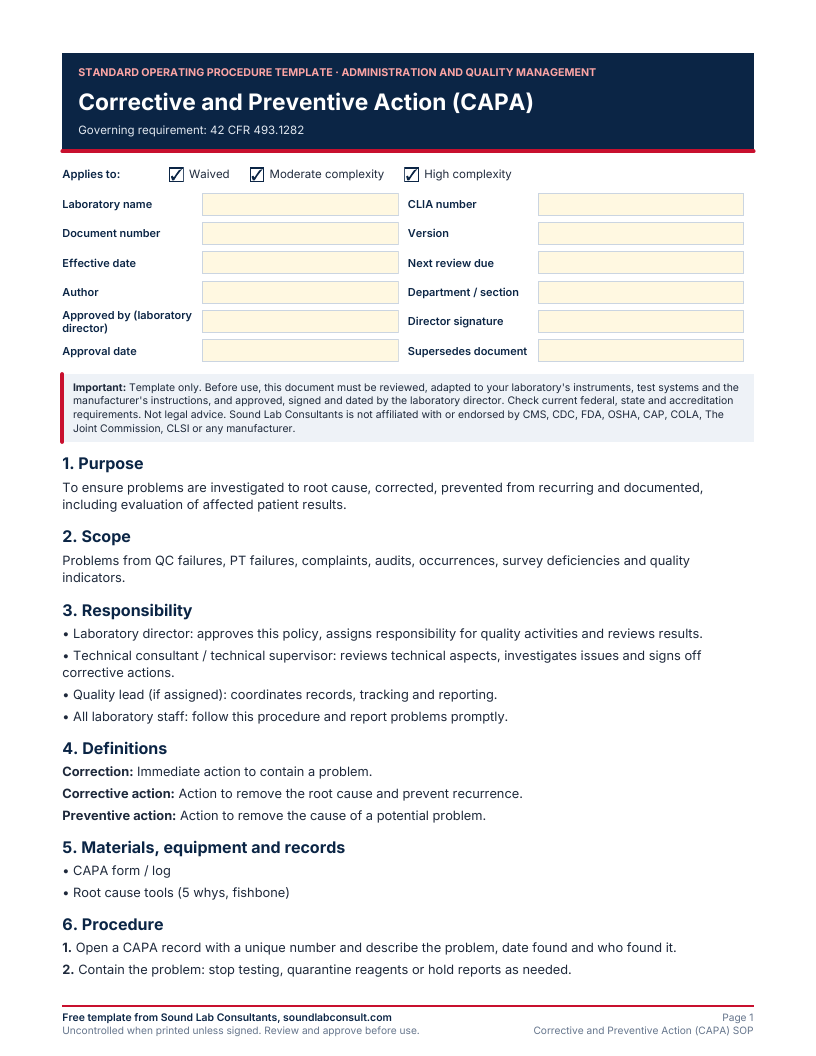
Corrective and Preventive Action (CAPA)
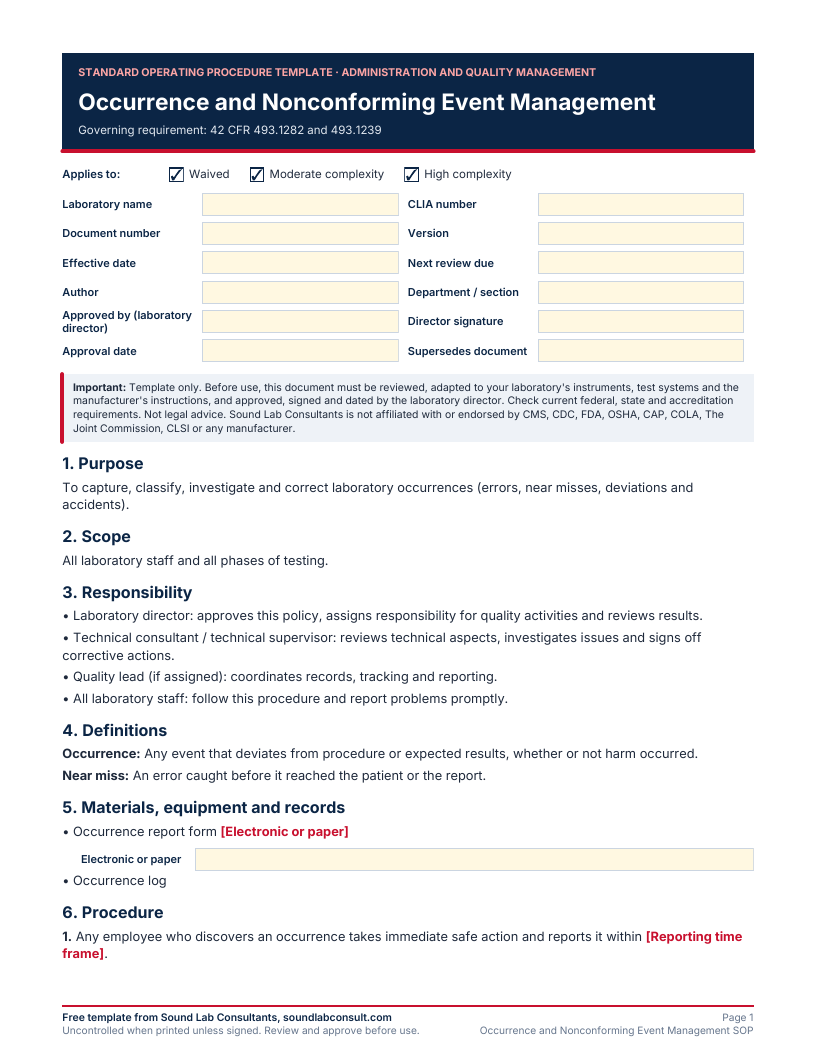
Occurrence and Nonconforming Event Management
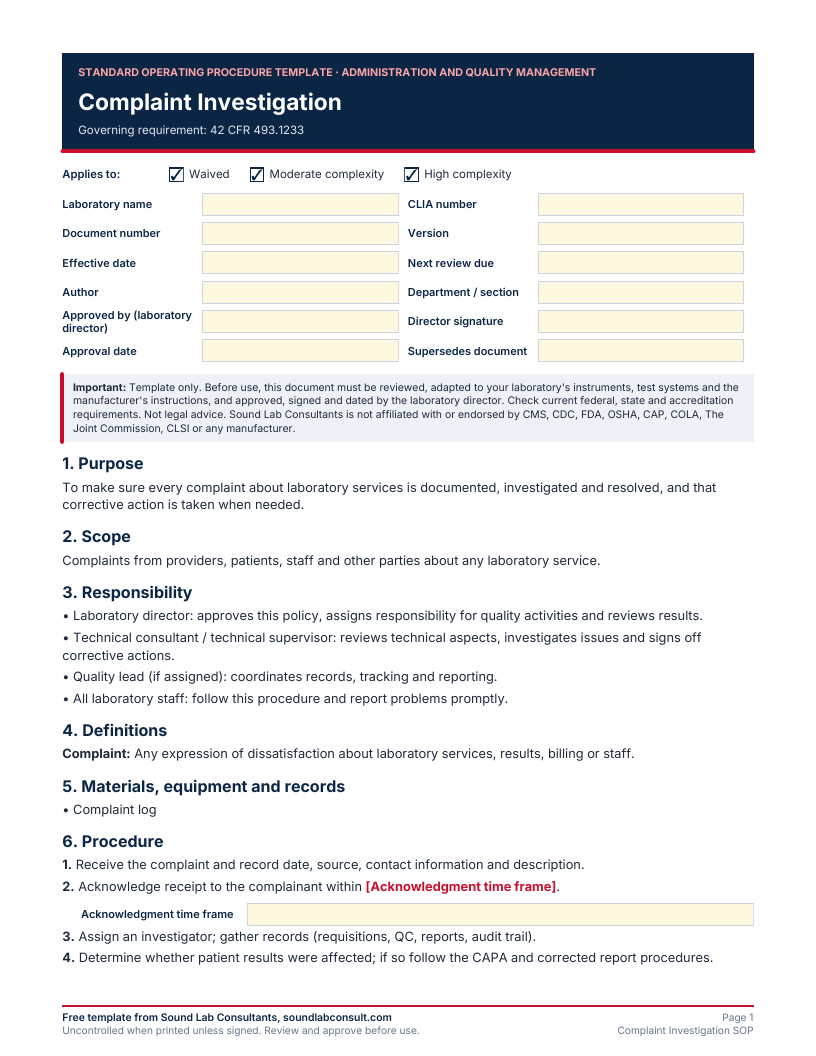
Complaint Investigation
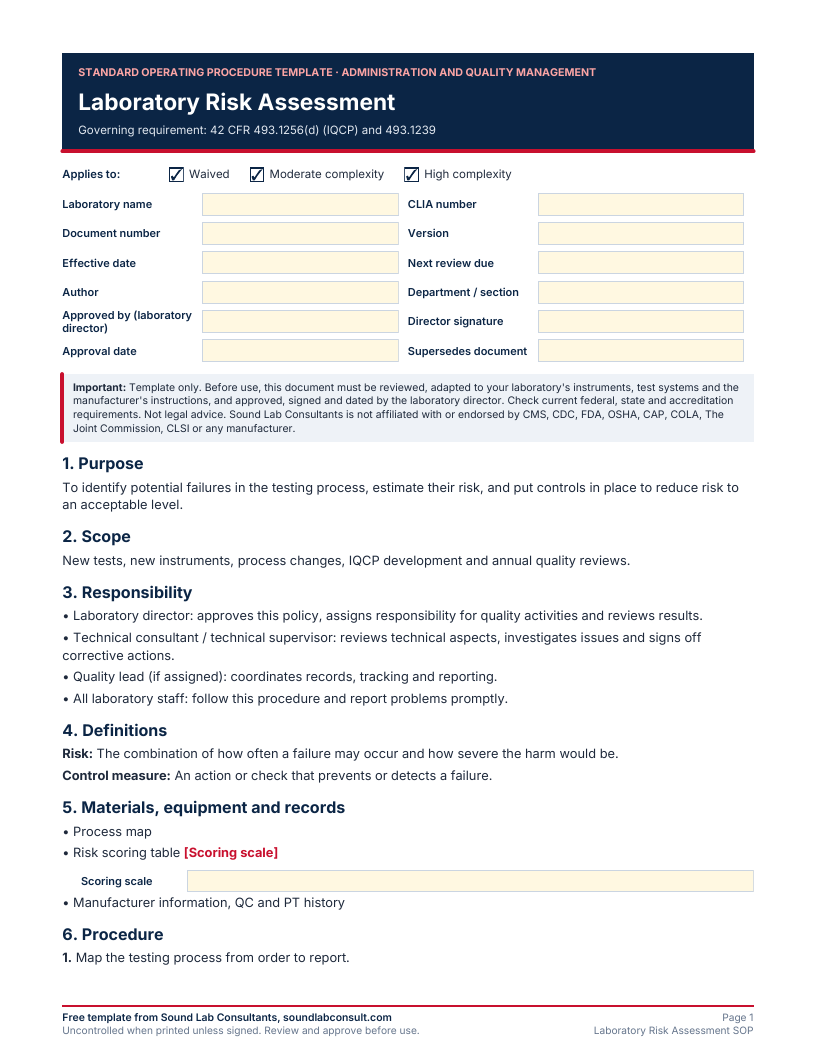
Laboratory Risk Assessment
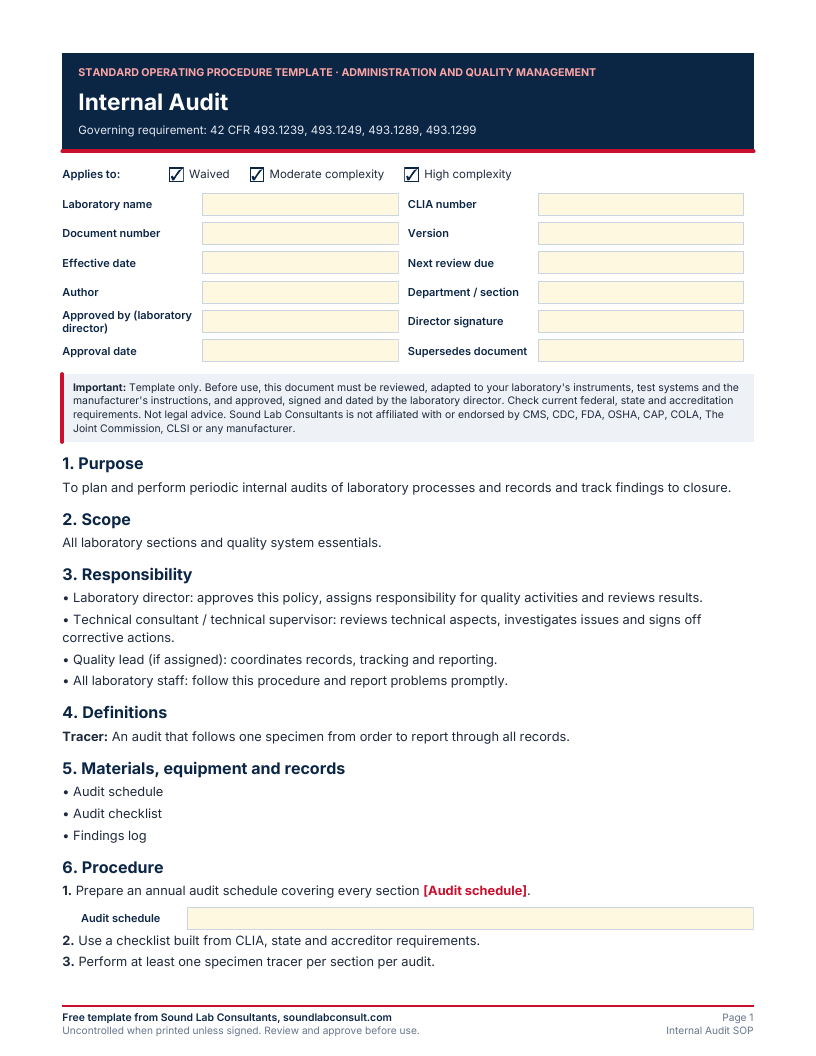
Internal Audit
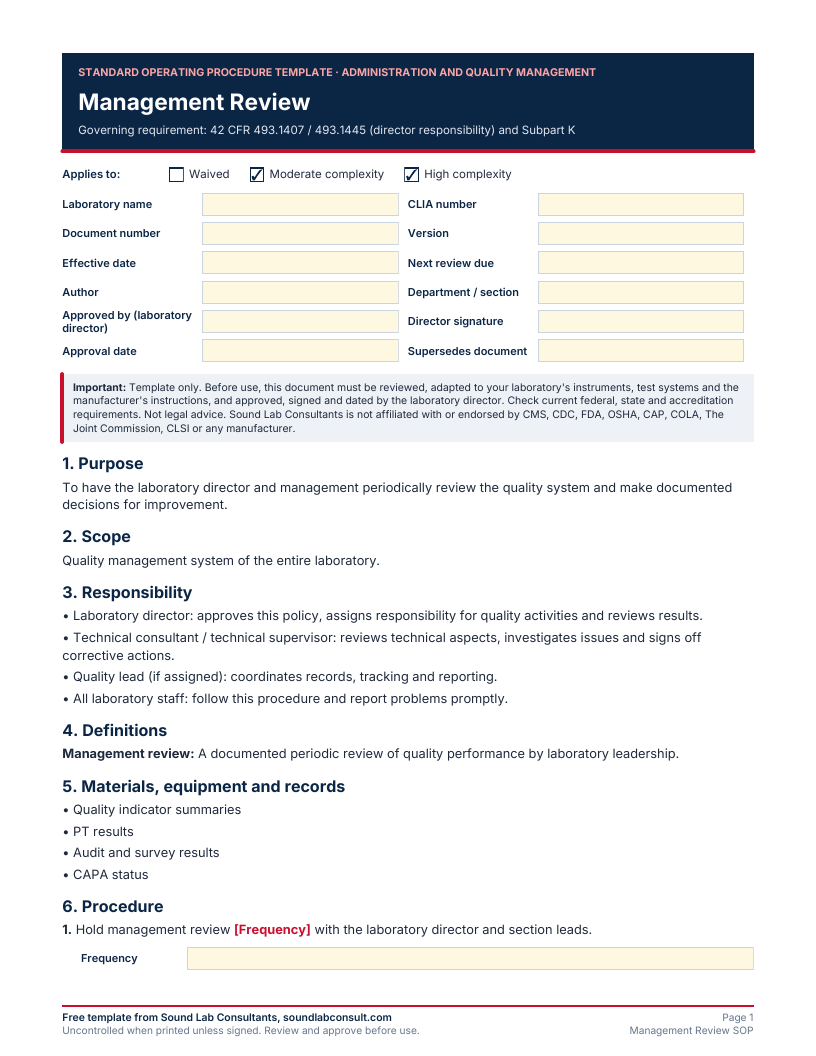
Management Review
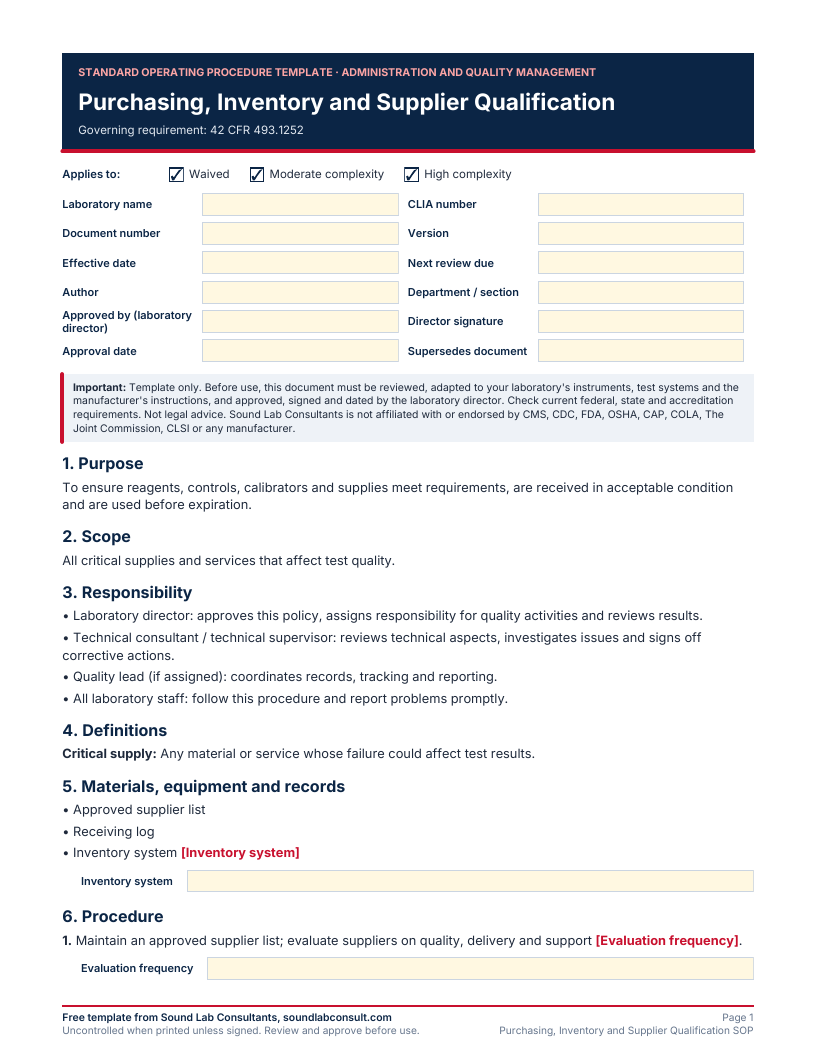
Purchasing, Inventory and Supplier Qualification
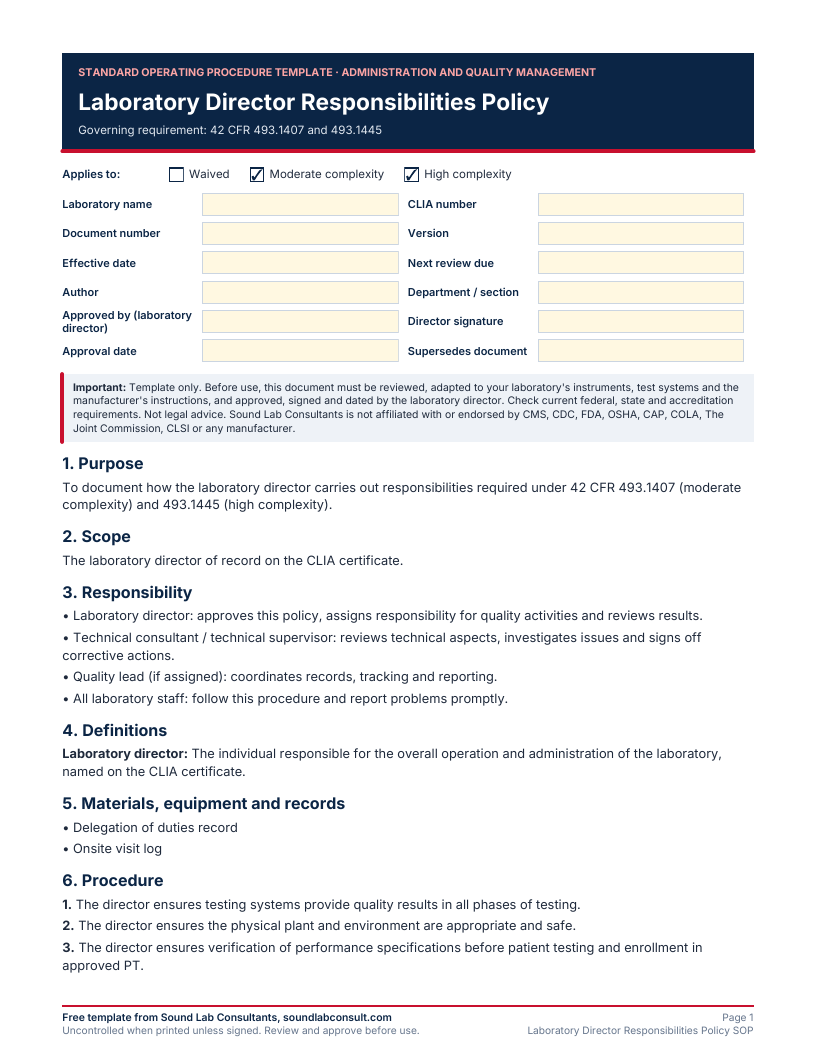
Laboratory Director Responsibilities Policy
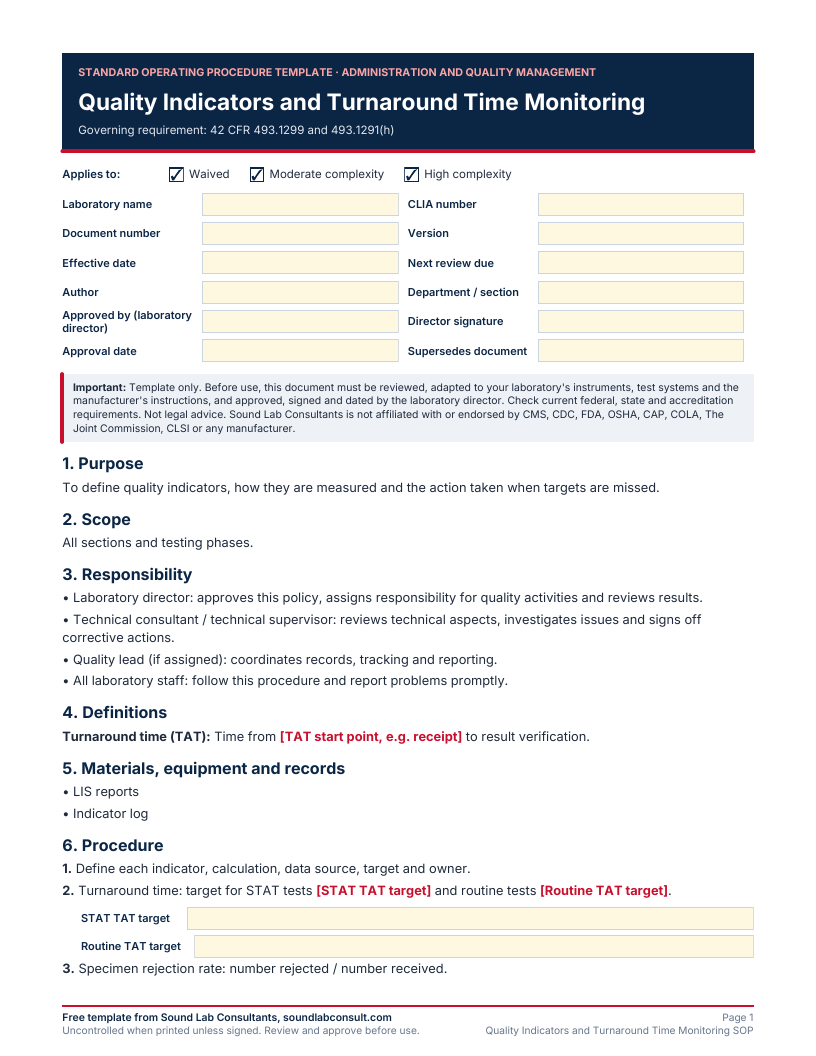
Quality Indicators and Turnaround Time Monitoring
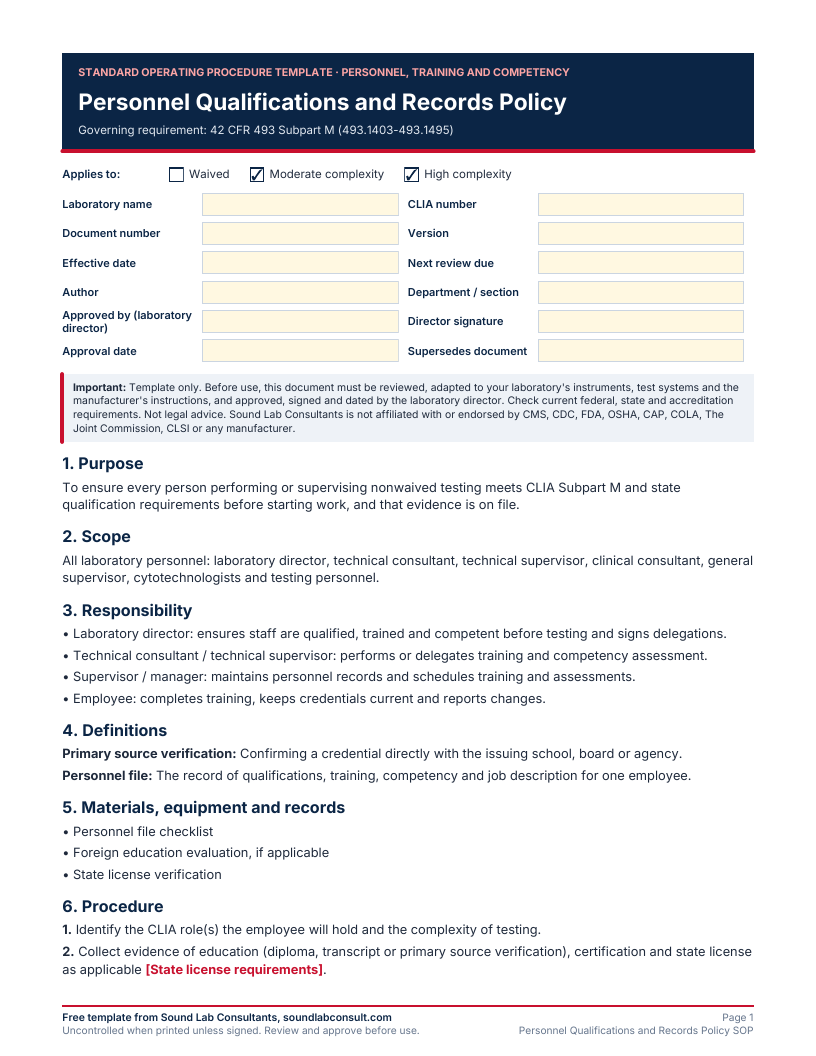
Personnel Qualifications and Records Policy
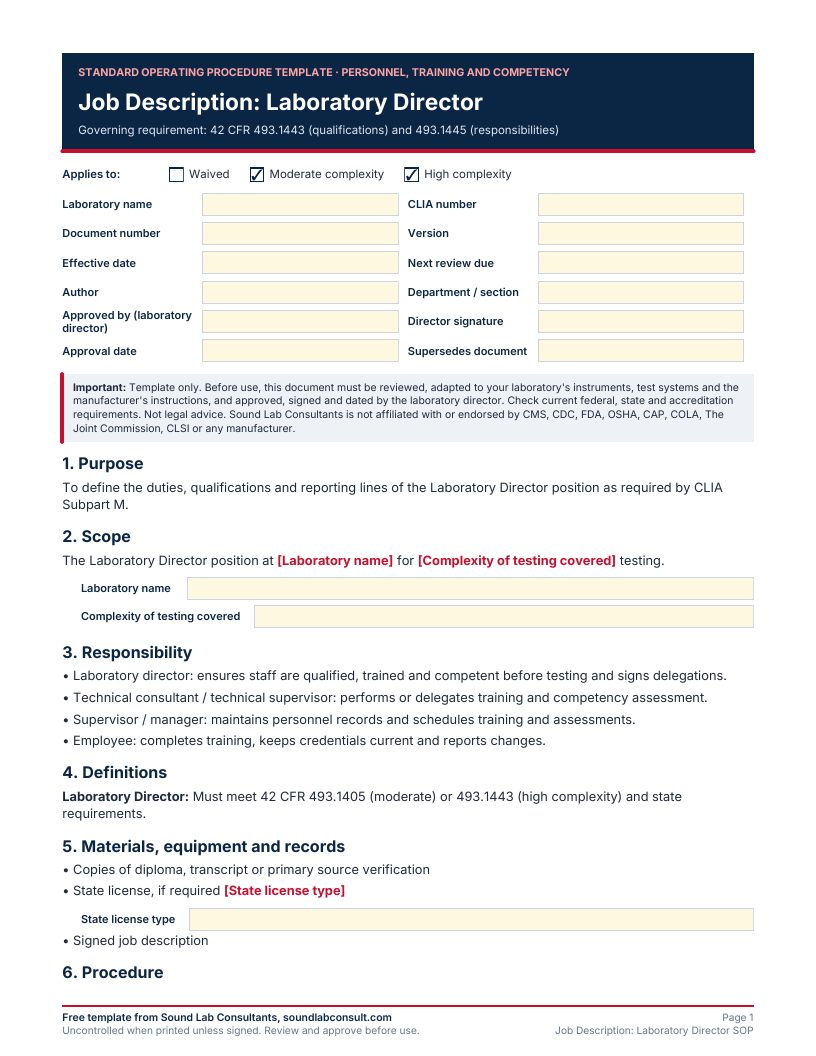
Job Description: Laboratory Director
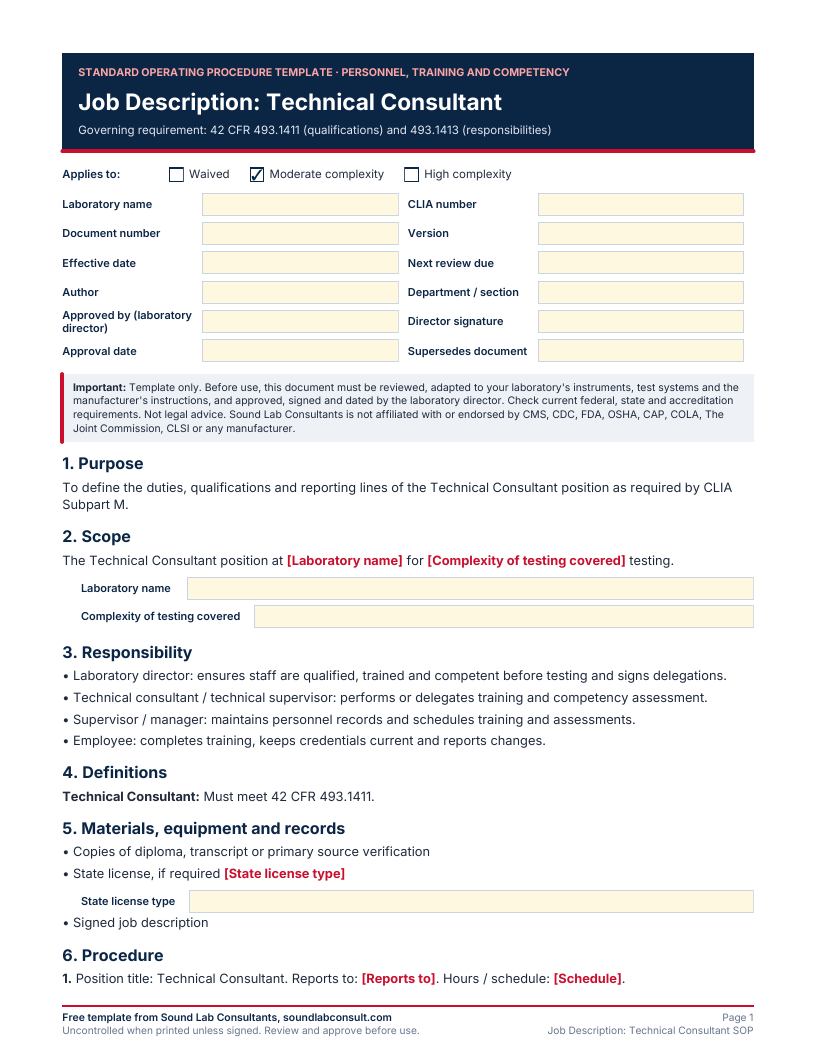
Job Description: Technical Consultant
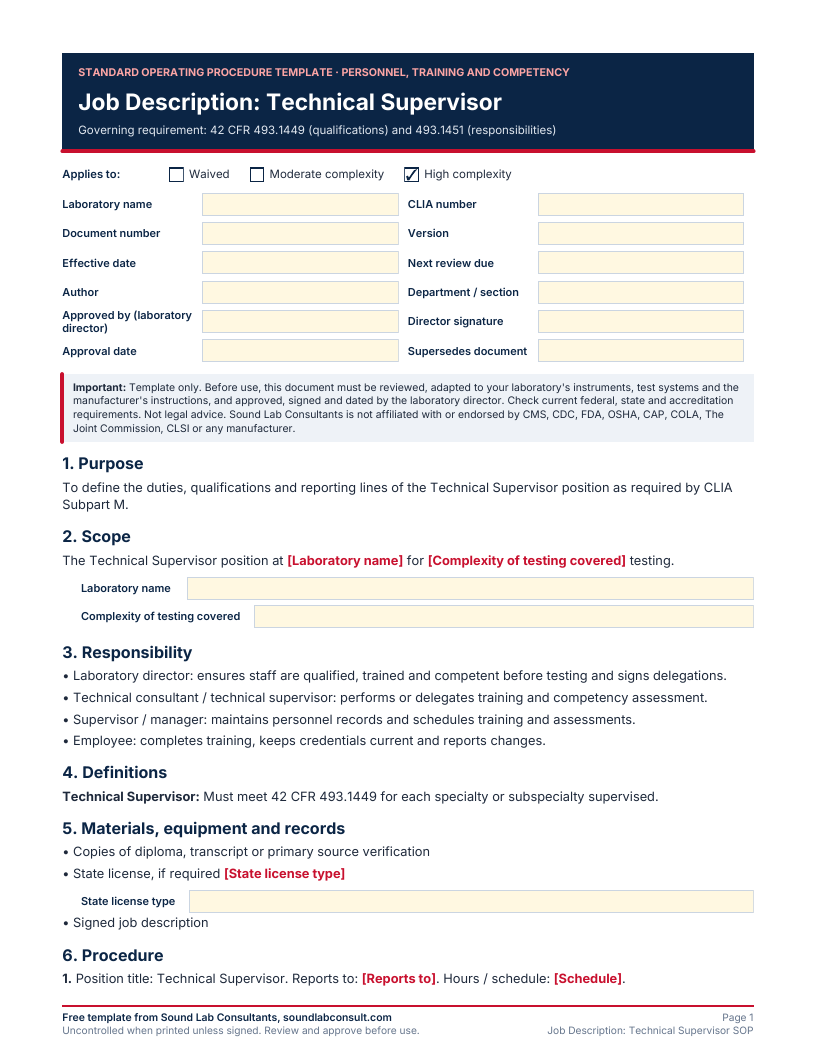
Job Description: Technical Supervisor
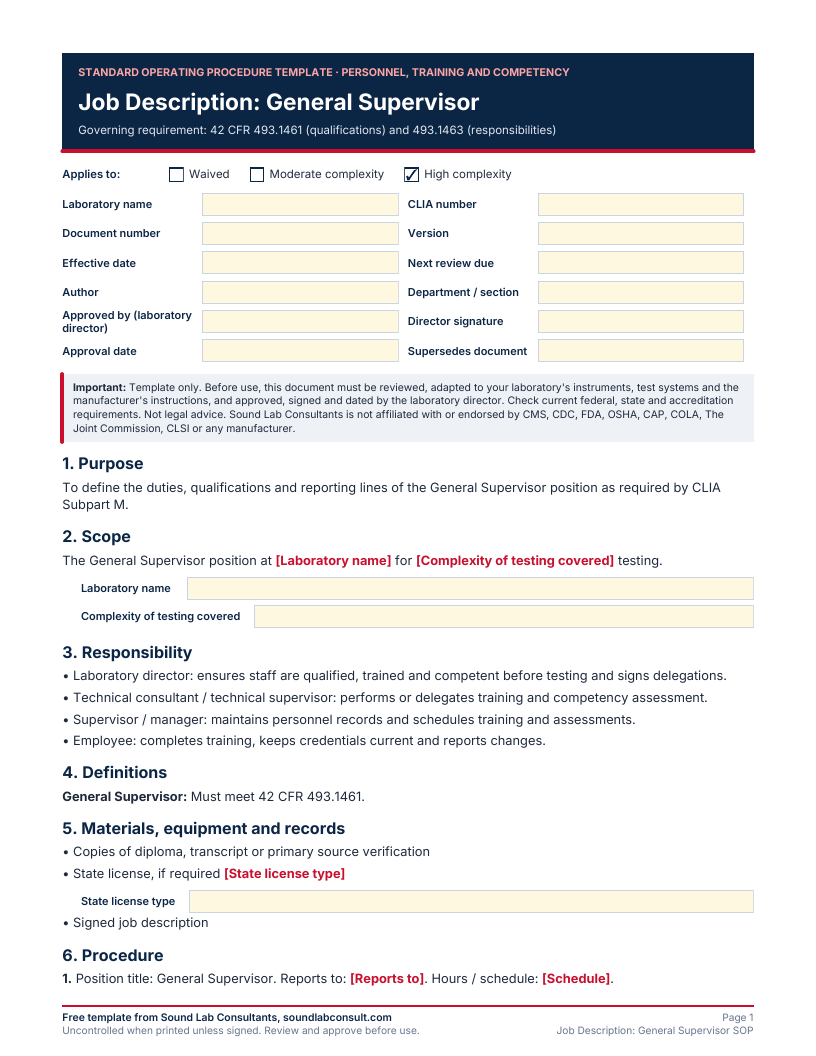
Job Description: General Supervisor
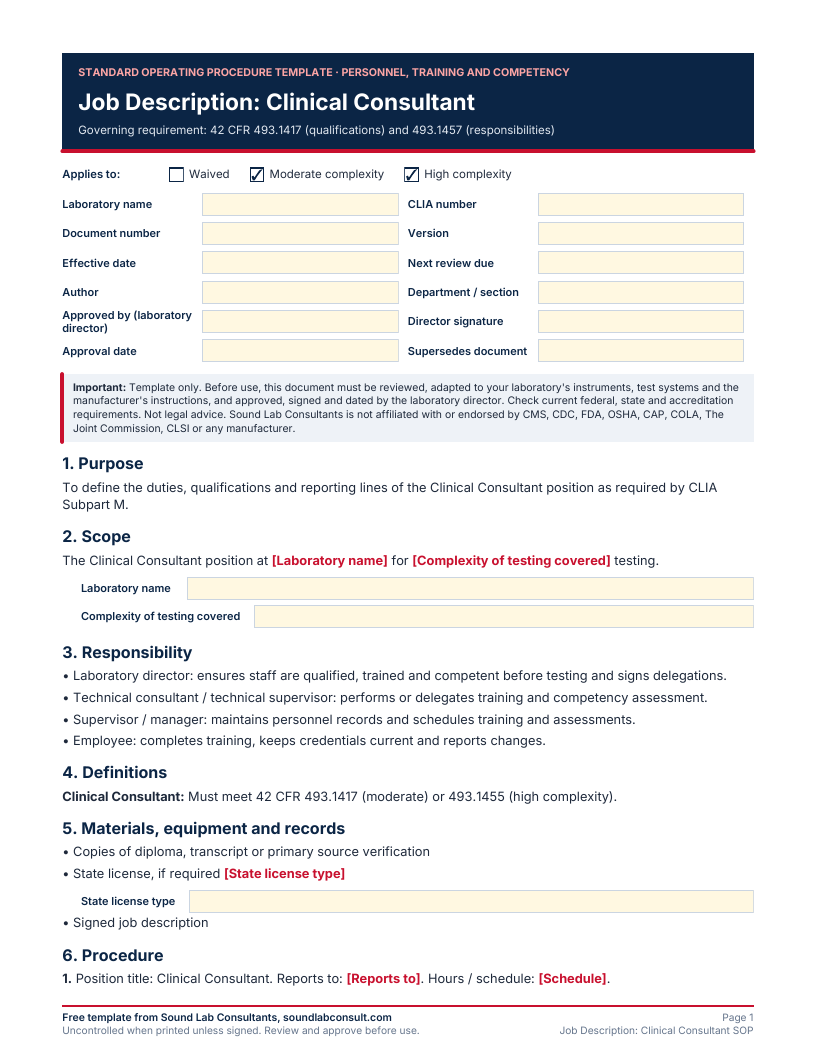
Job Description: Clinical Consultant
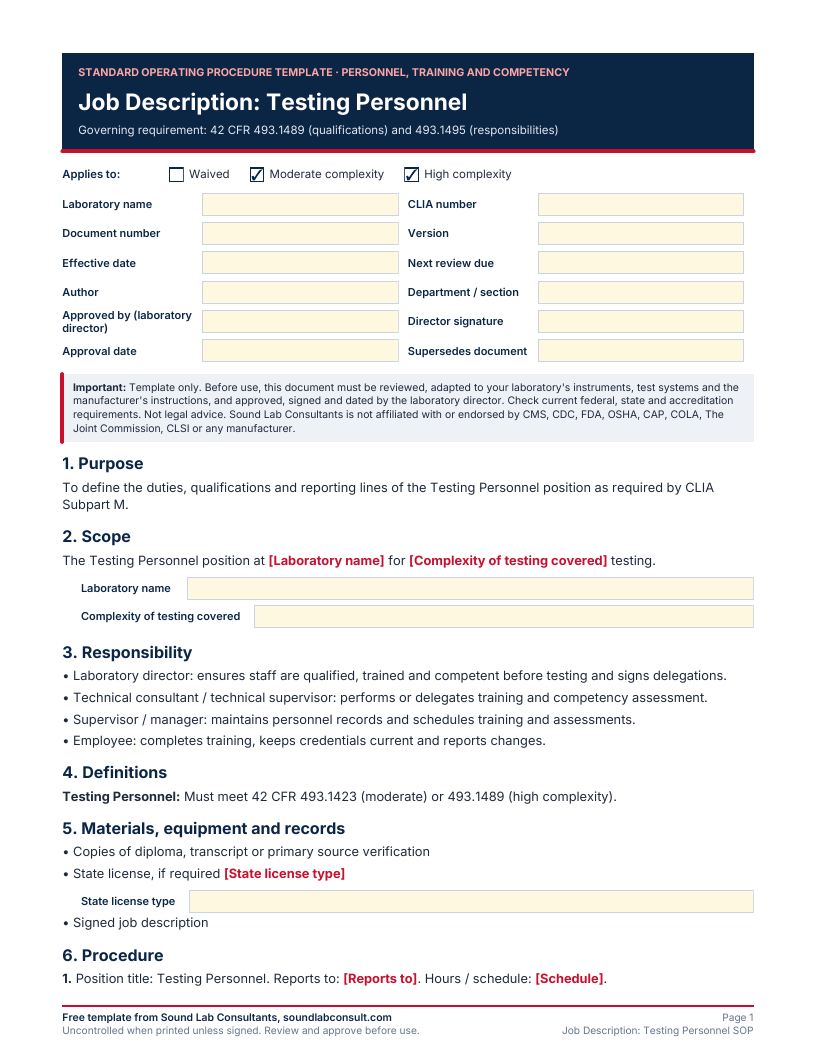
Job Description: Testing Personnel
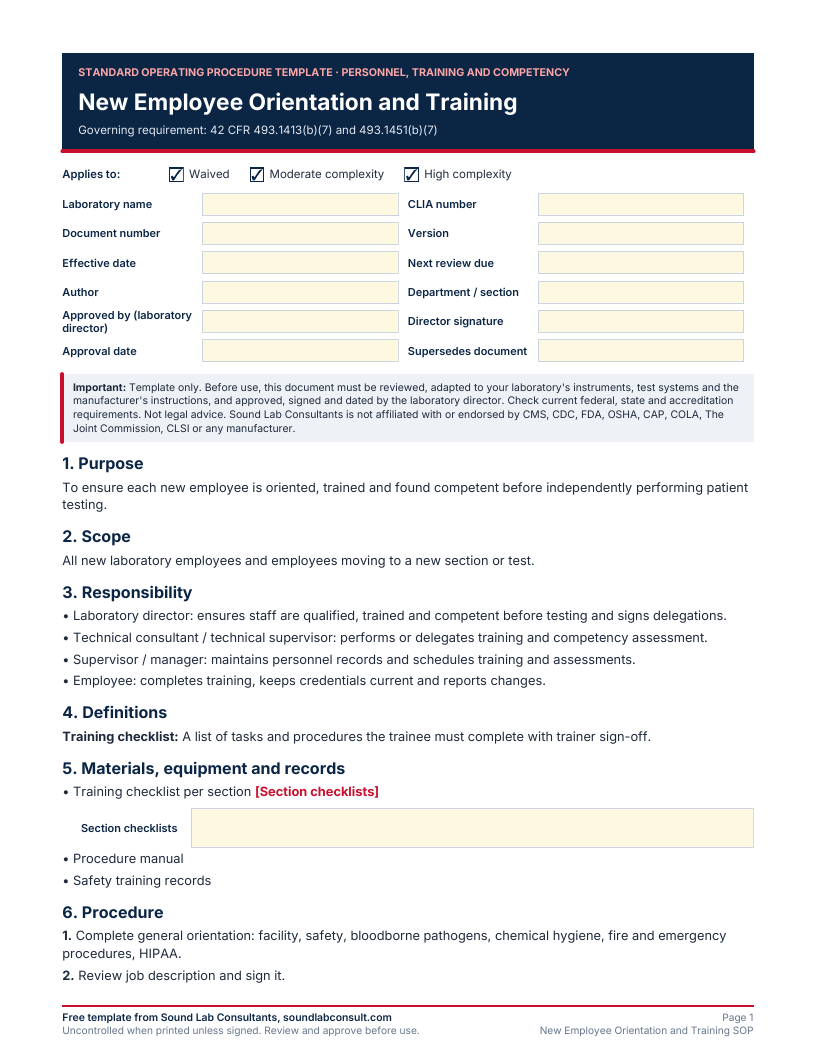
New Employee Orientation and Training
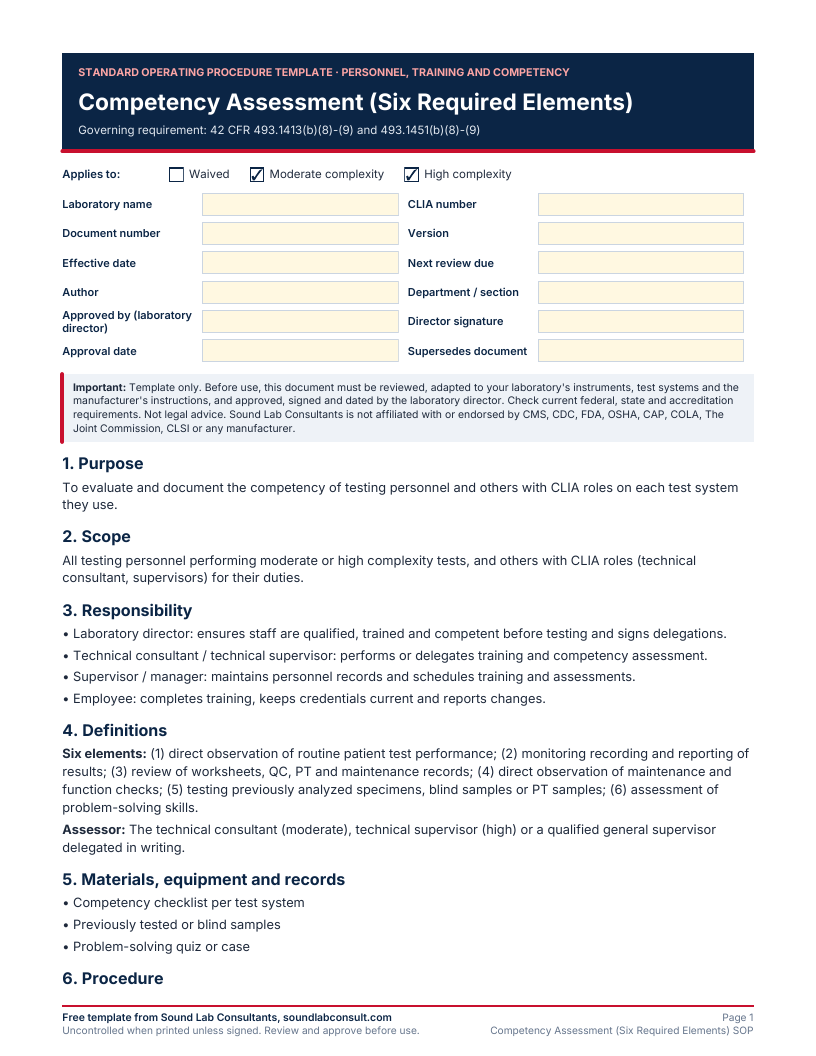
Competency Assessment (Six Required Elements)
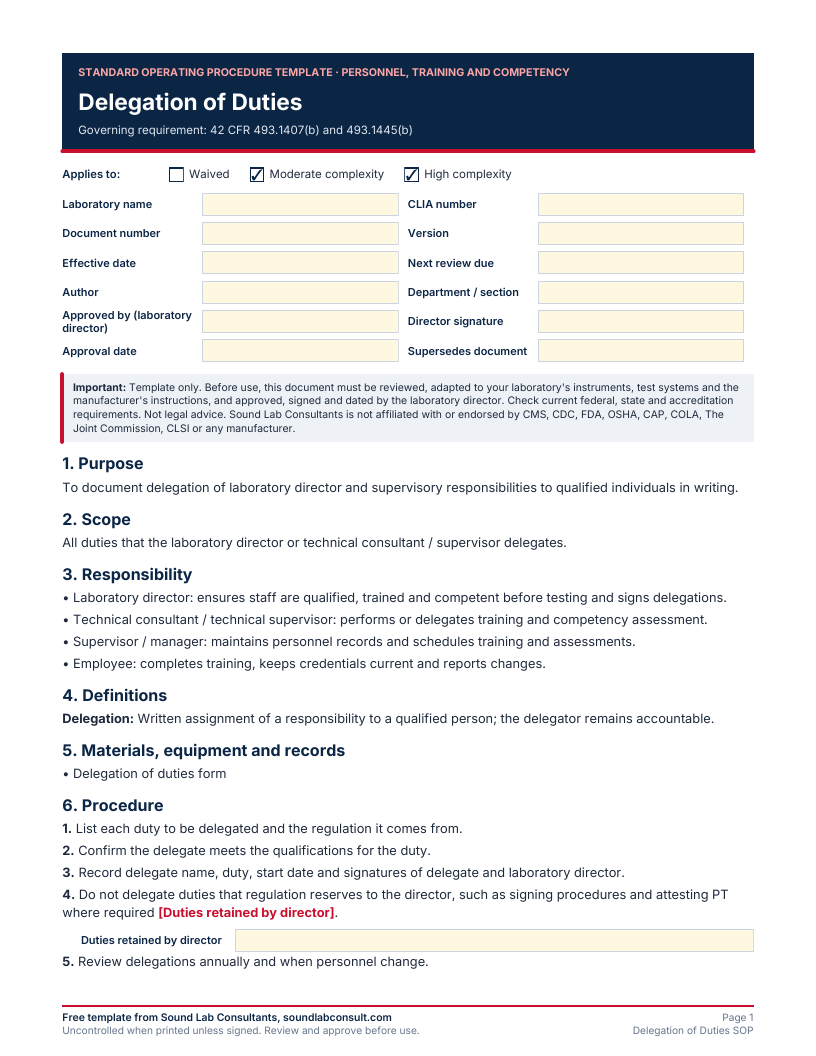
Delegation of Duties
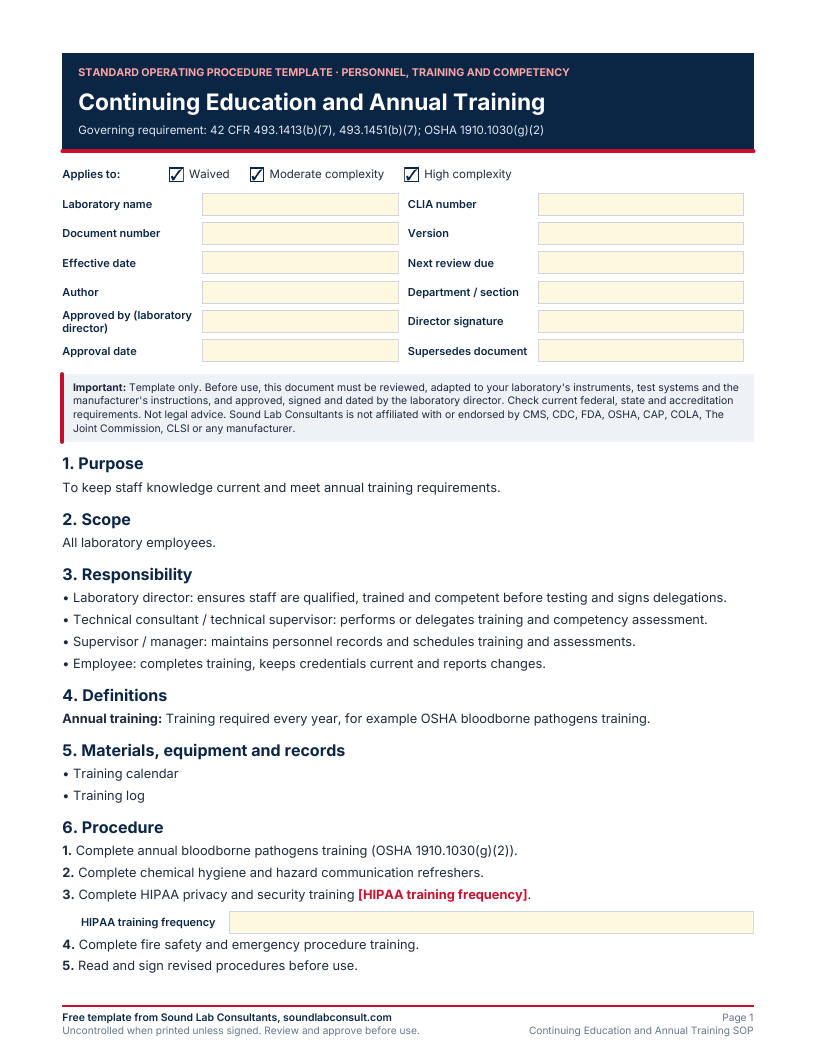
Continuing Education and Annual Training
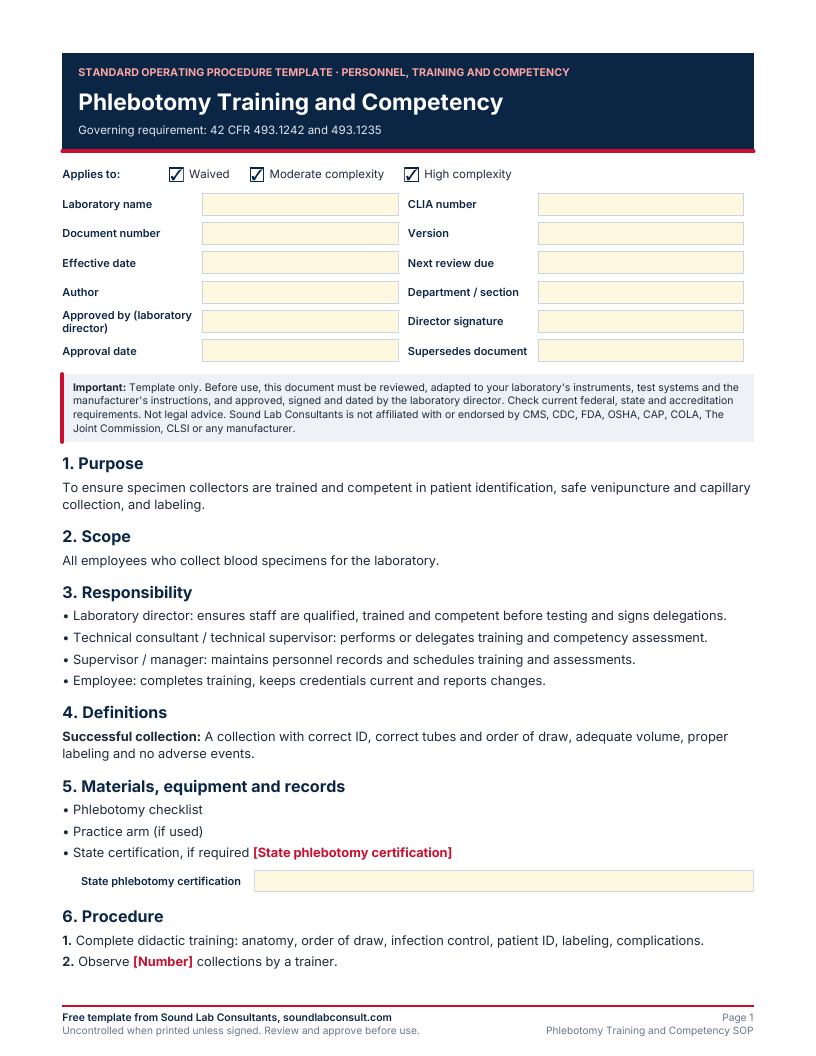
Phlebotomy Training and Competency
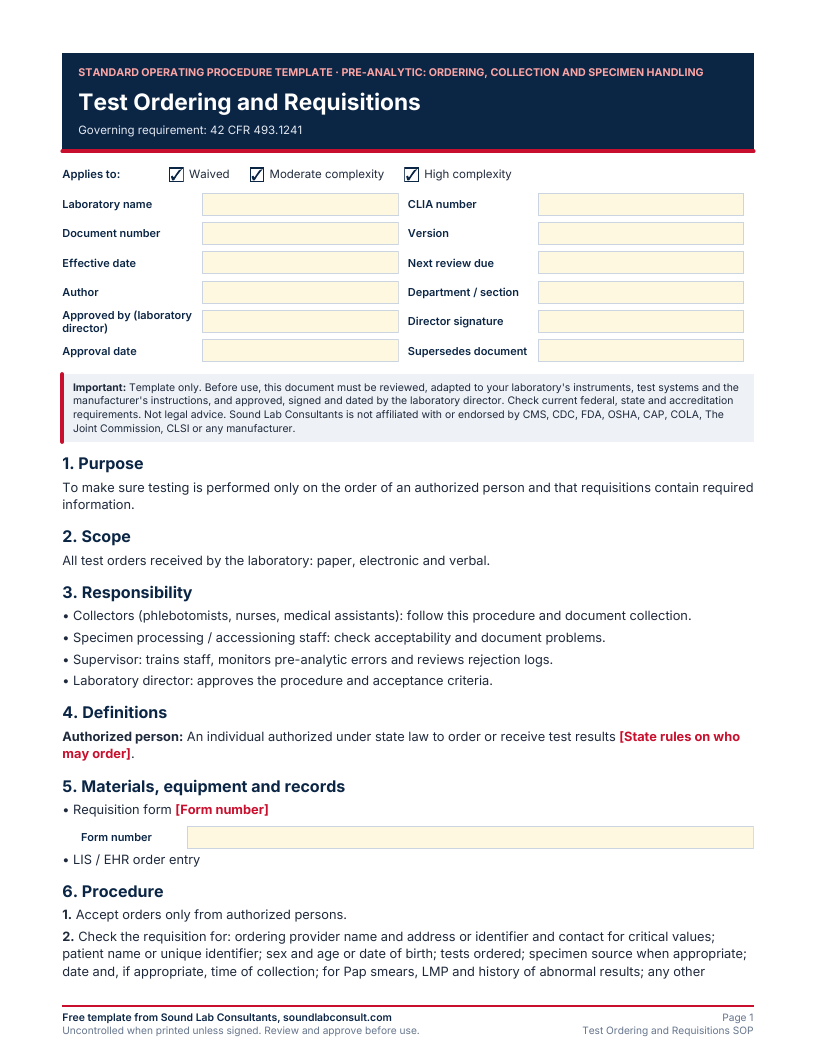
Test Ordering and Requisitions
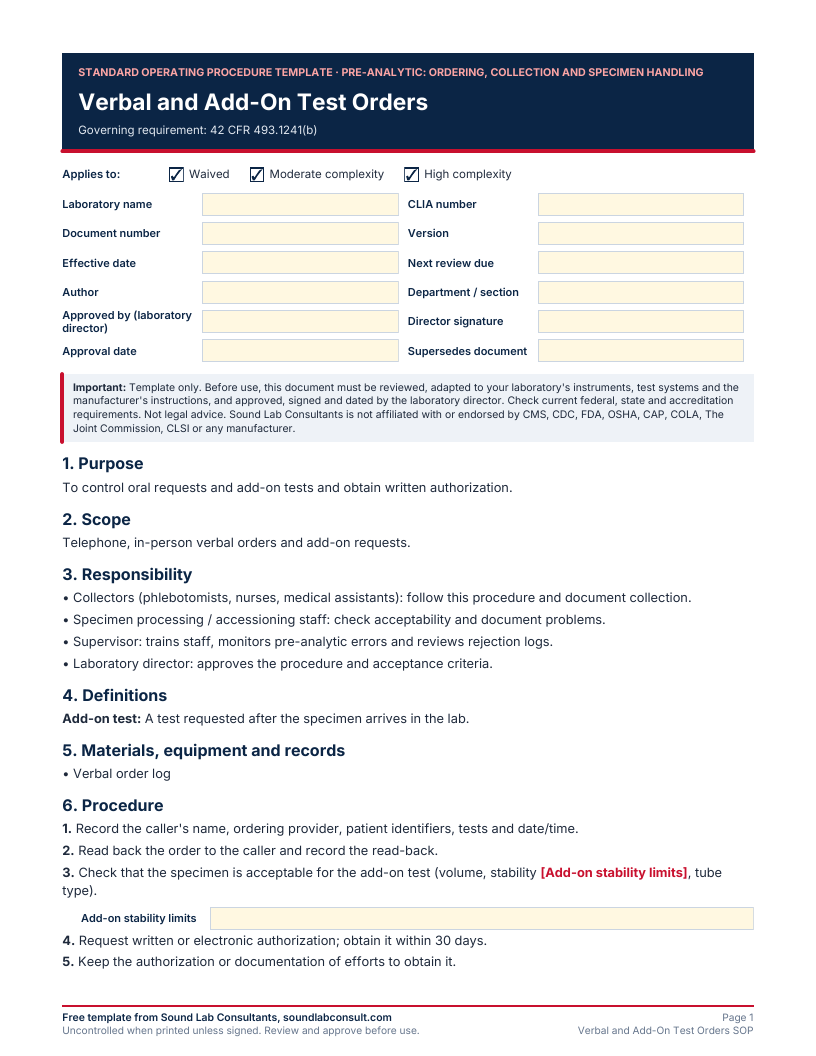
Verbal and Add-On Test Orders
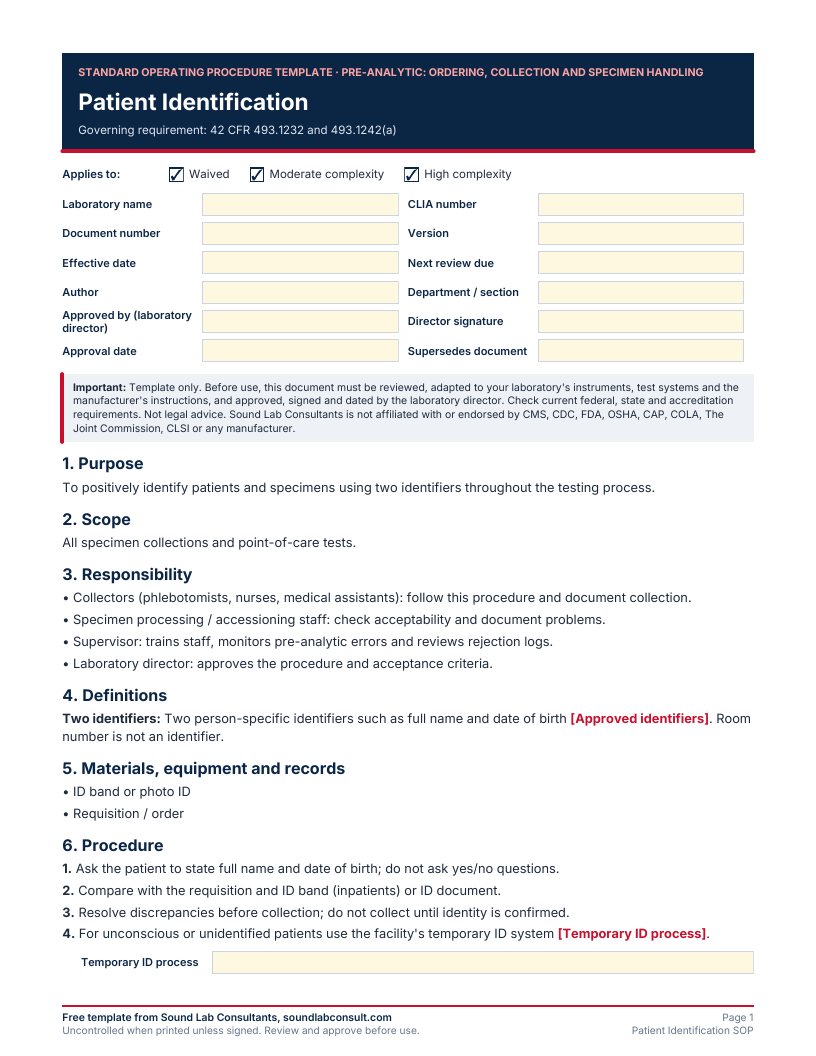
Patient Identification
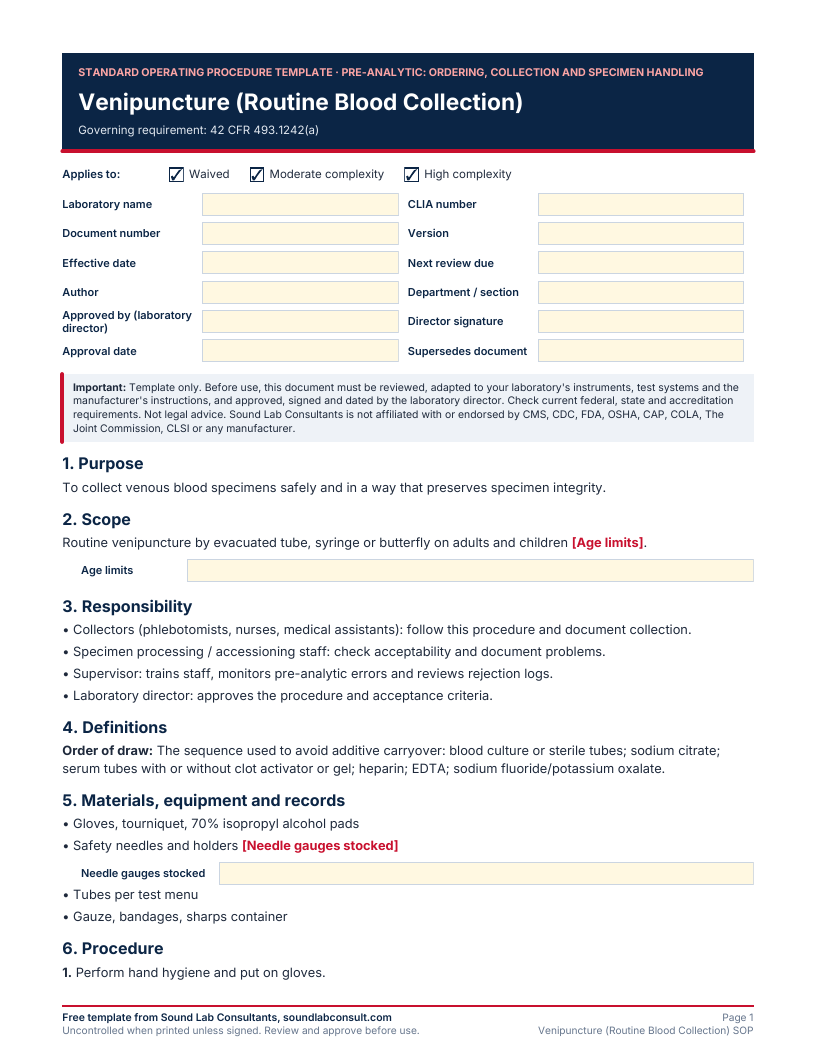
Venipuncture (Routine Blood Collection)
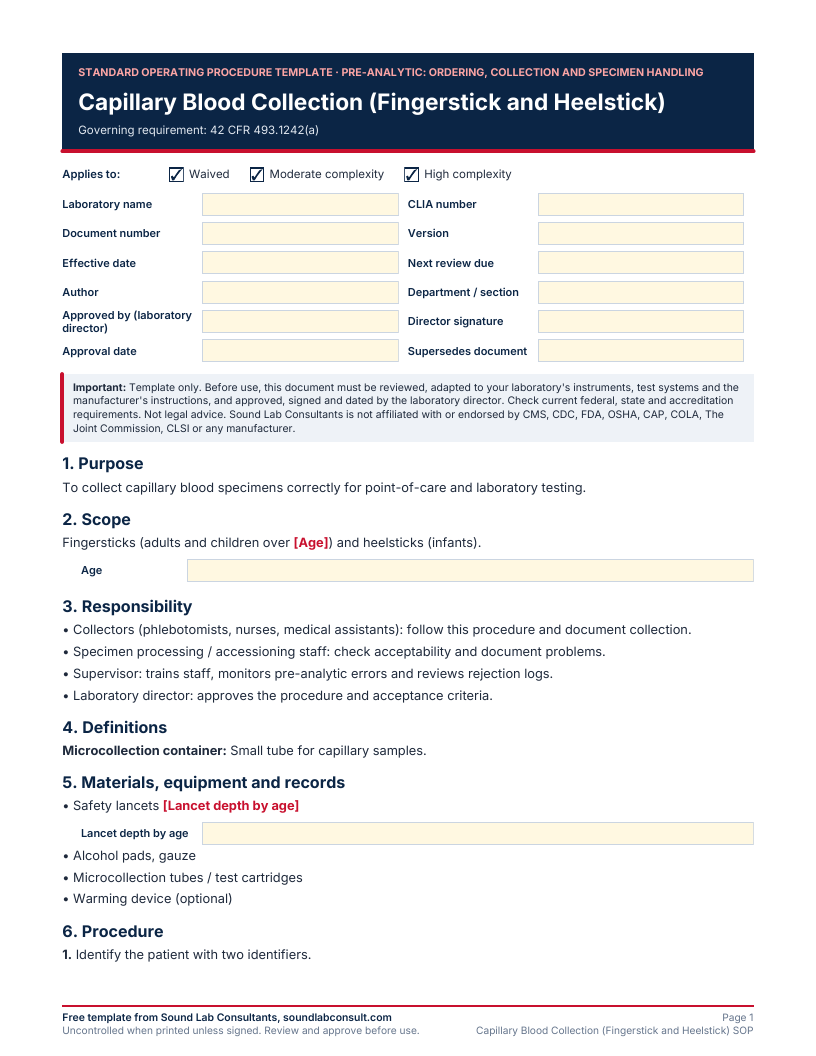
Capillary Blood Collection (Fingerstick and Heelstick)
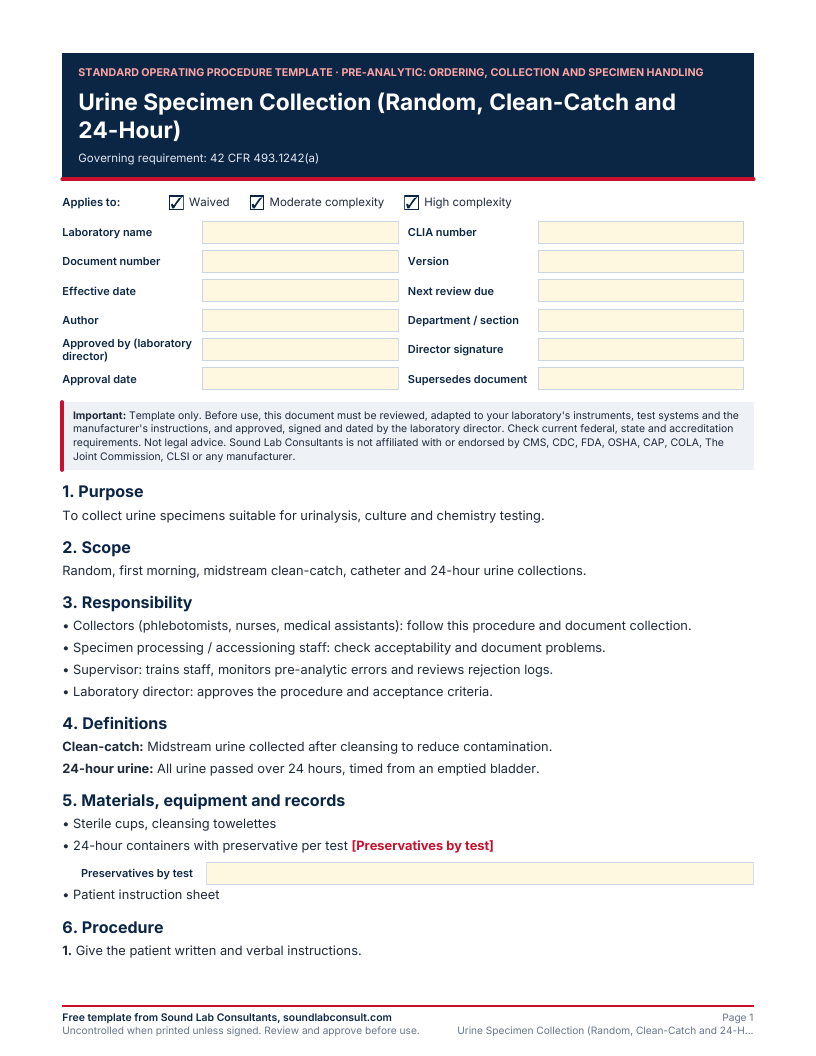
Urine Specimen Collection (Random, Clean-Catch and 24-Hour)
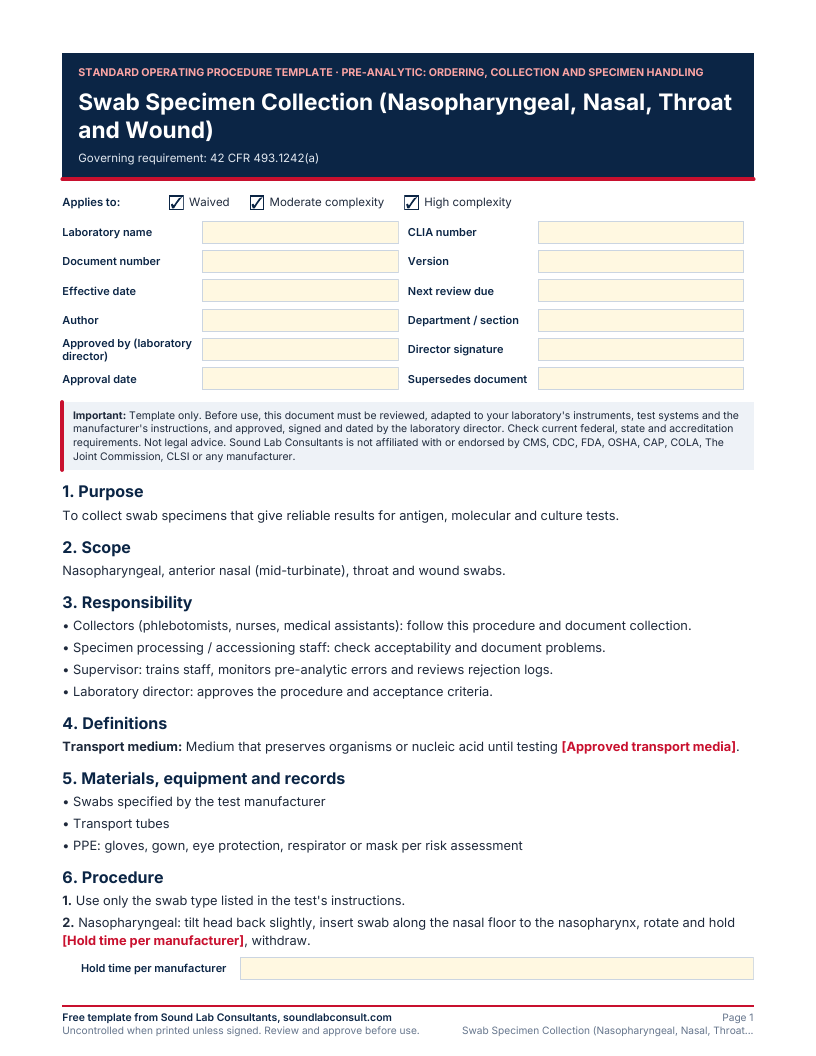
Swab Specimen Collection (Nasopharyngeal, Nasal, Throat and Wound)
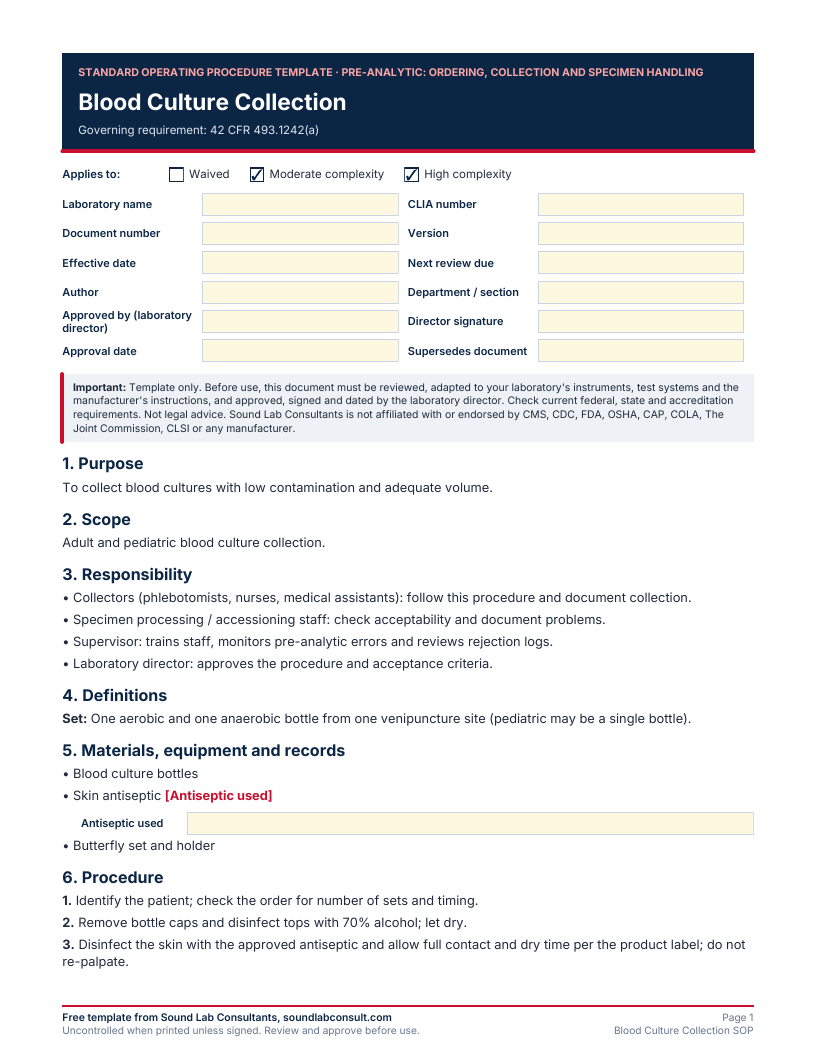
Blood Culture Collection
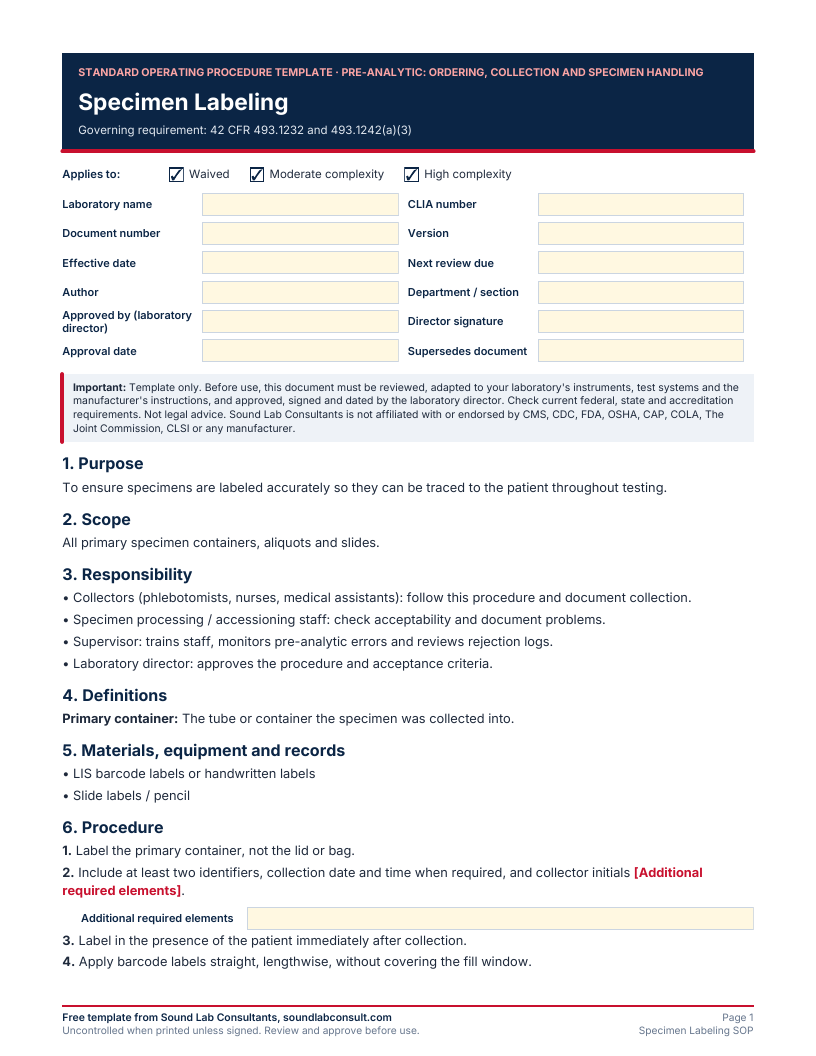
Specimen Labeling
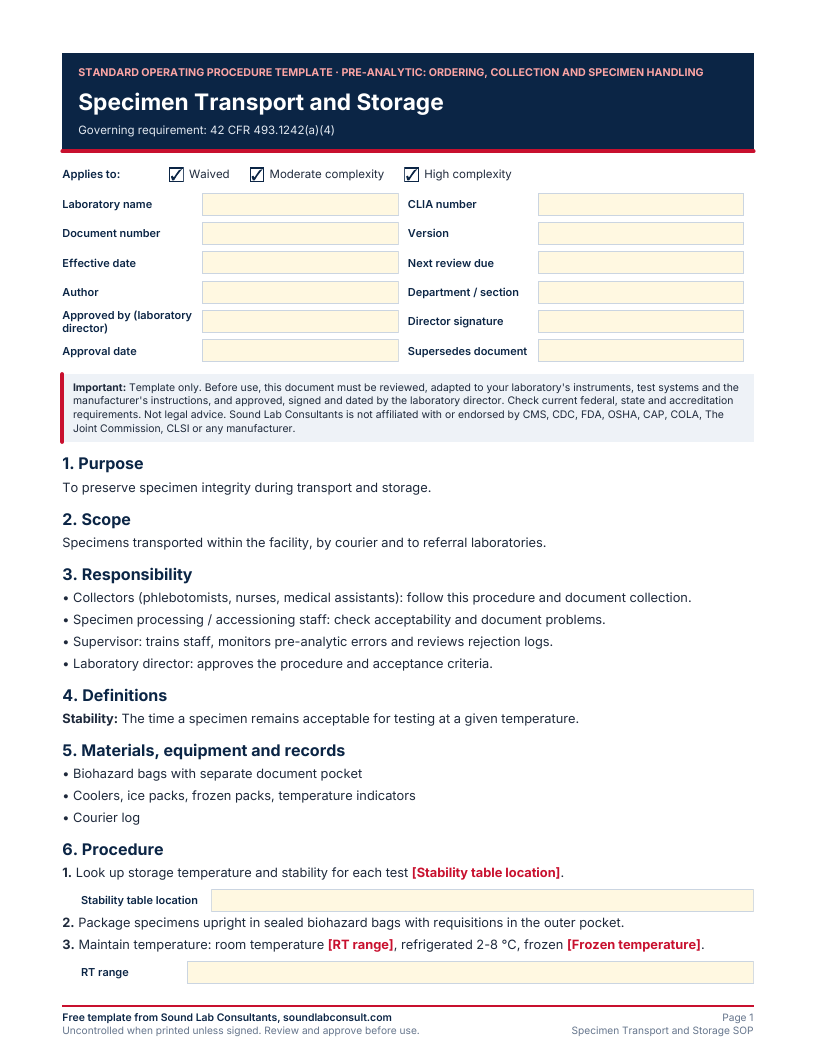
Specimen Transport and Storage
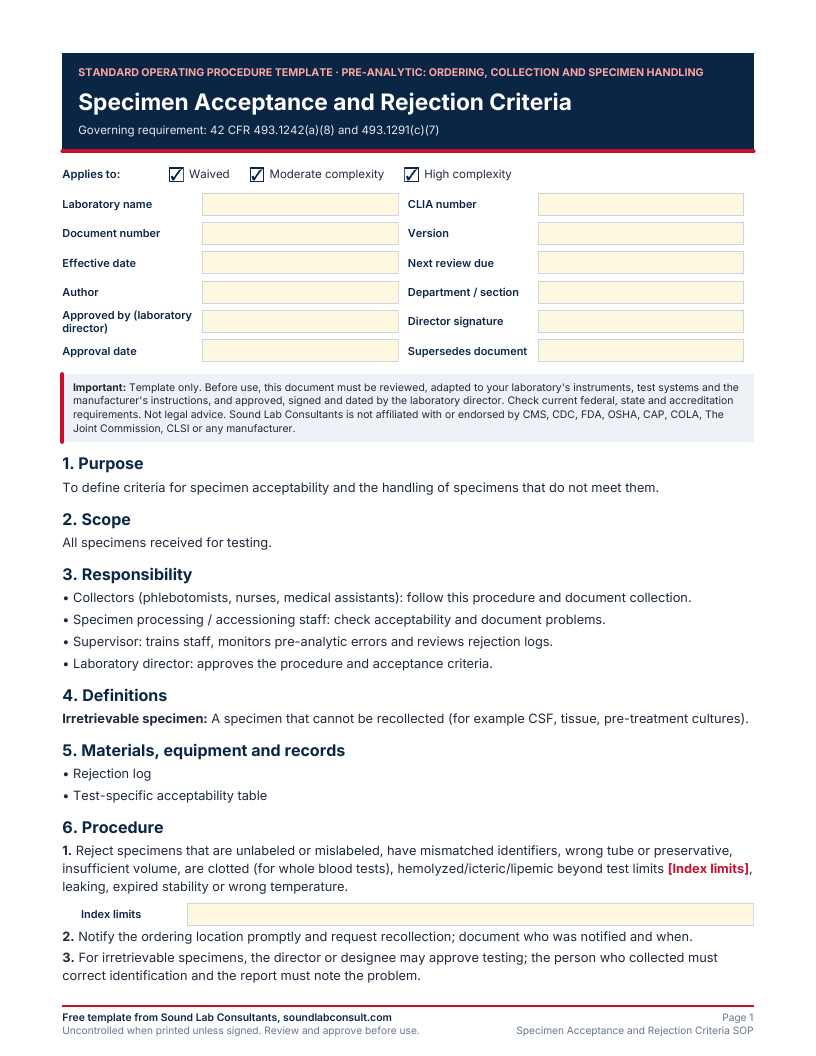
Specimen Acceptance and Rejection Criteria
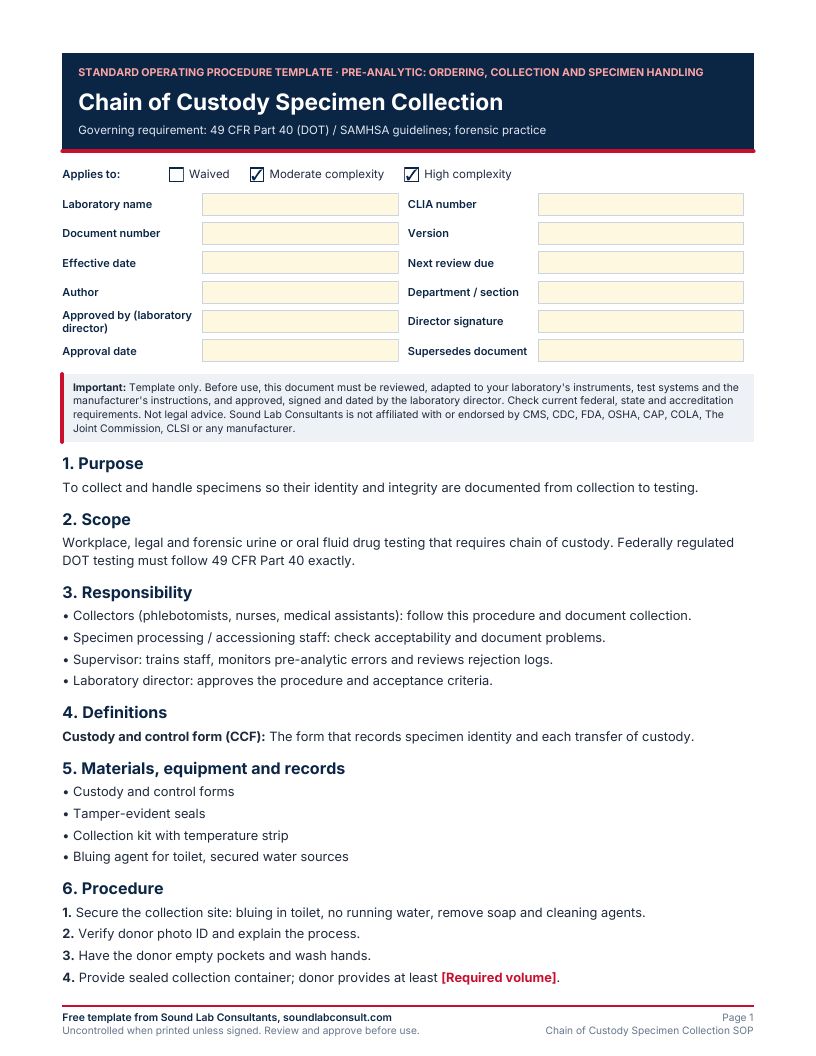
Chain of Custody Specimen Collection
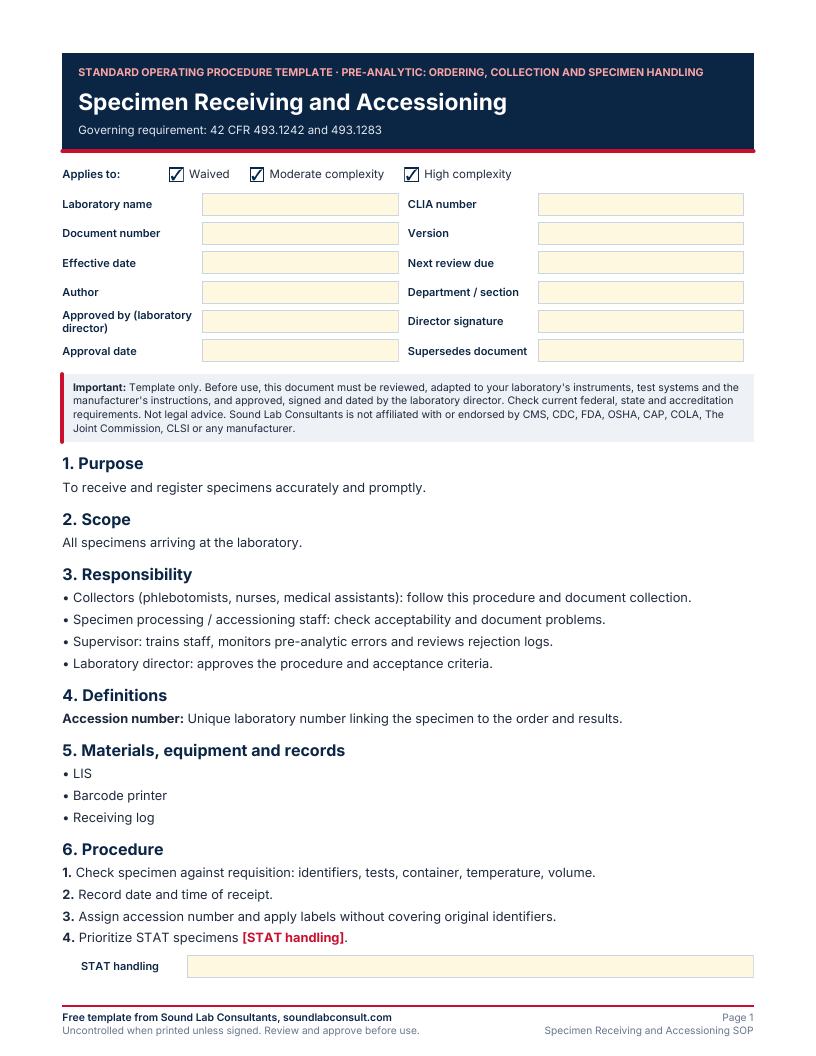
Specimen Receiving and Accessioning
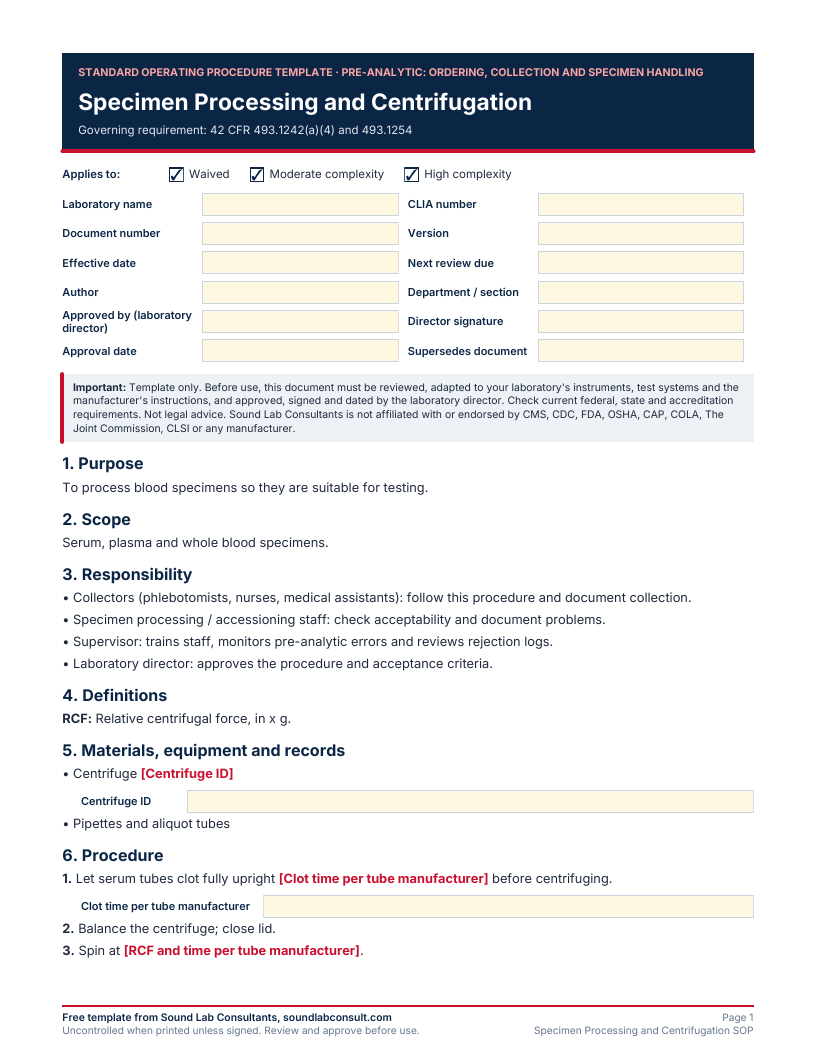
Specimen Processing and Centrifugation
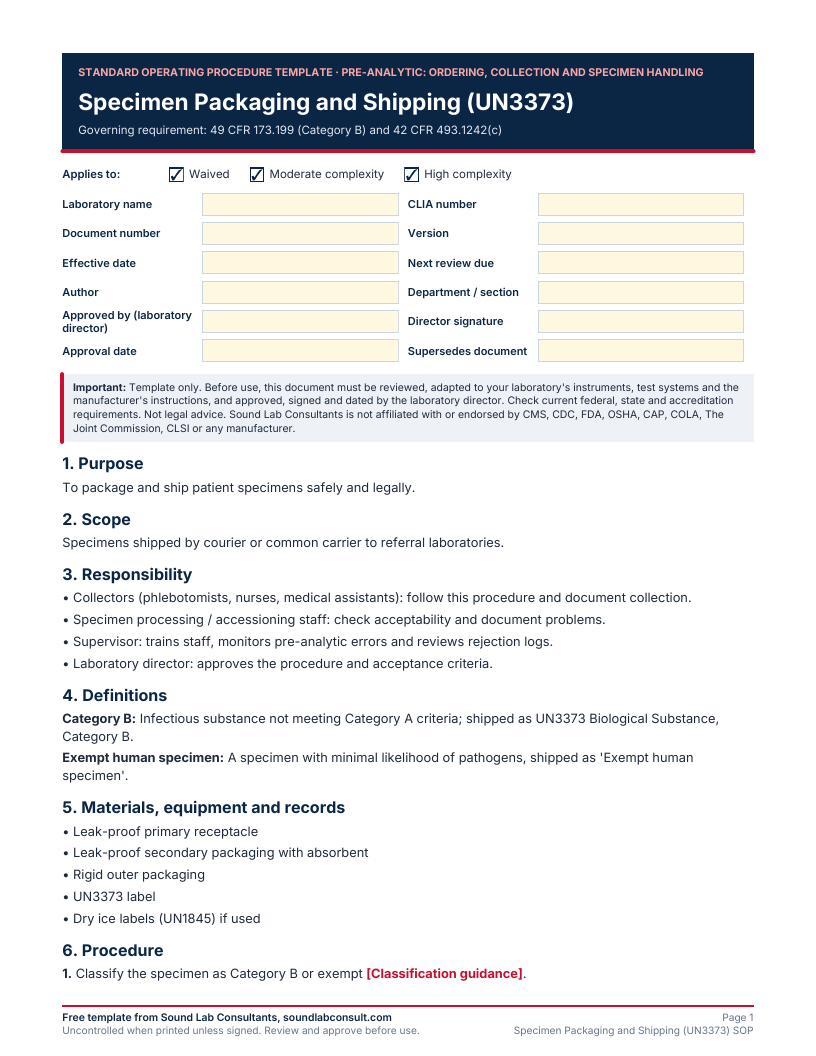
Specimen Packaging and Shipping (UN3373)
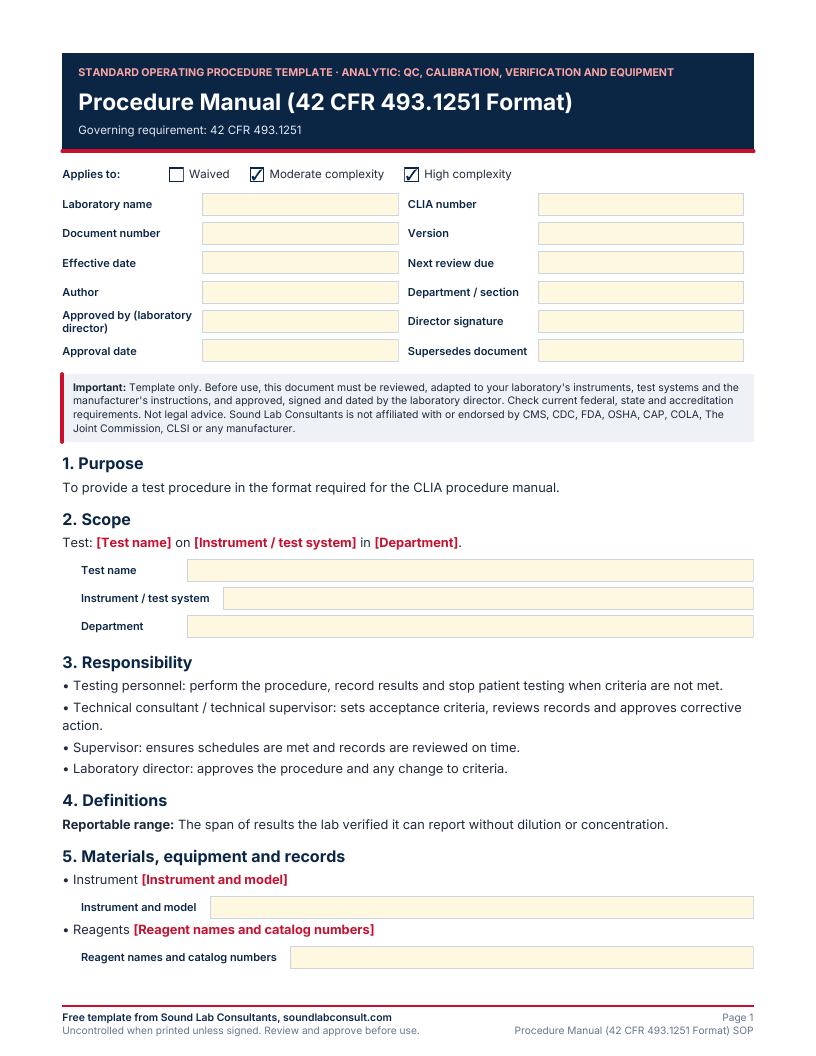
Procedure Manual (42 CFR 493.1251 Format)
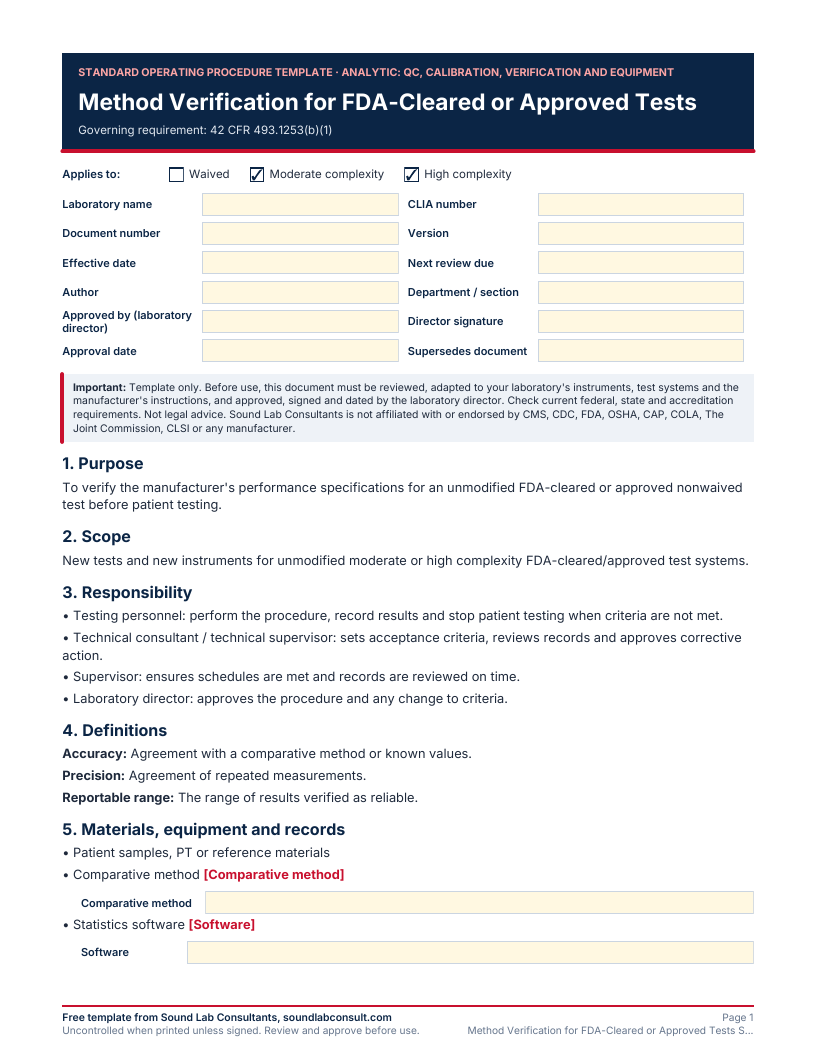
Method Verification for FDA-Cleared or Approved Tests
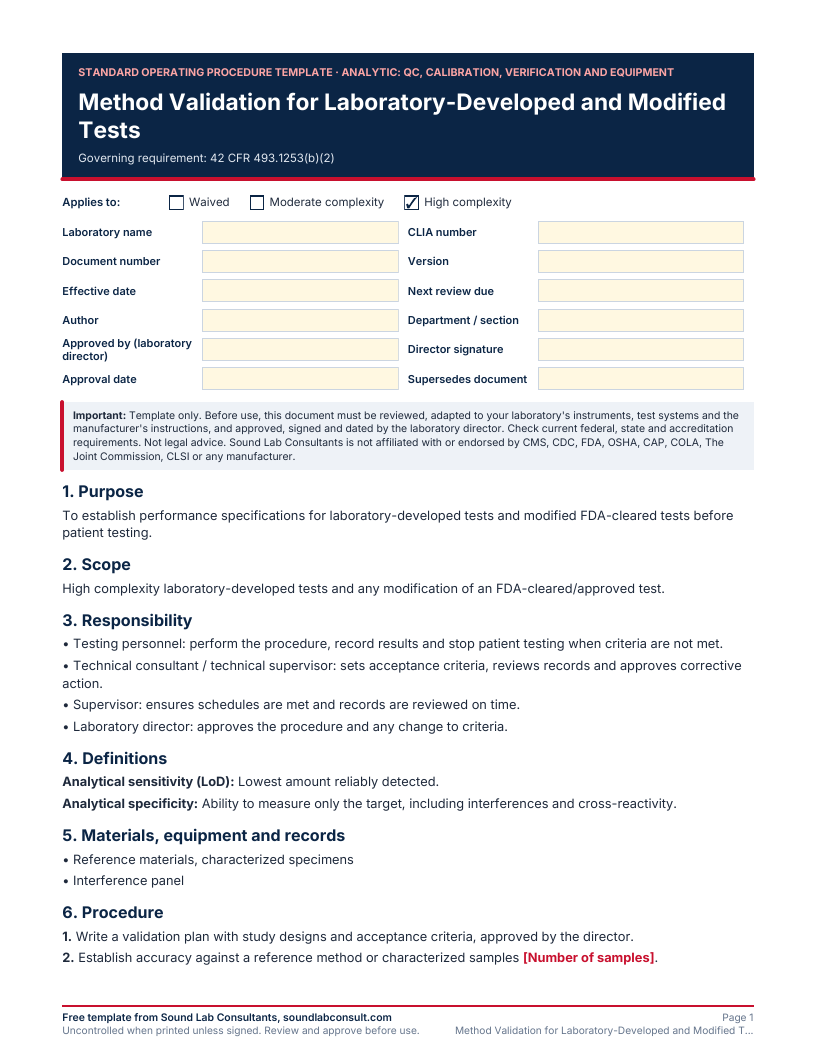
Method Validation for Laboratory-Developed and Modified Tests
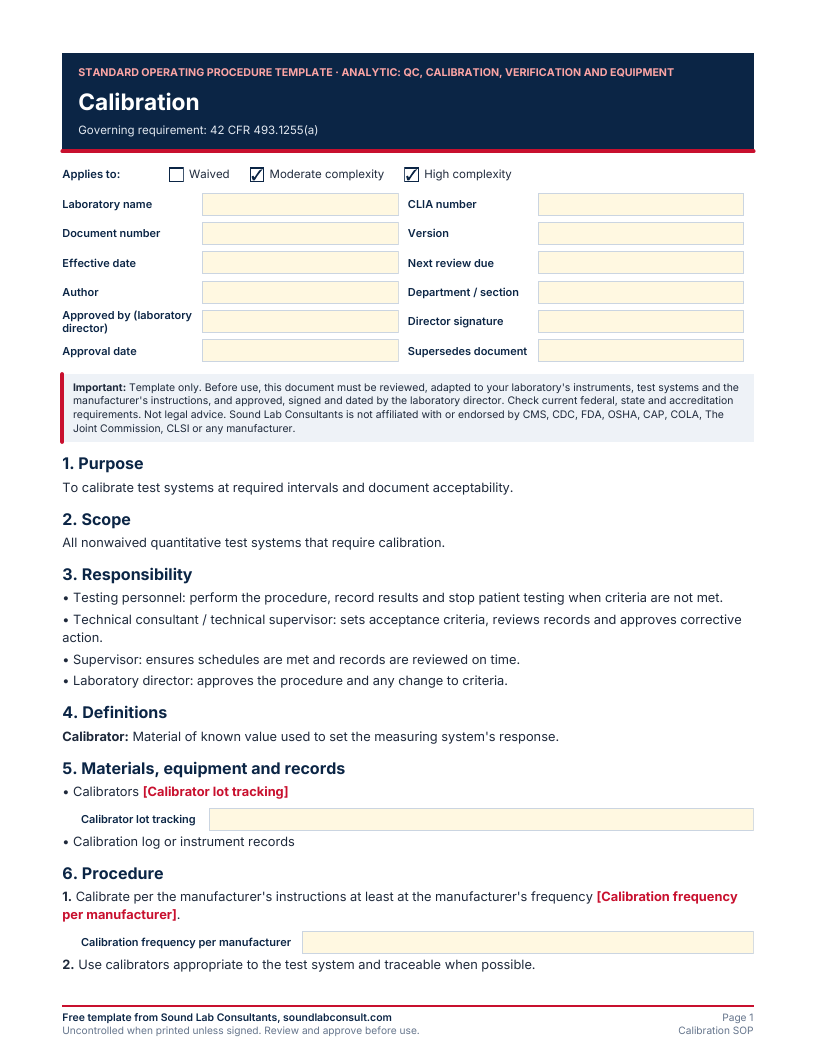
Calibration
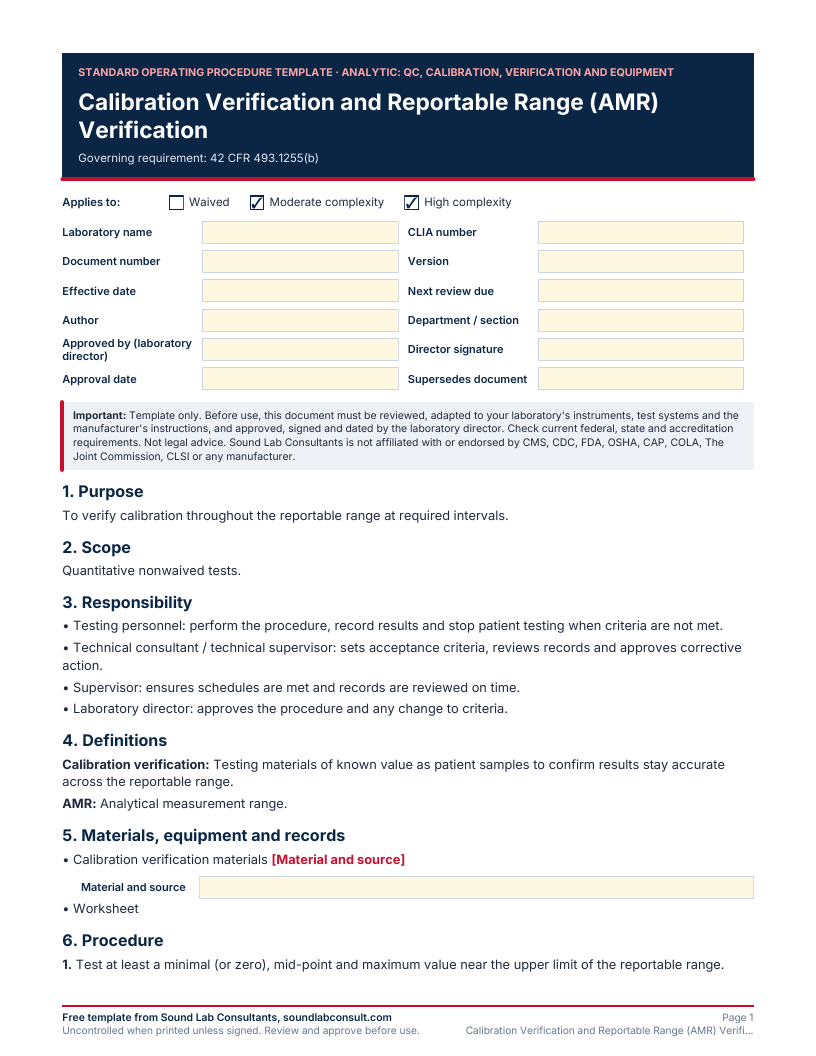
Calibration Verification and Reportable Range (AMR) Verification
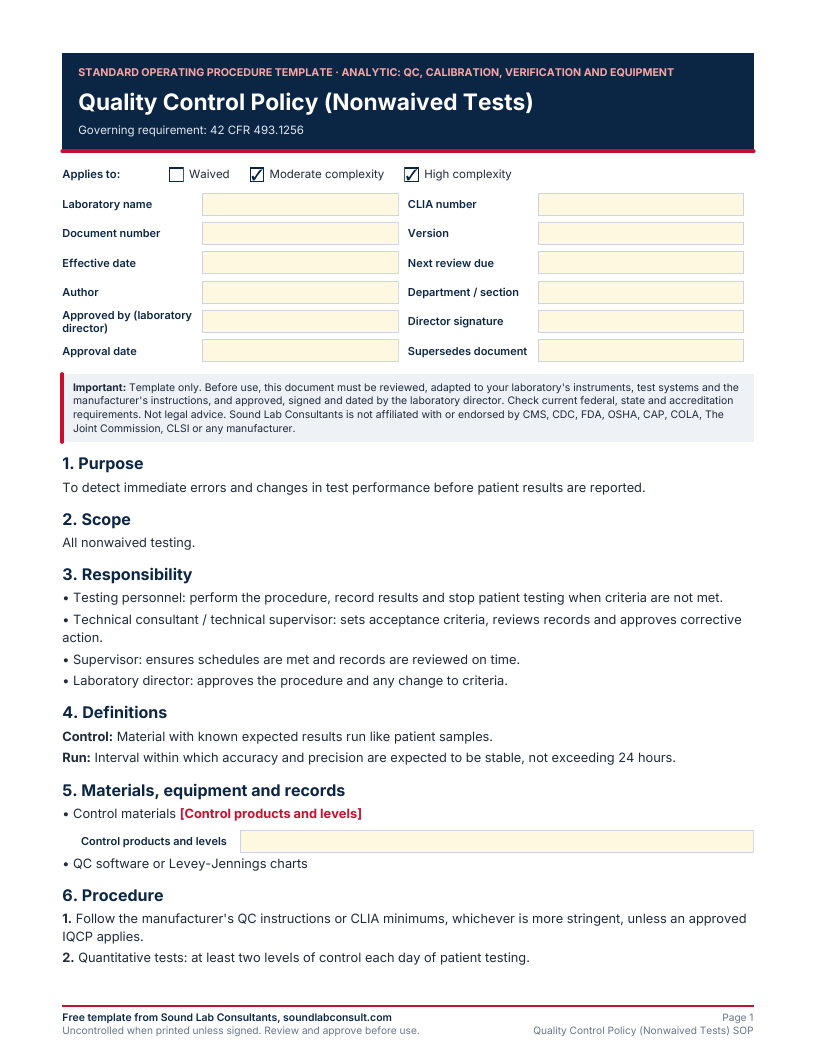
Quality Control Policy (Nonwaived Tests)
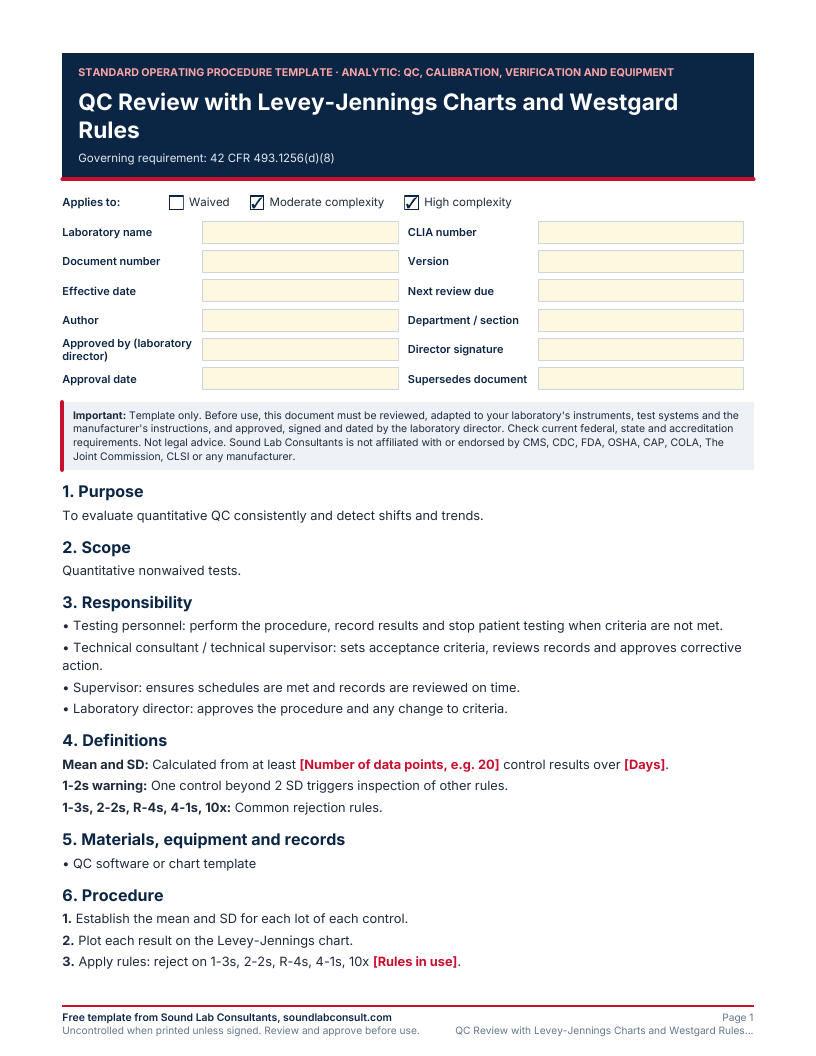
QC Review with Levey-Jennings Charts and Westgard Rules
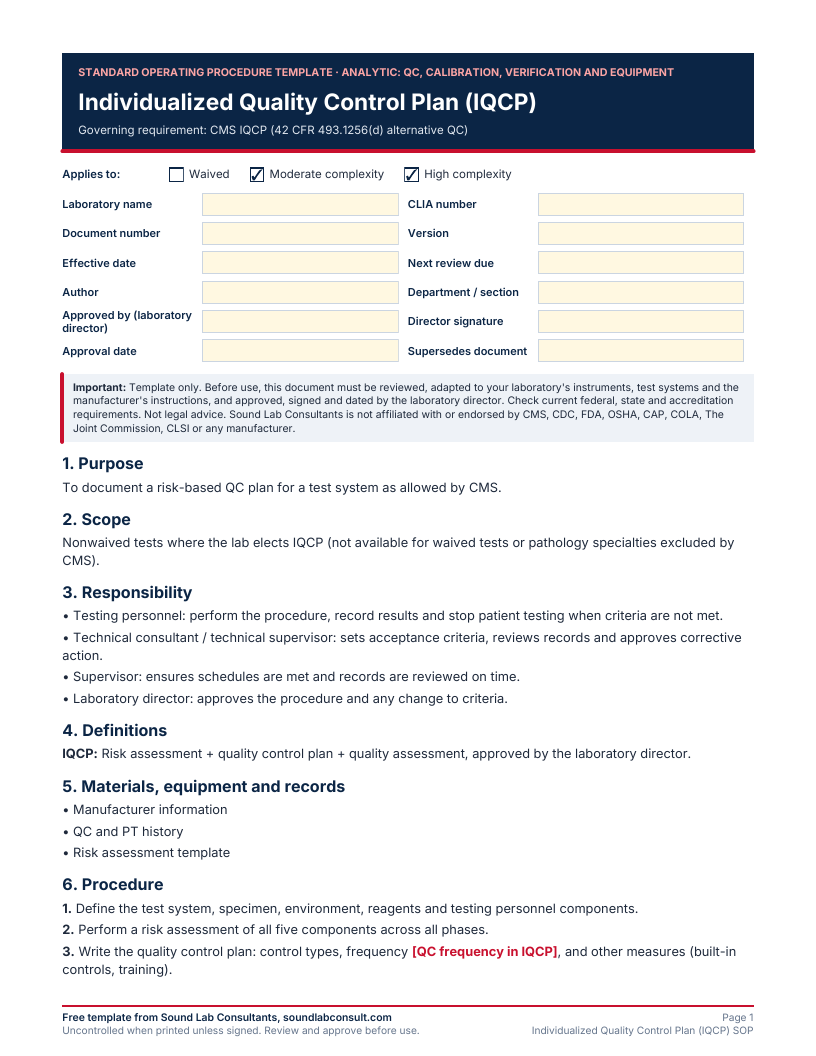
Individualized Quality Control Plan (IQCP)
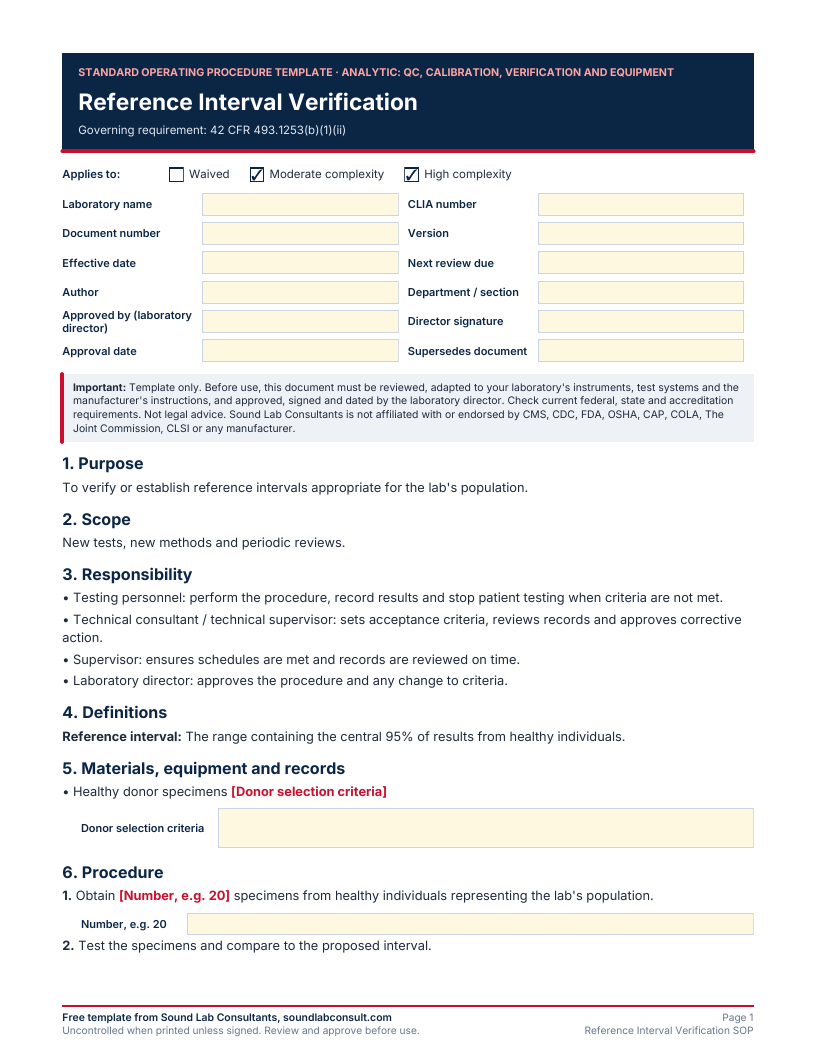
Reference Interval Verification
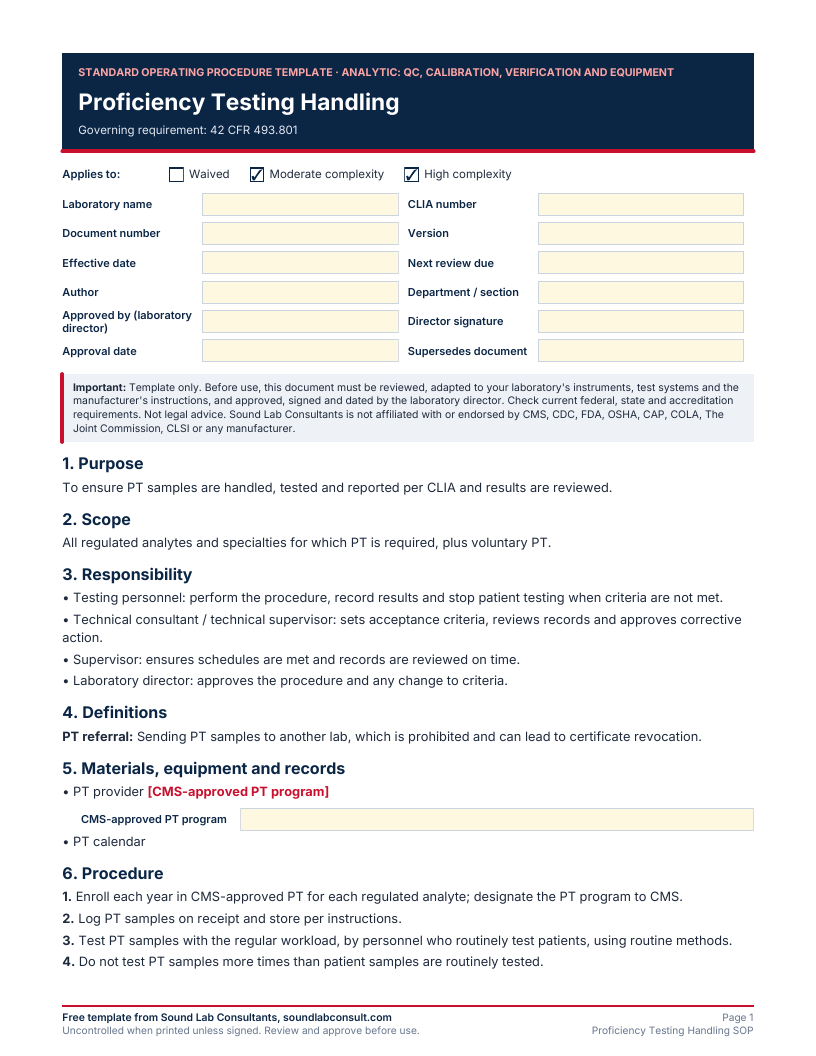
Proficiency Testing Handling
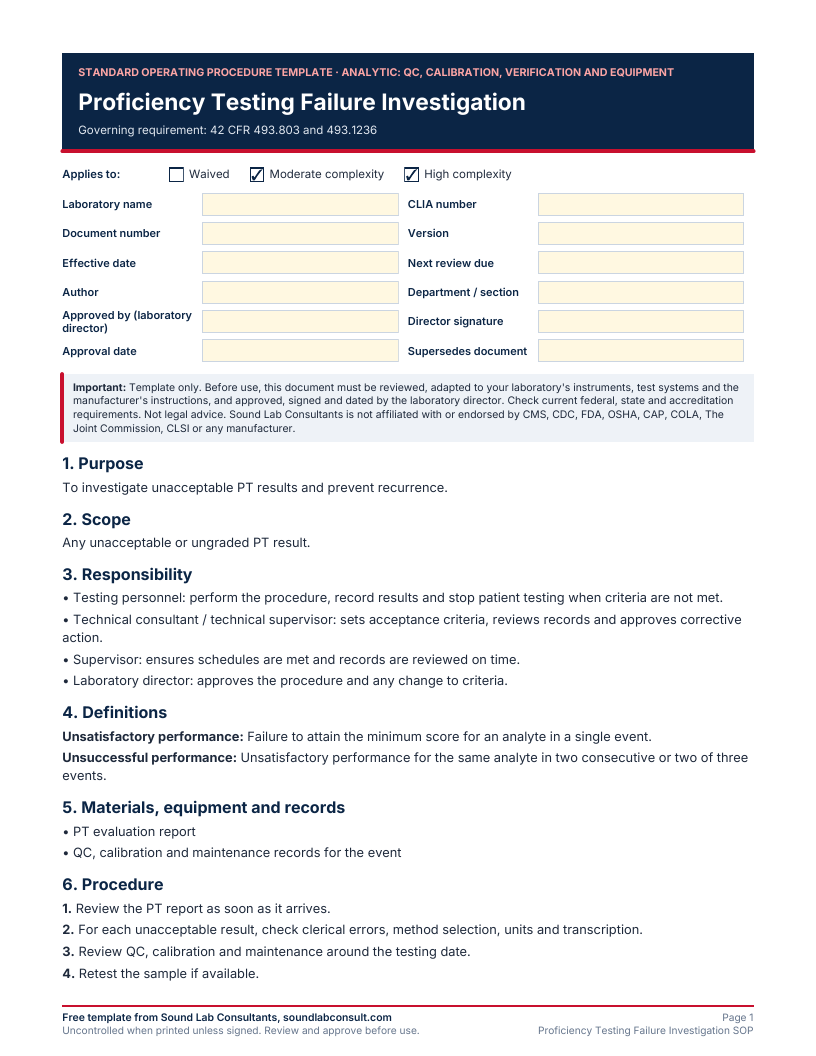
Proficiency Testing Failure Investigation
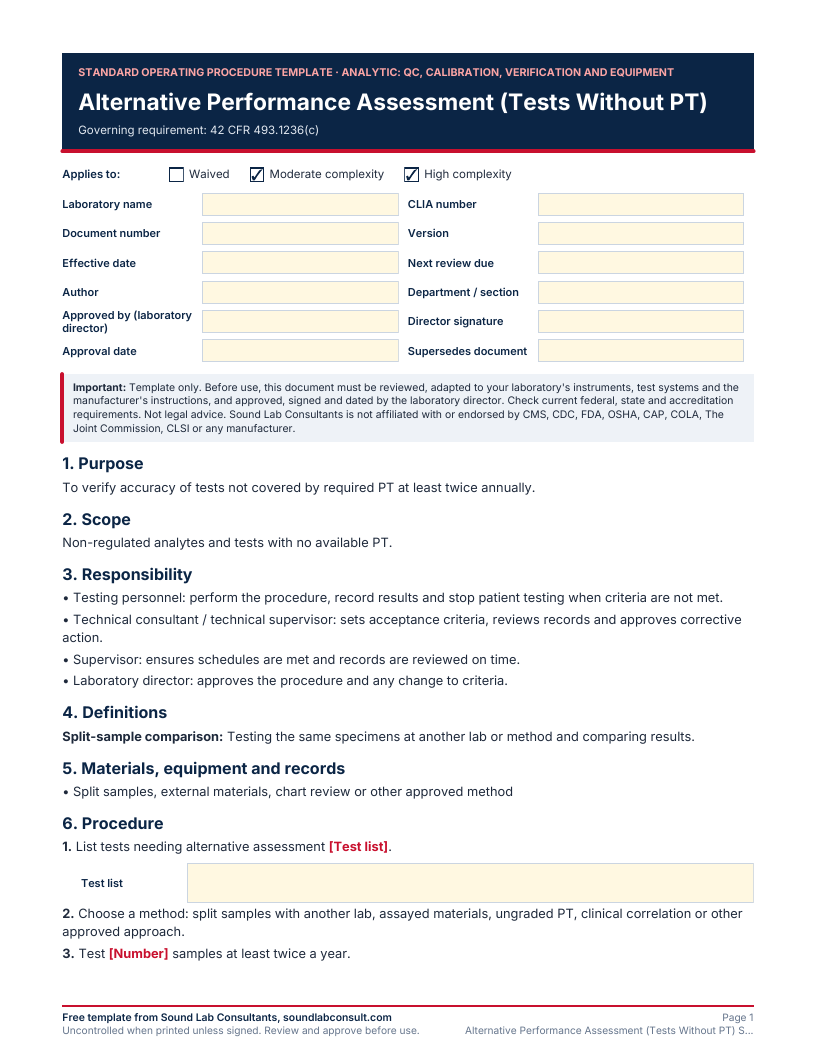
Alternative Performance Assessment (Tests Without PT)
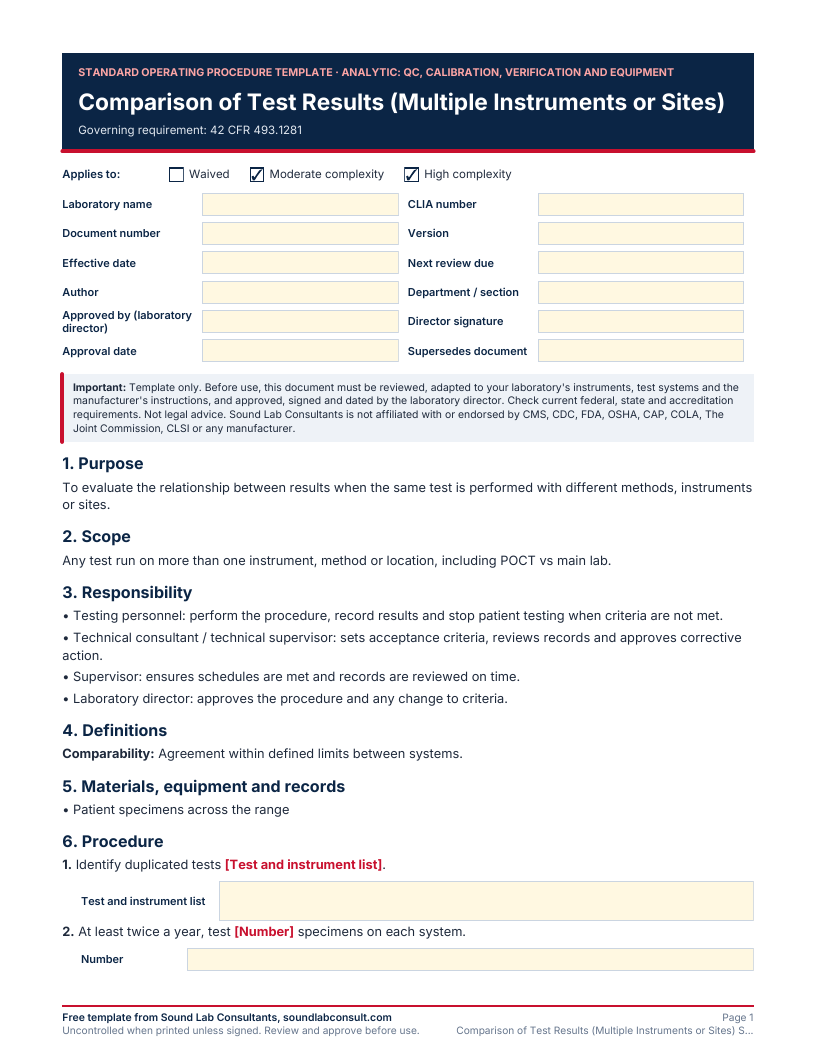
Comparison of Test Results (Multiple Instruments or Sites)
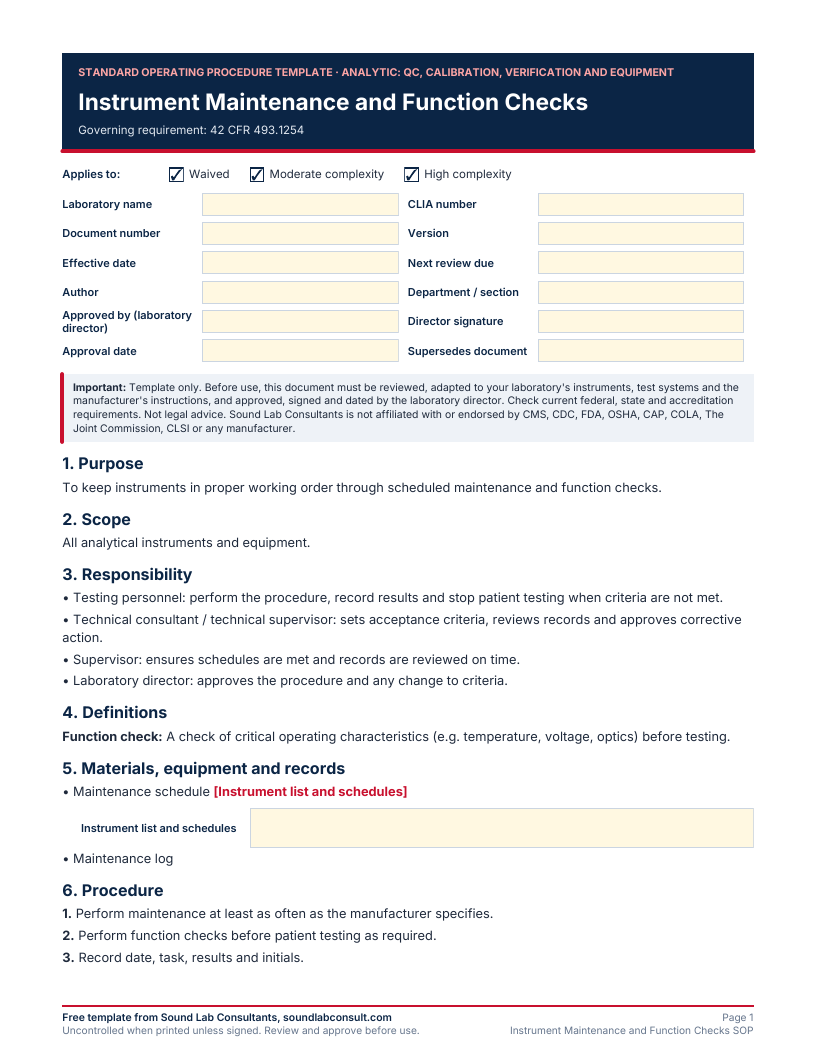
Instrument Maintenance and Function Checks
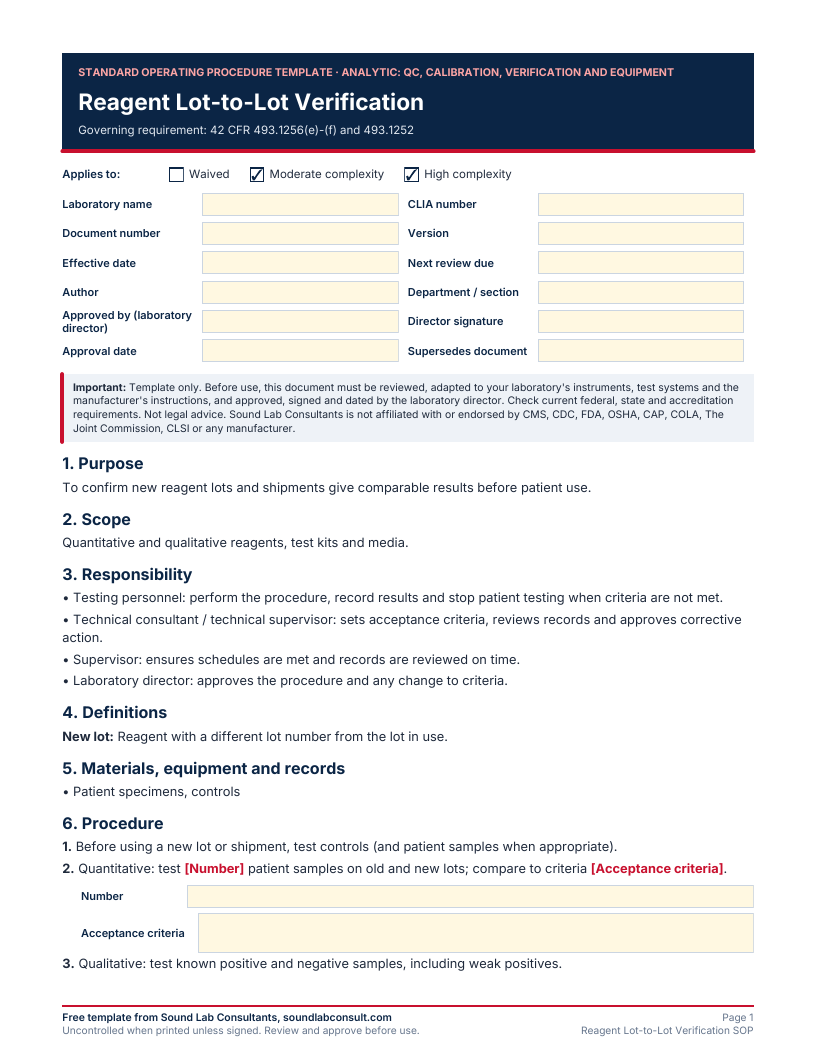
Reagent Lot-to-Lot Verification
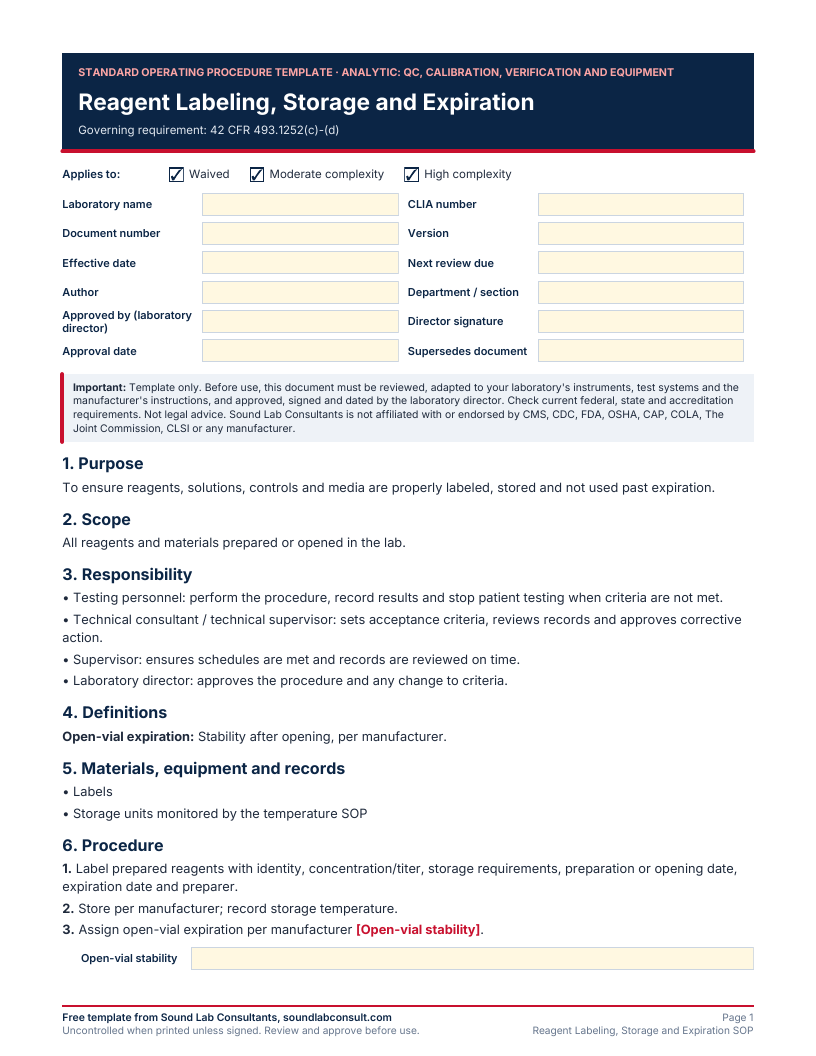
Reagent Labeling, Storage and Expiration
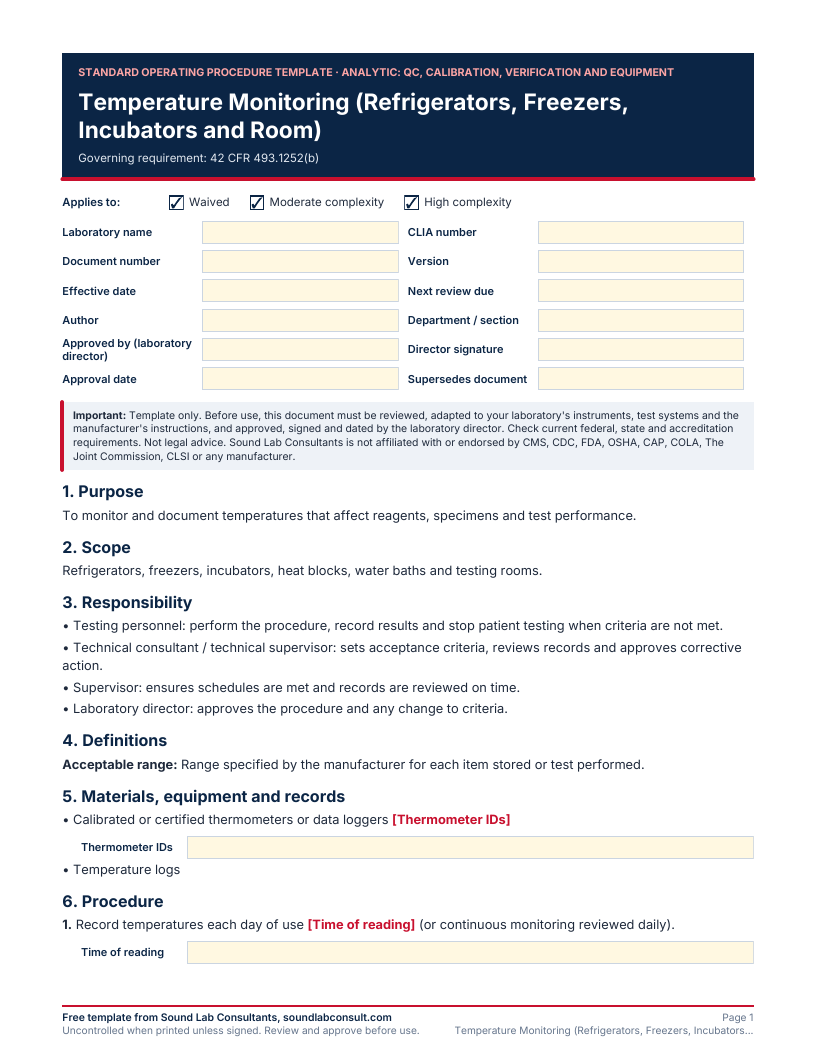
Temperature Monitoring (Refrigerators, Freezers, Incubators and Room)
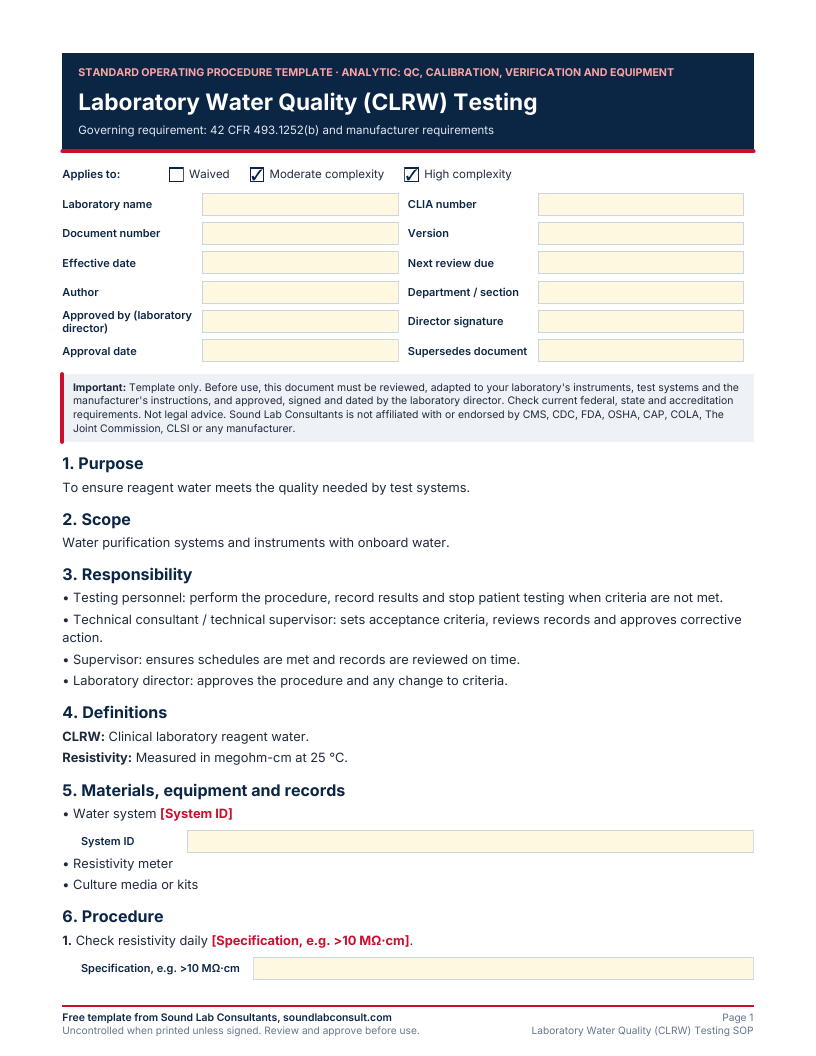
Laboratory Water Quality (CLRW) Testing
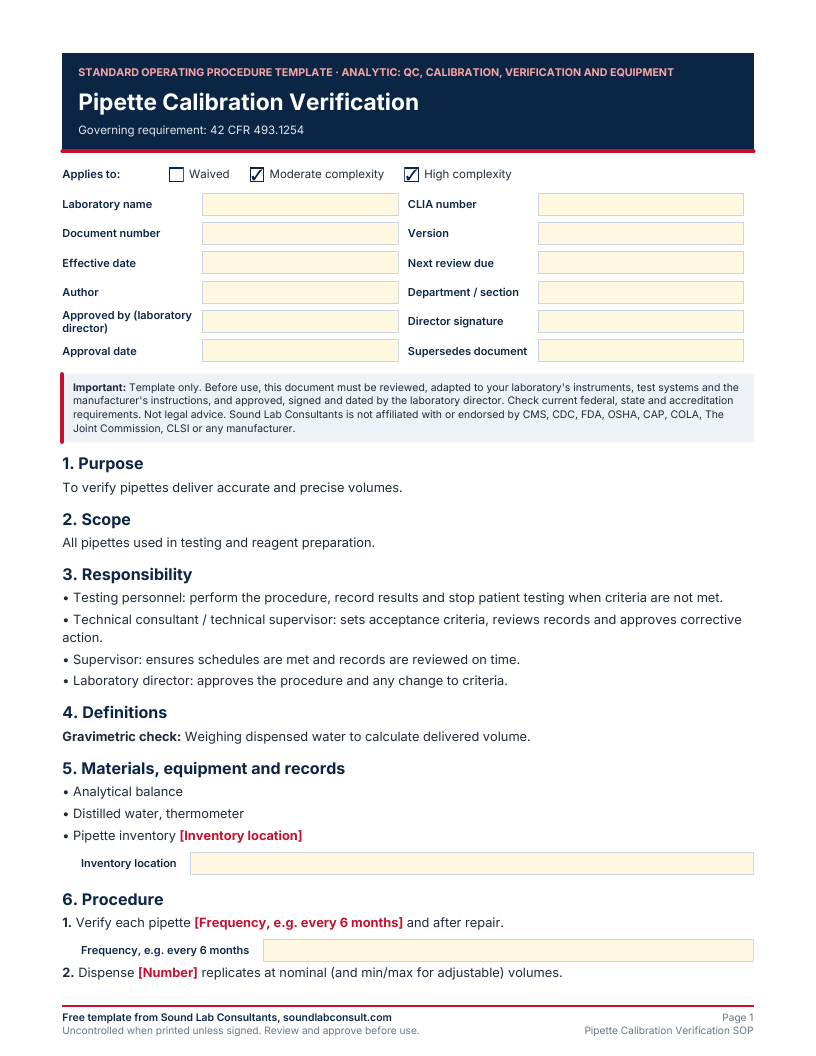
Pipette Calibration Verification
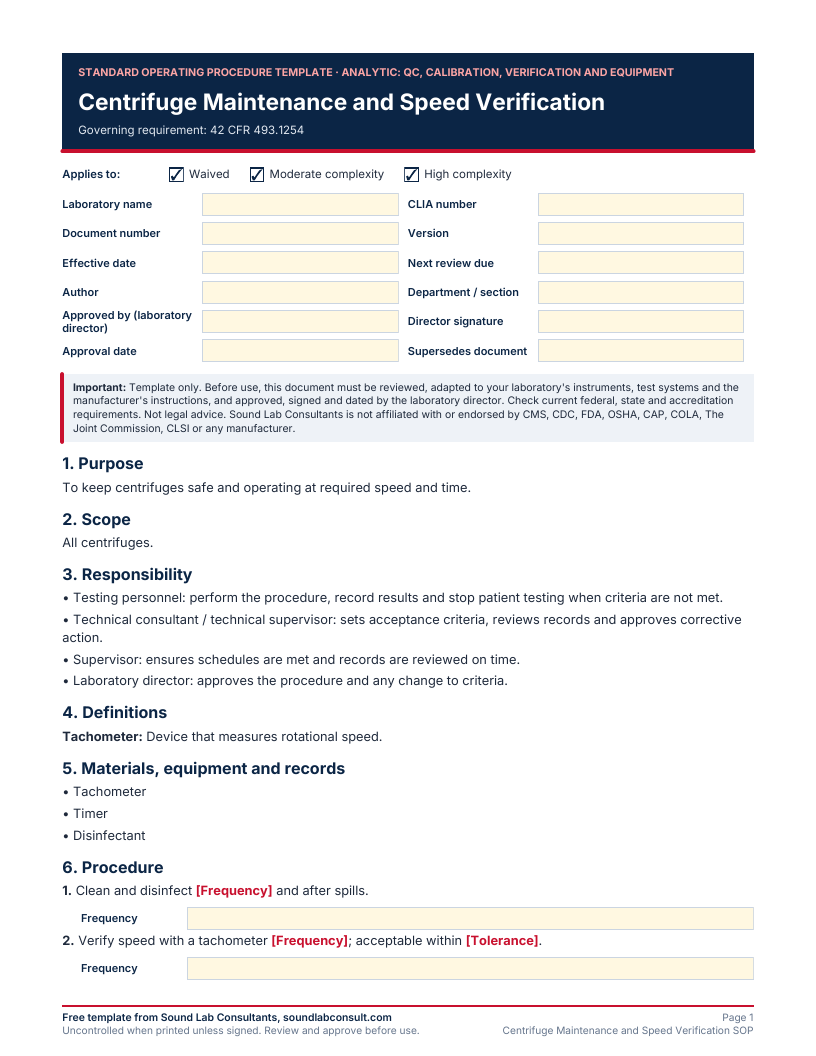
Centrifuge Maintenance and Speed Verification
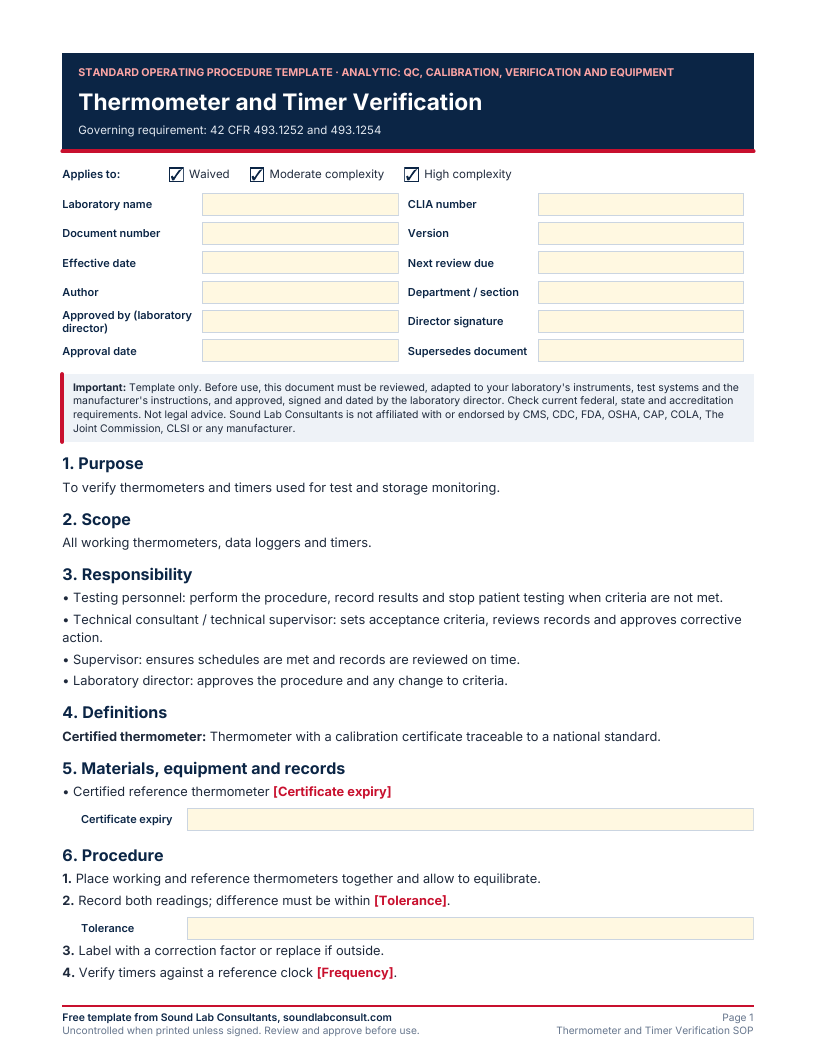
Thermometer and Timer Verification
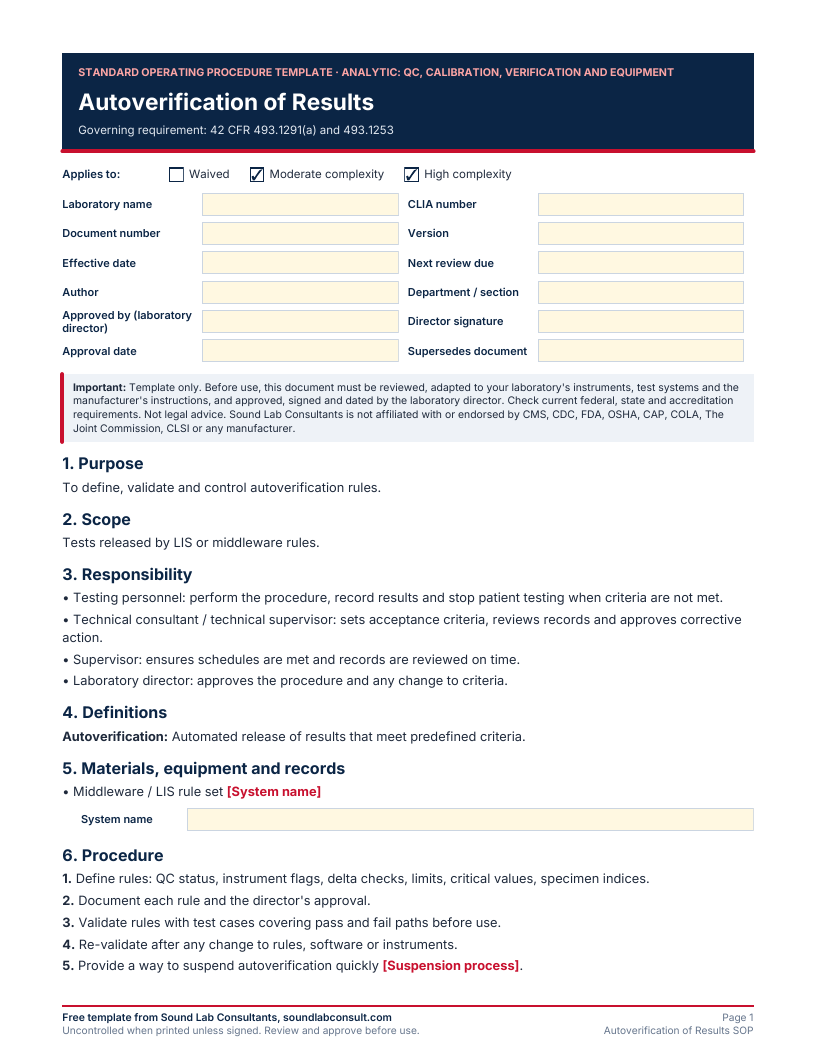
Autoverification of Results
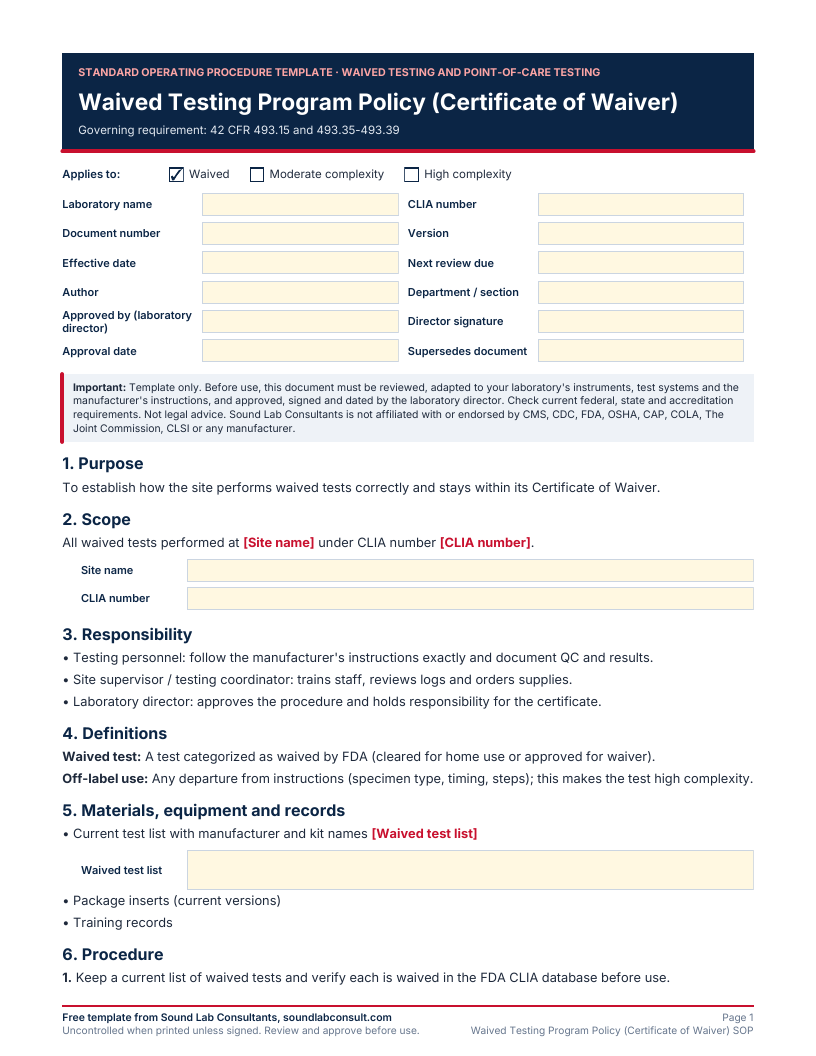
Waived Testing Program Policy (Certificate of Waiver)
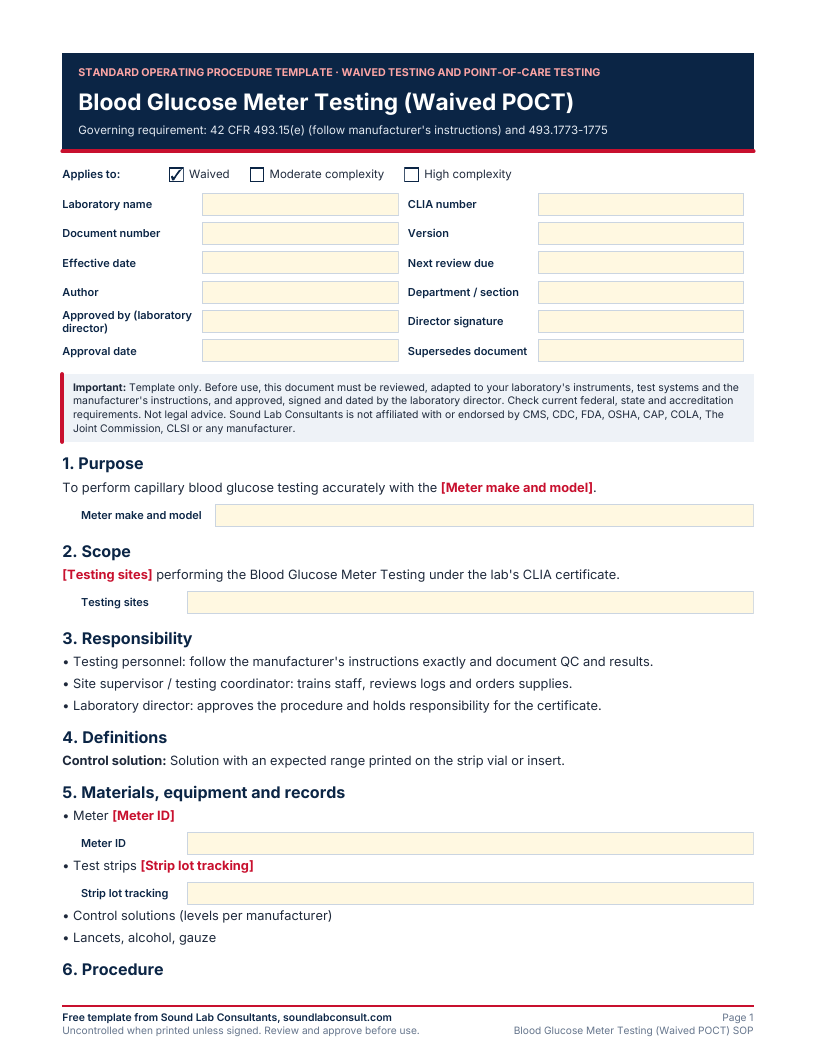
Blood Glucose Meter Testing (Waived POCT)
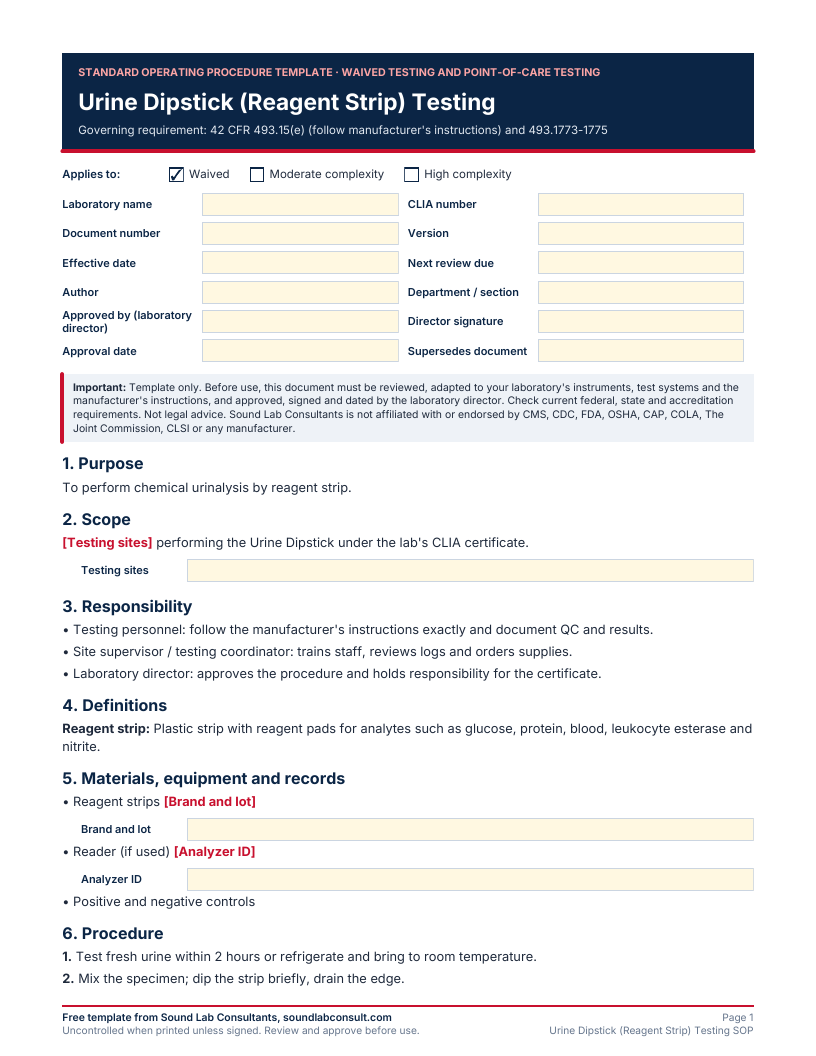
Urine Dipstick (Reagent Strip) Testing
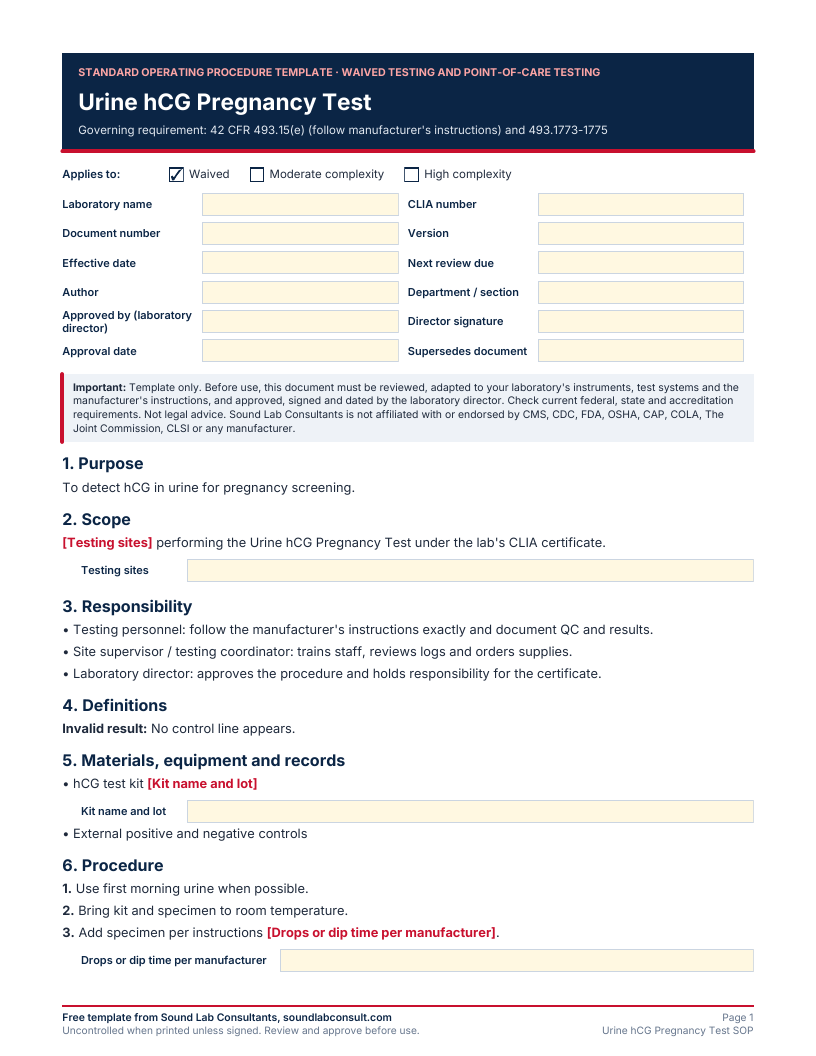
Urine hCG Pregnancy Test
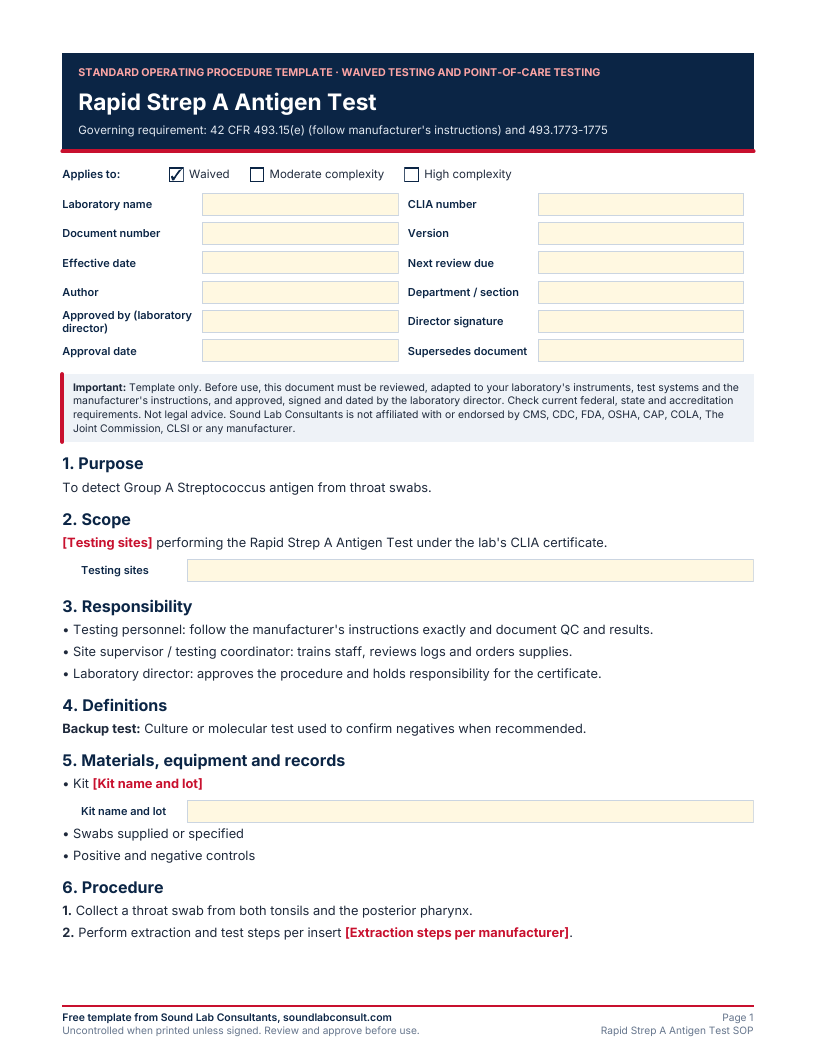
Rapid Strep A Antigen Test
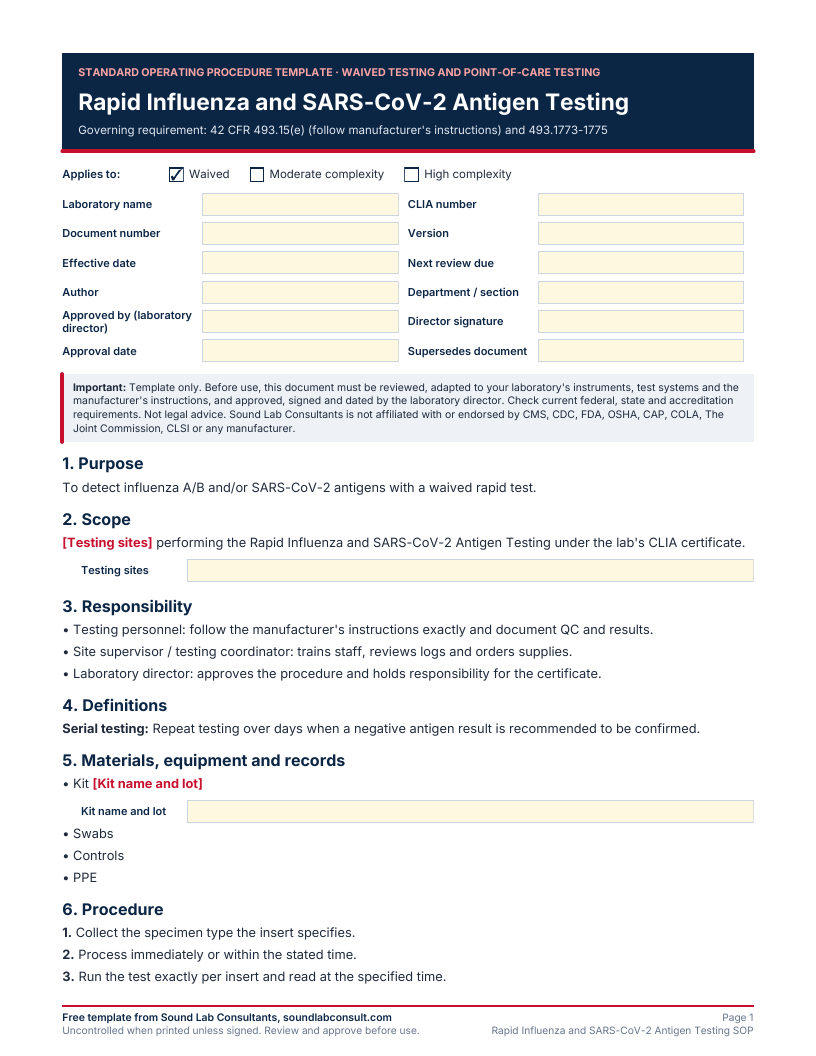
Rapid Influenza and SARS-CoV-2 Antigen Testing
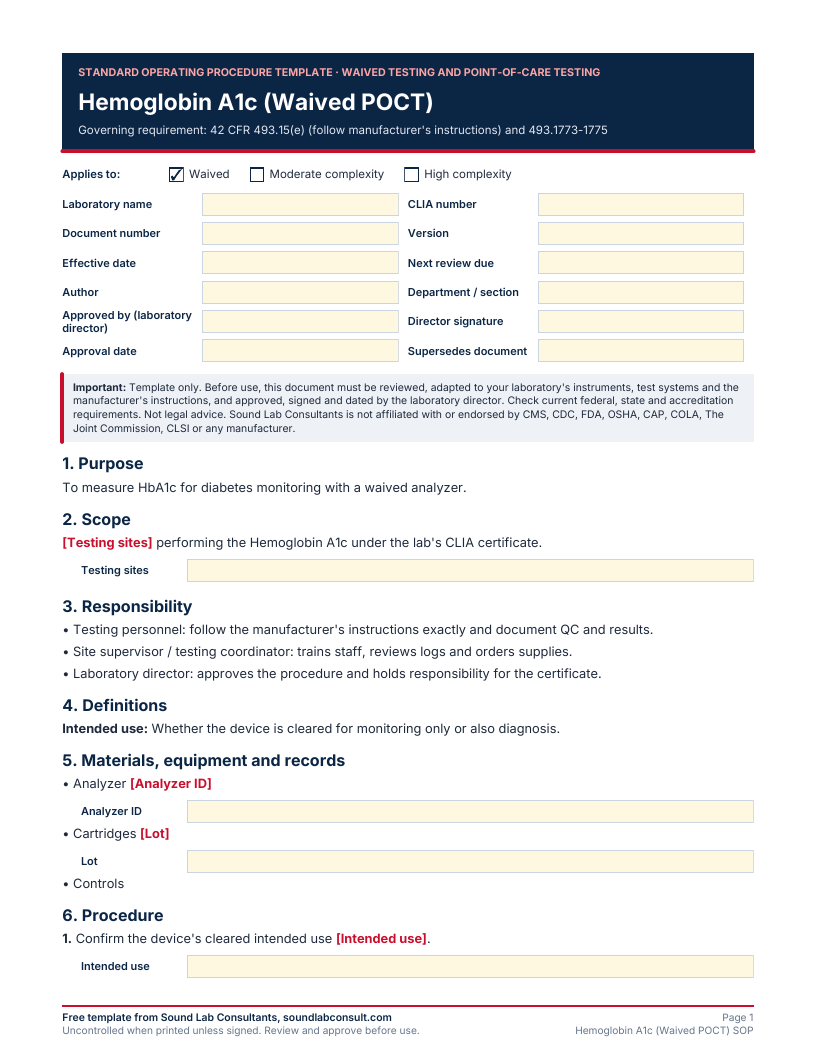
Hemoglobin A1c (Waived POCT)
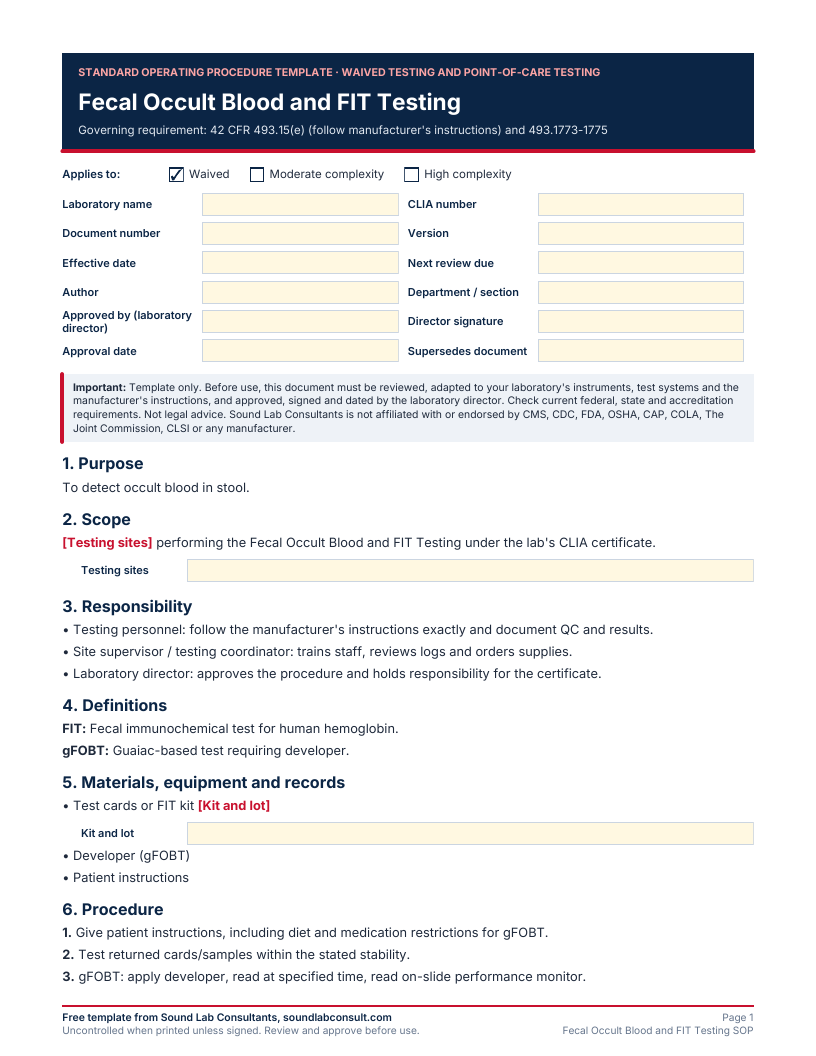
Fecal Occult Blood and FIT Testing
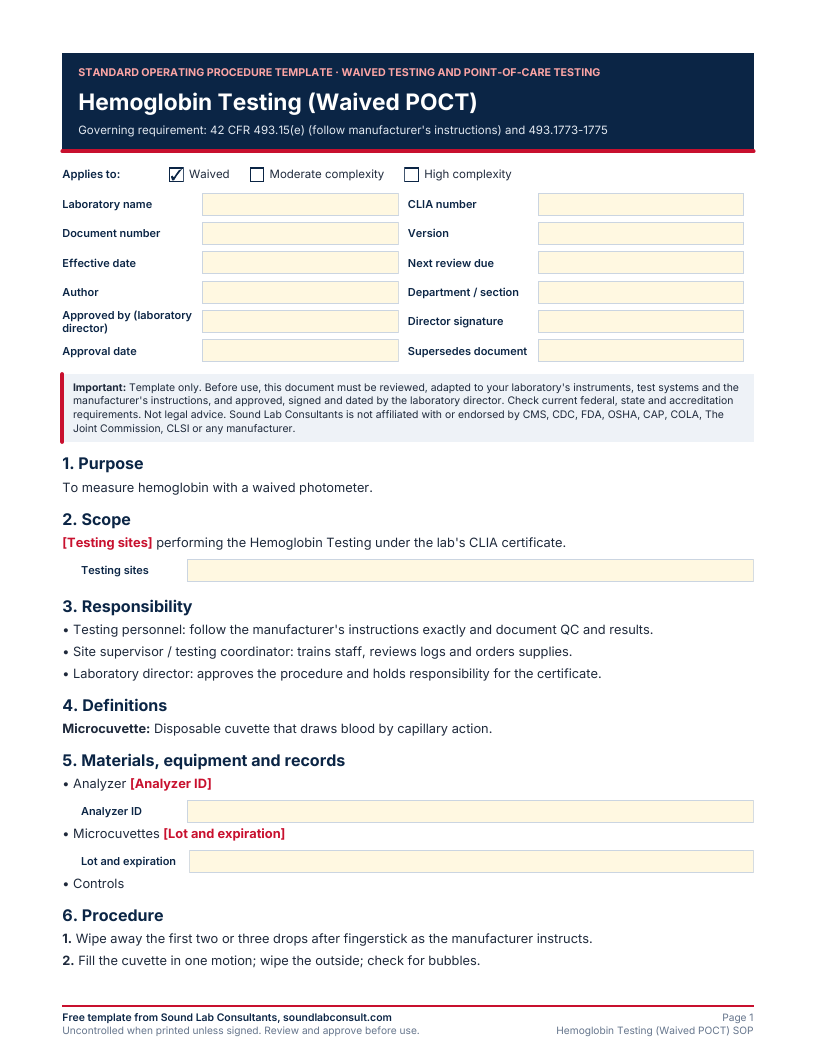
Hemoglobin Testing (Waived POCT)
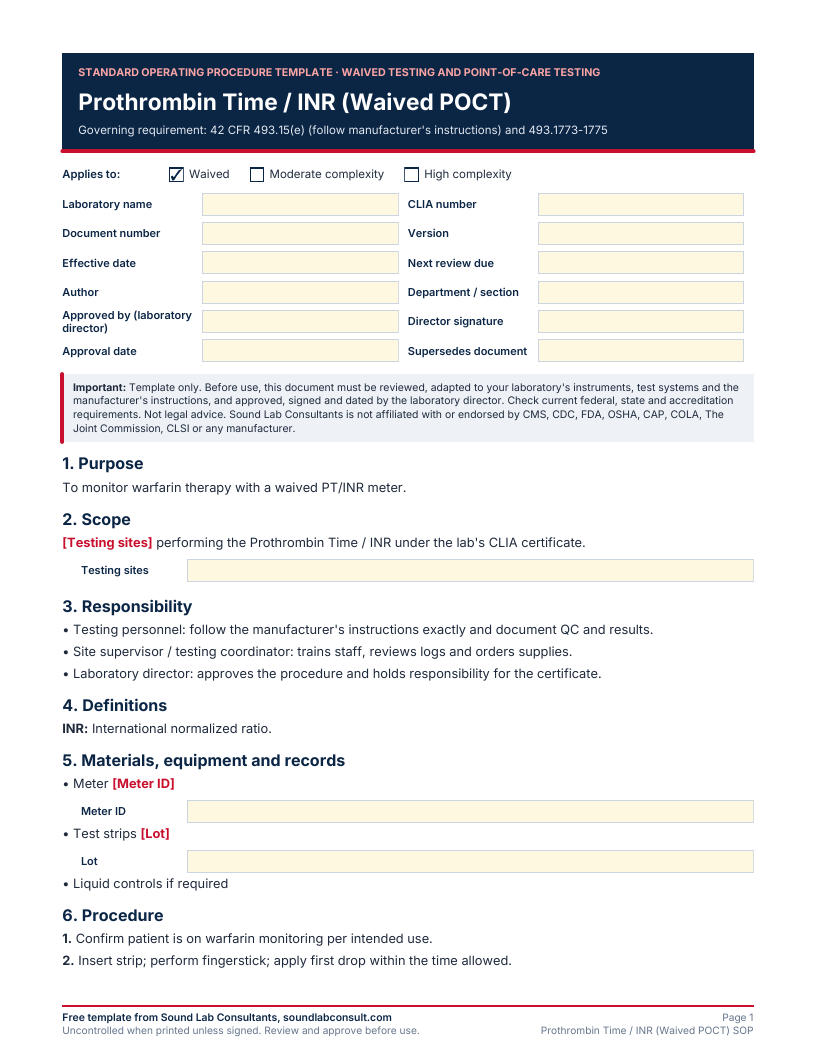
Prothrombin Time / INR (Waived POCT)
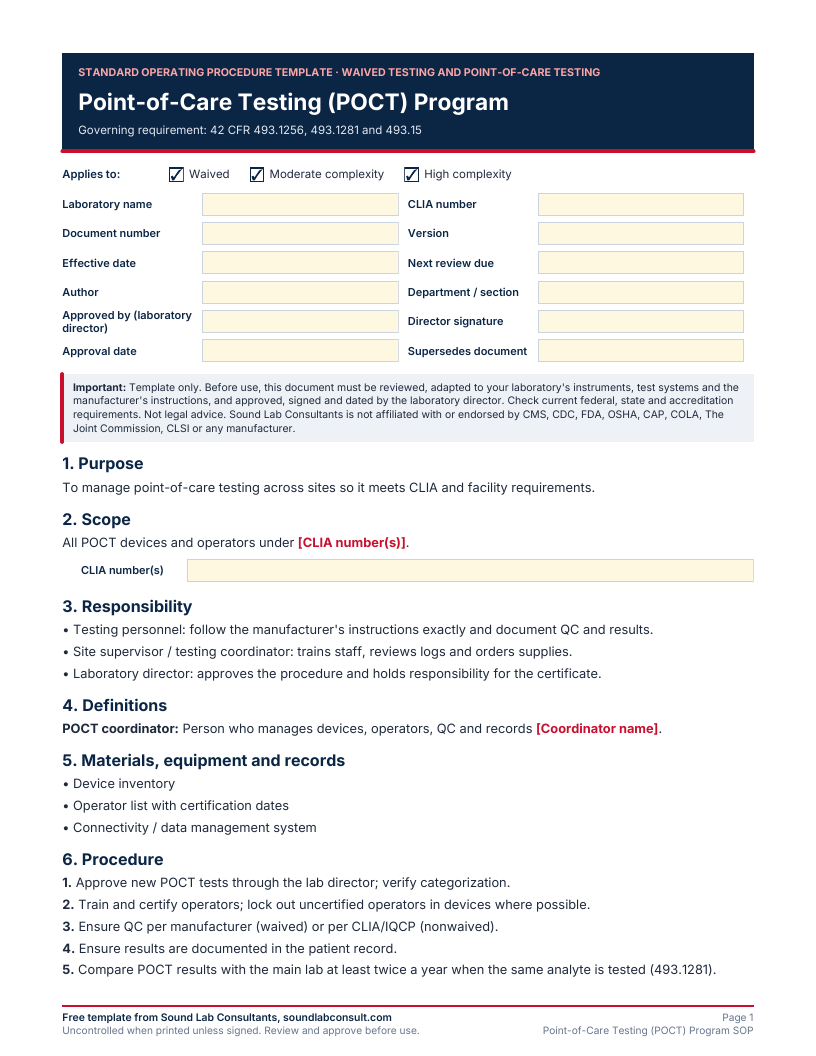
Point-of-Care Testing (POCT) Program
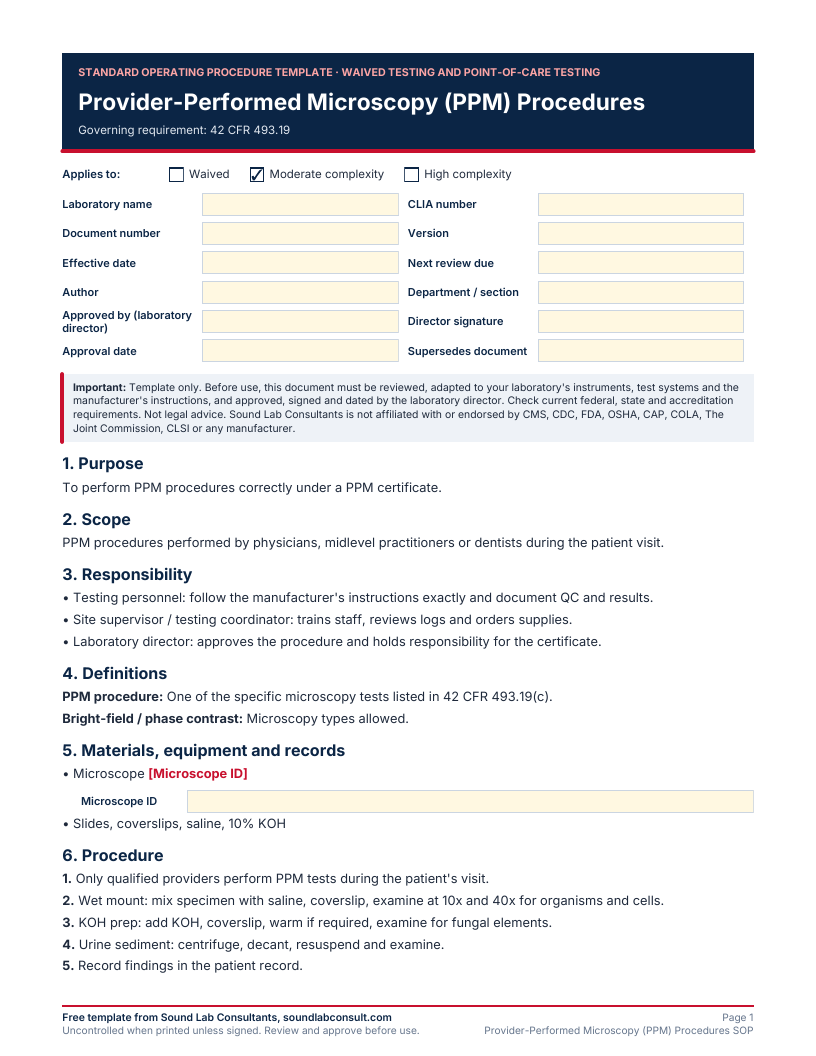
Provider-Performed Microscopy (PPM) Procedures
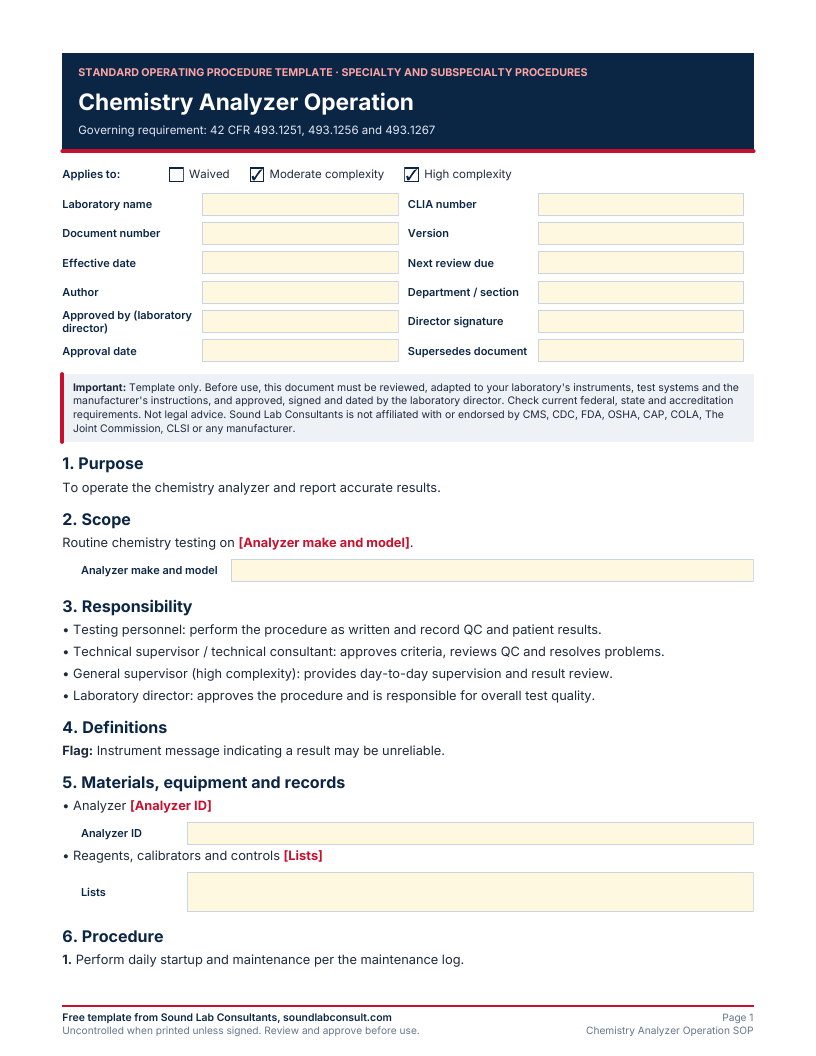
Chemistry Analyzer Operation
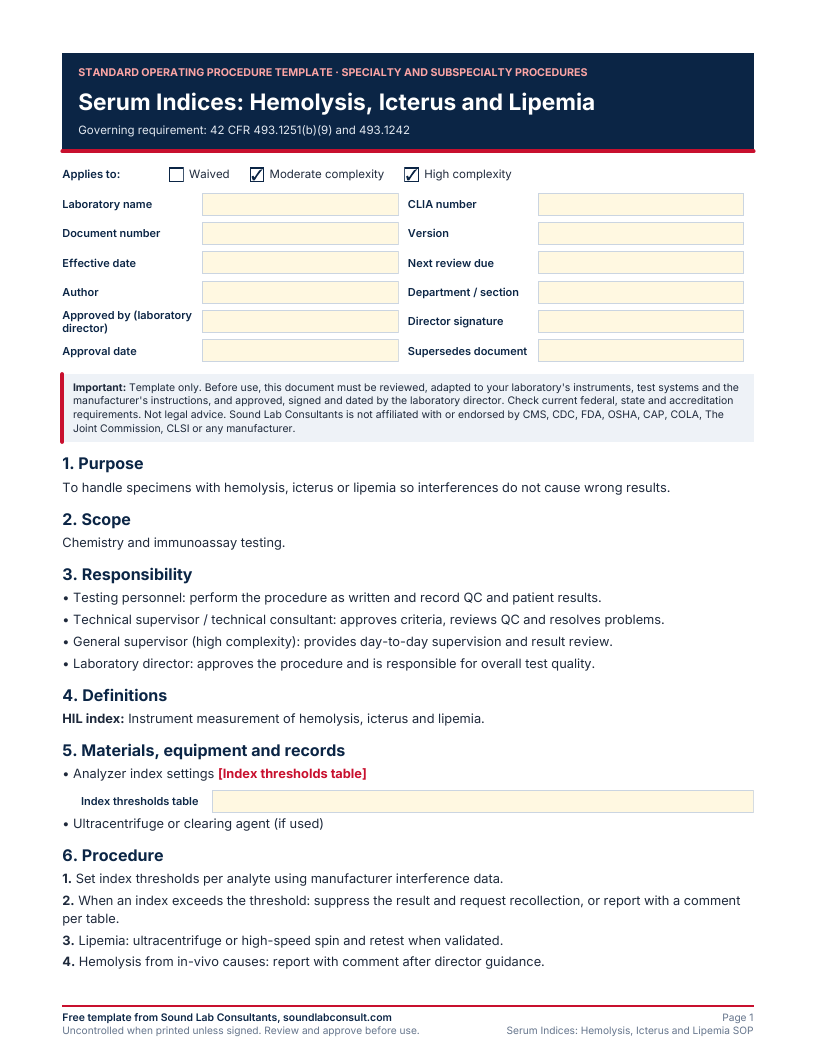
Serum Indices: Hemolysis, Icterus and Lipemia
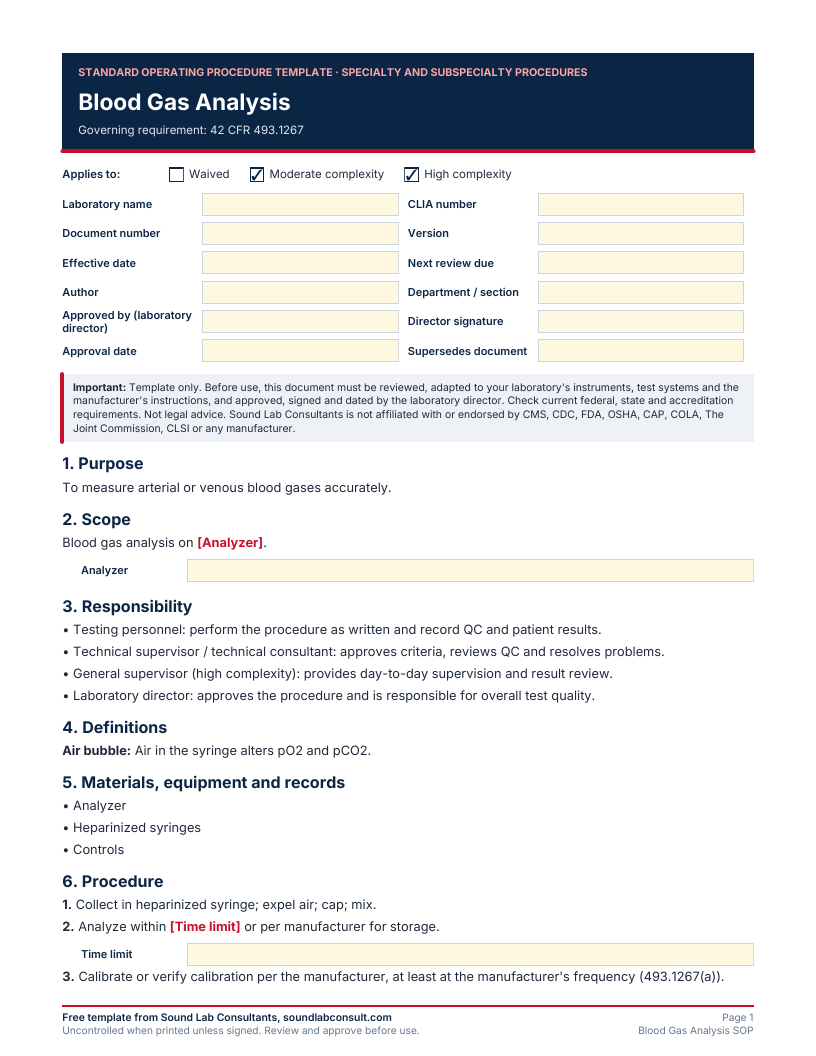
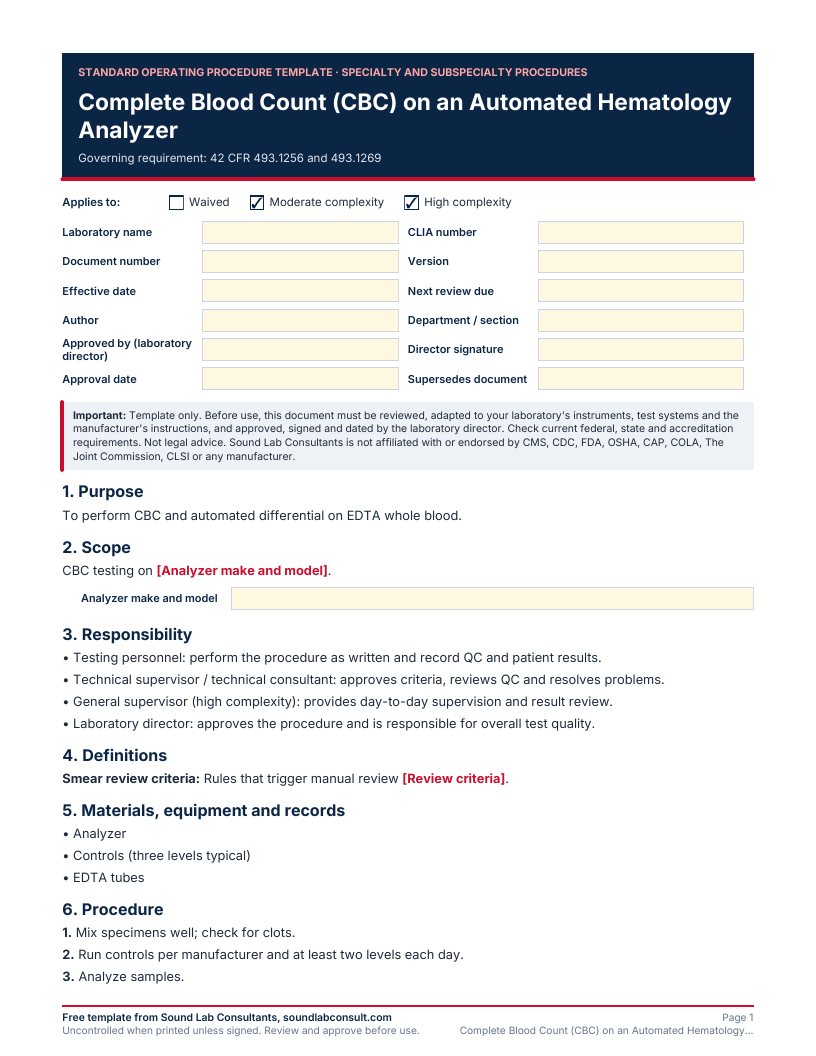
Complete Blood Count (CBC) on an Automated Hematology Analyzer
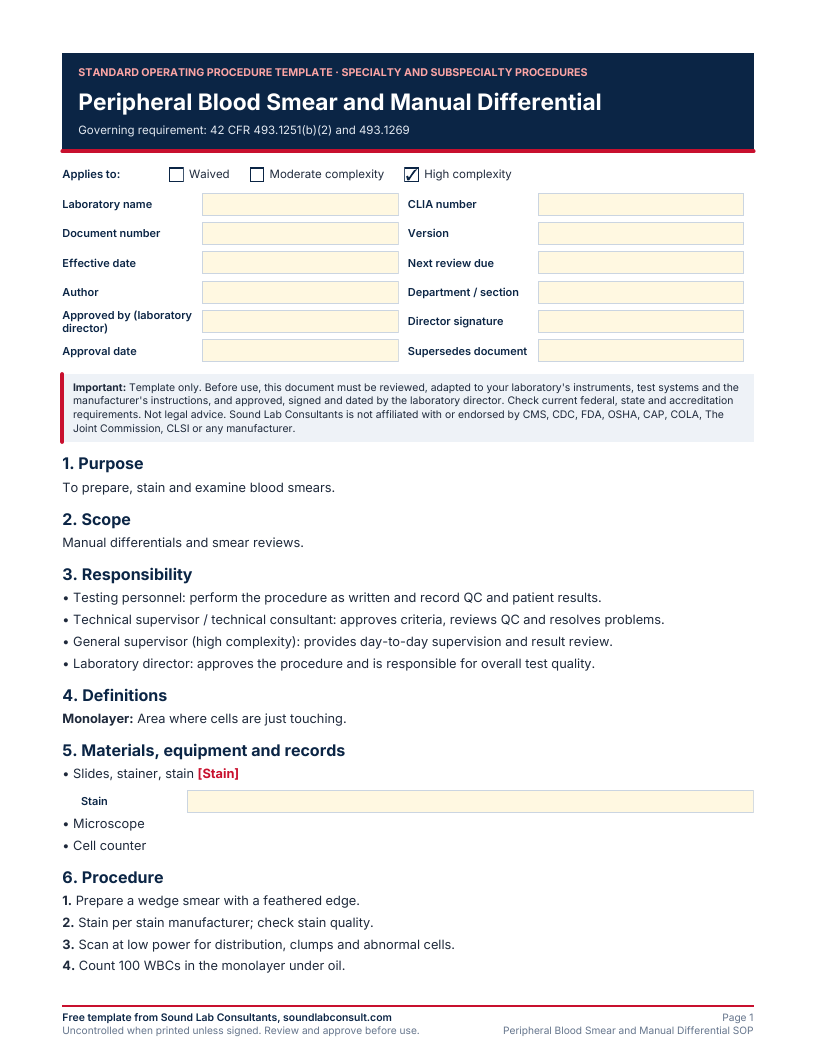
Peripheral Blood Smear and Manual Differential
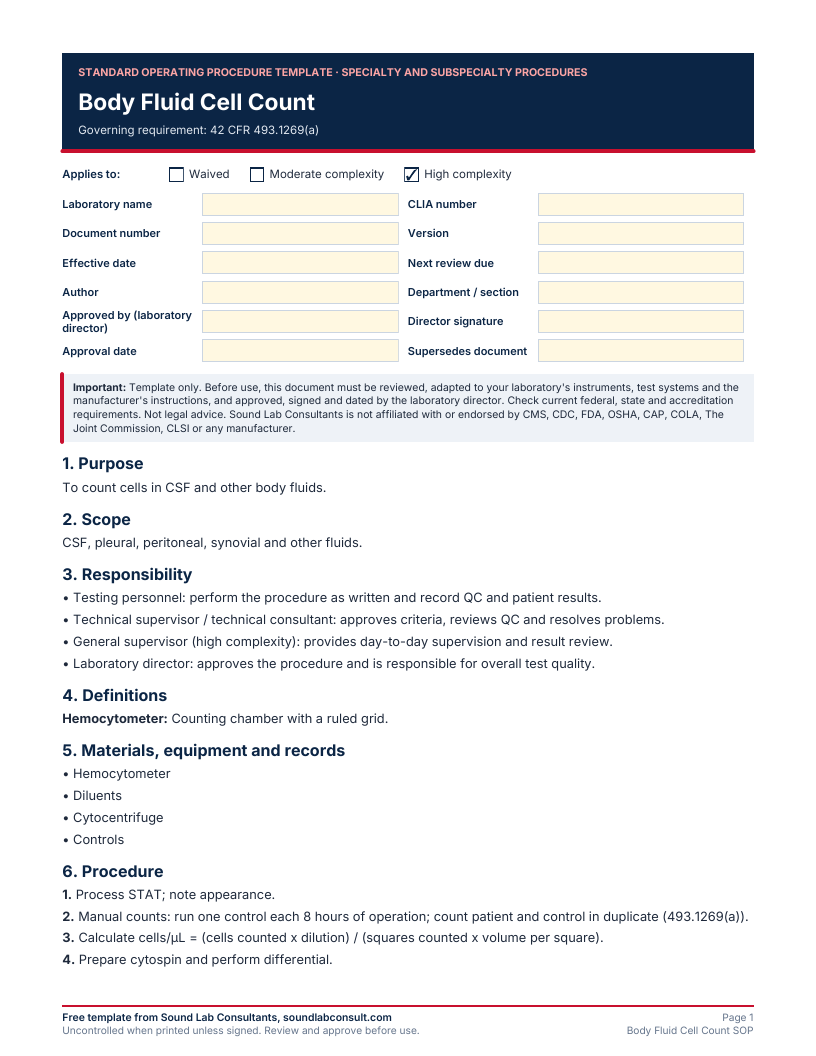
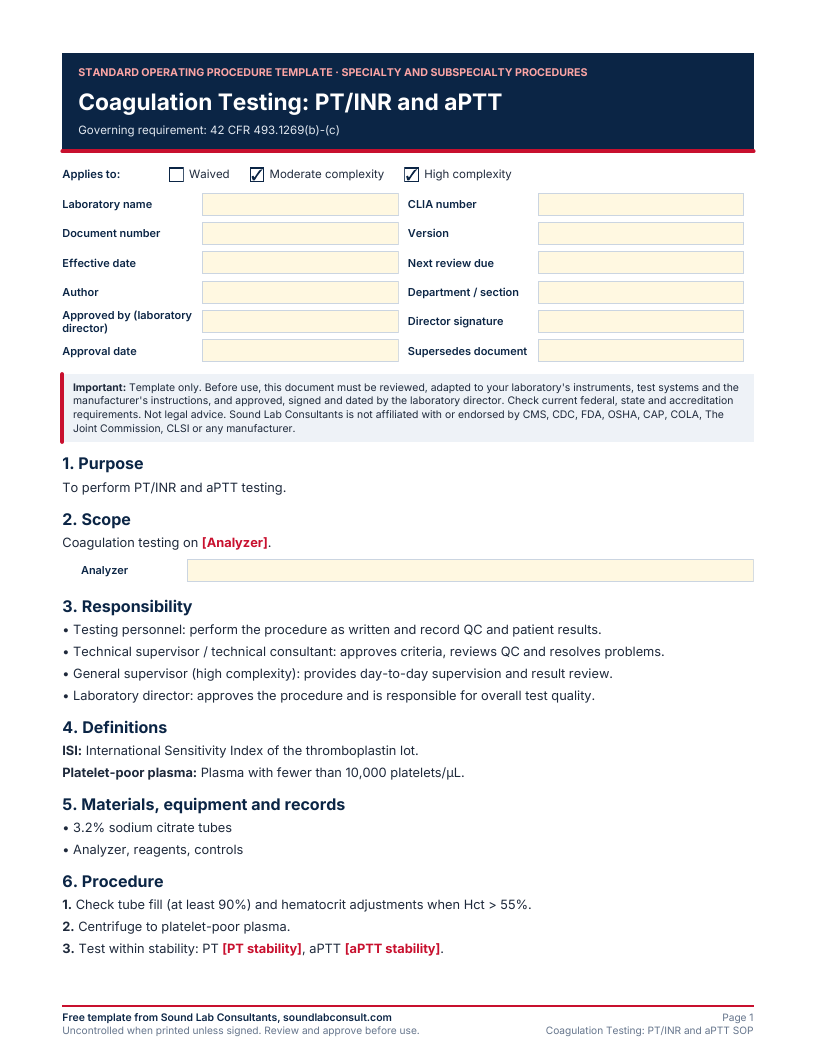
Coagulation Testing: PT/INR and aPTT
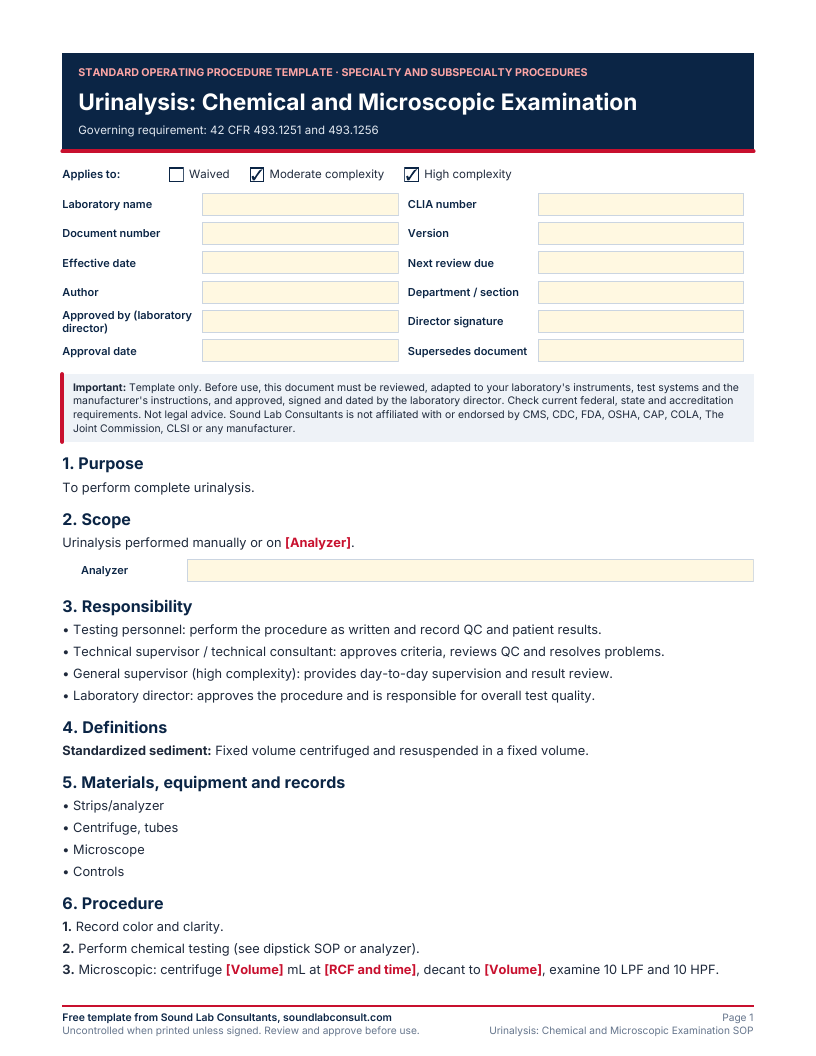
Urinalysis: Chemical and Microscopic Examination
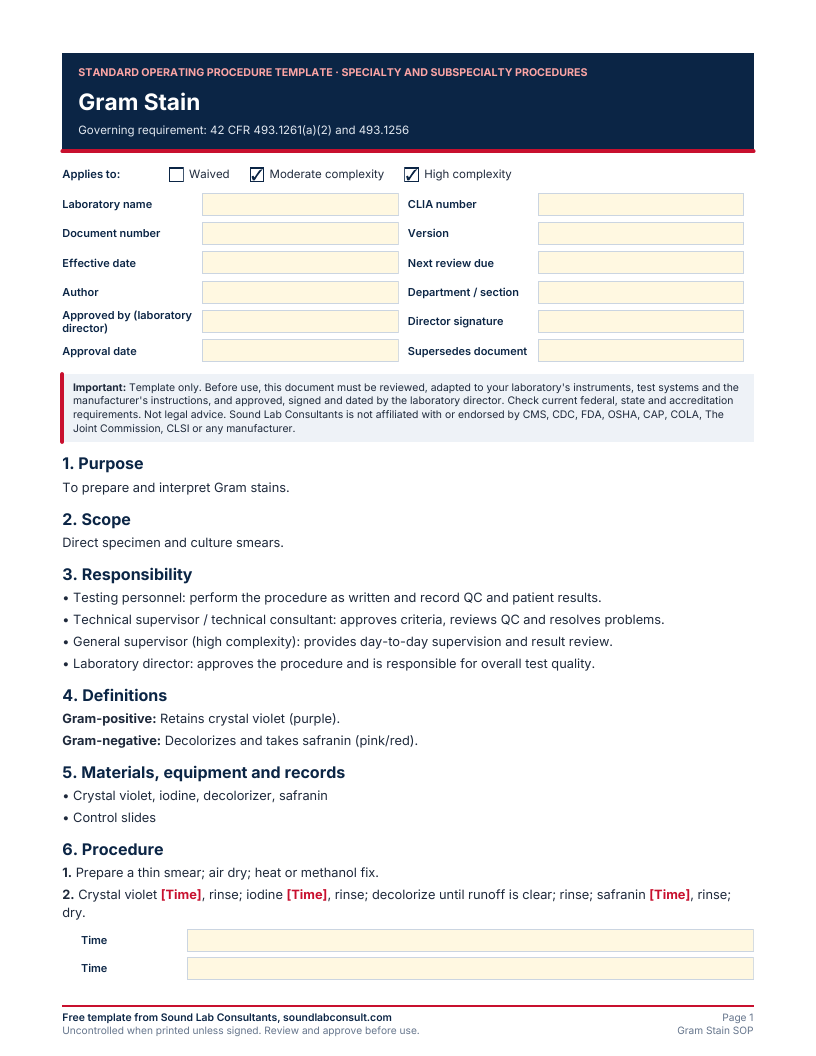
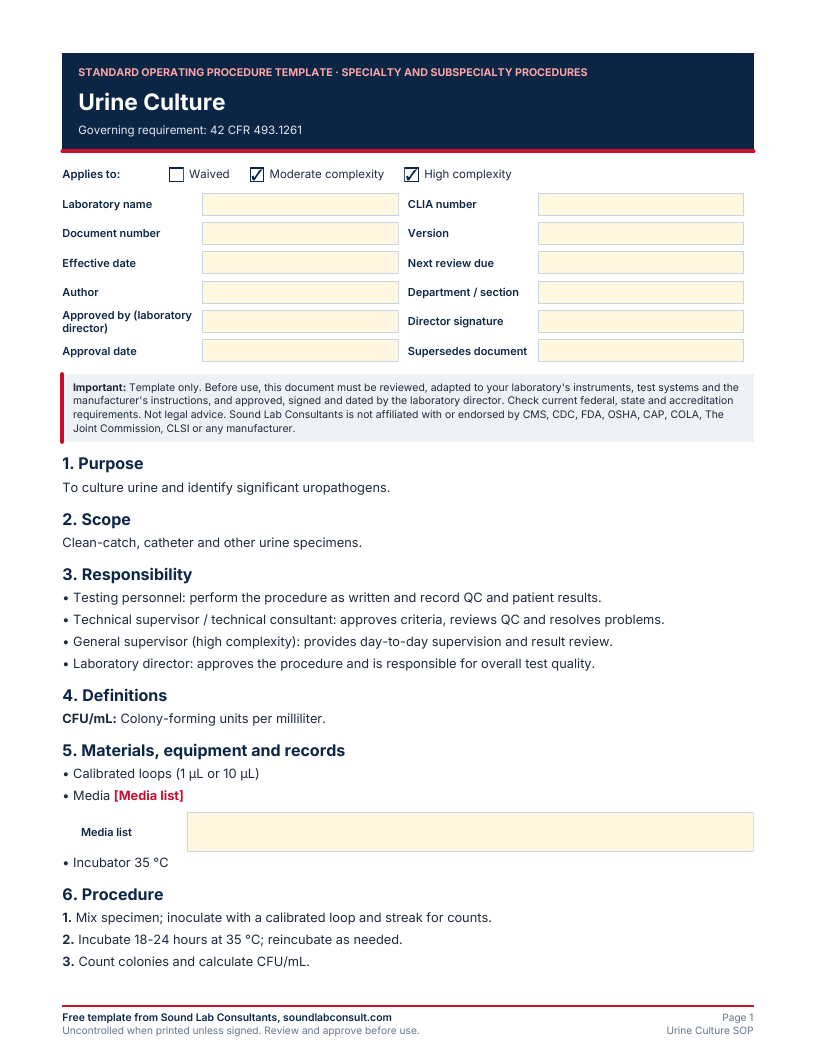
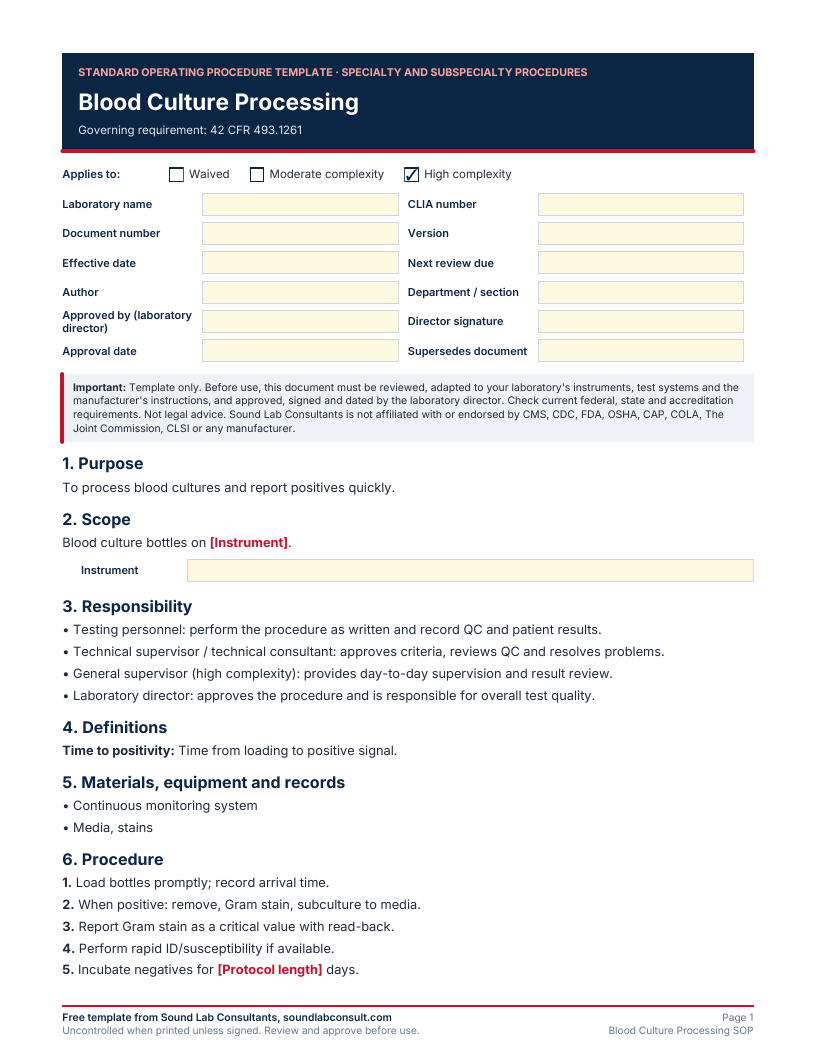
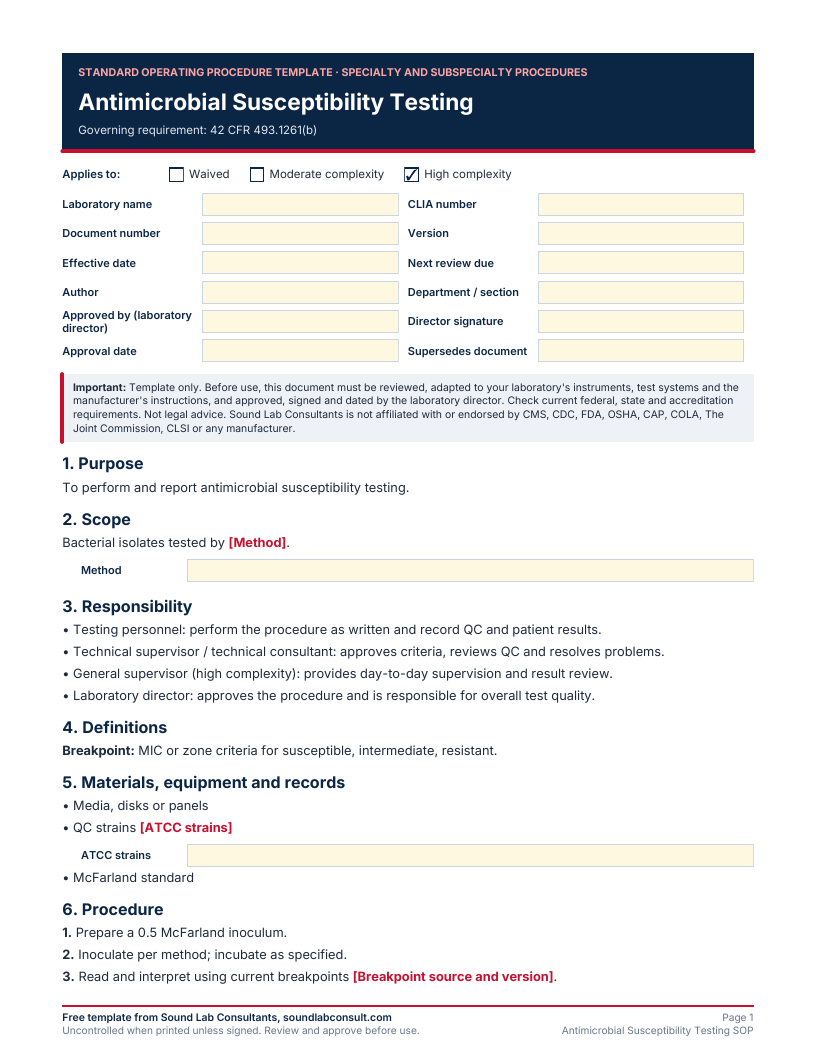
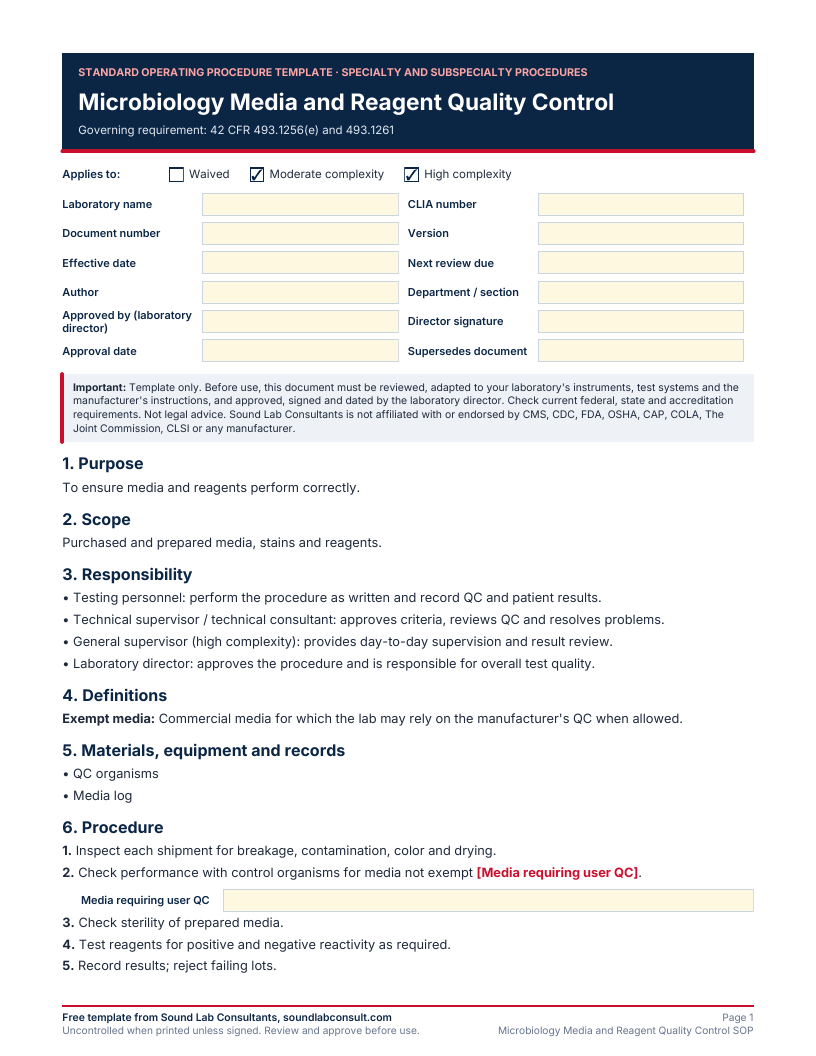
Microbiology Media and Reagent Quality Control
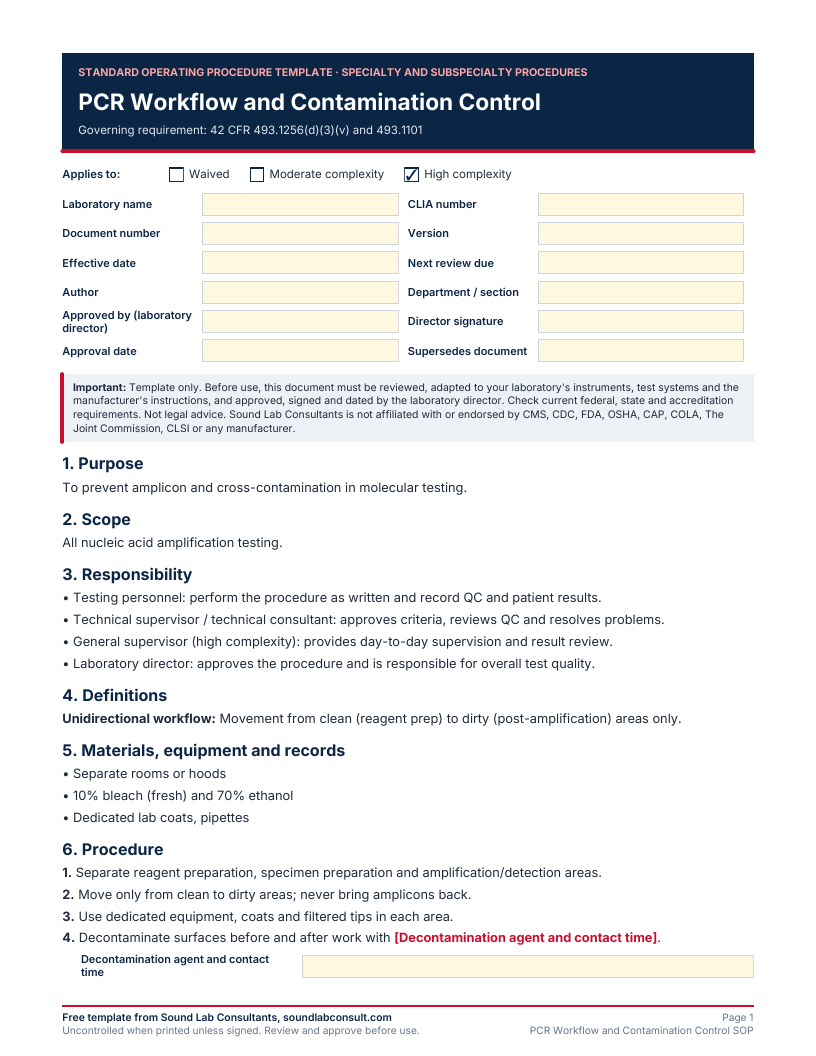
PCR Workflow and Contamination Control
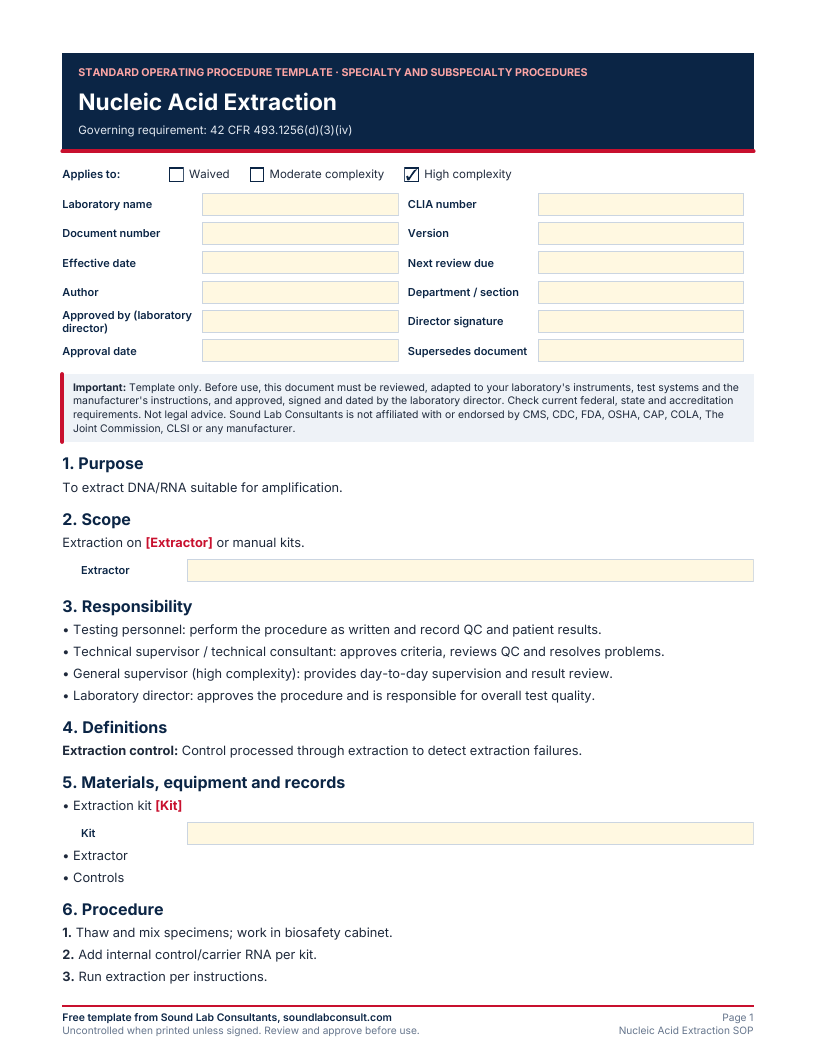
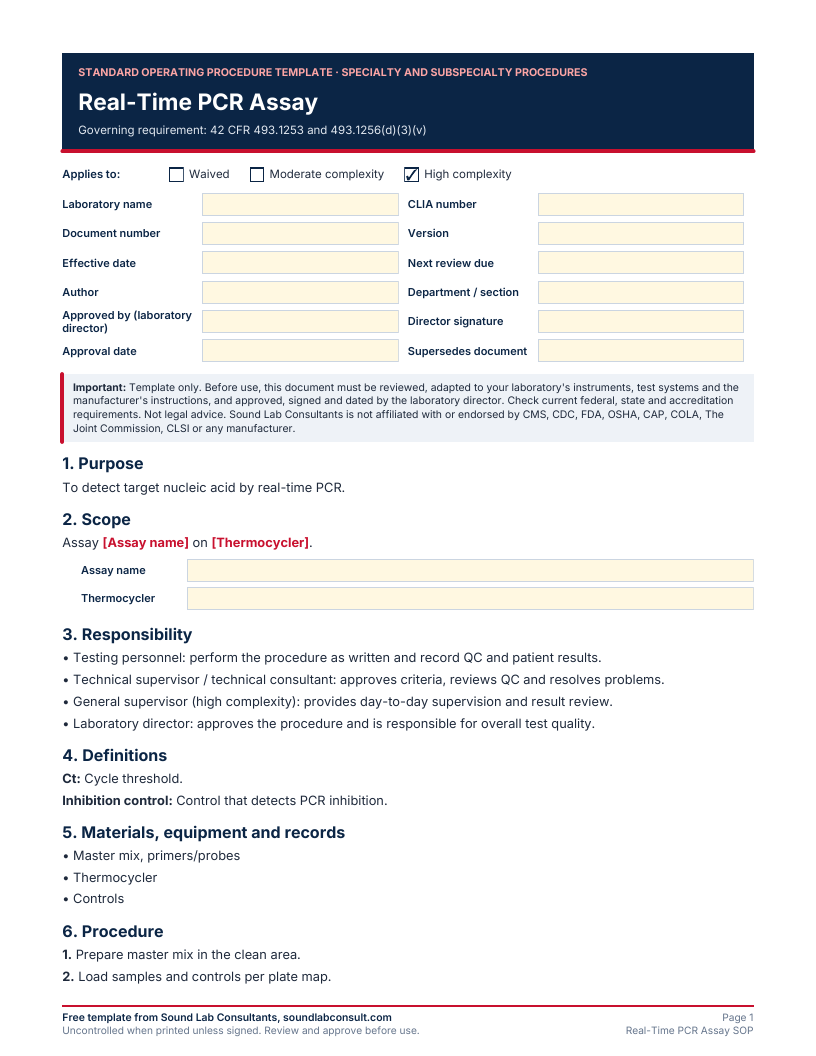
Real-Time PCR Assay
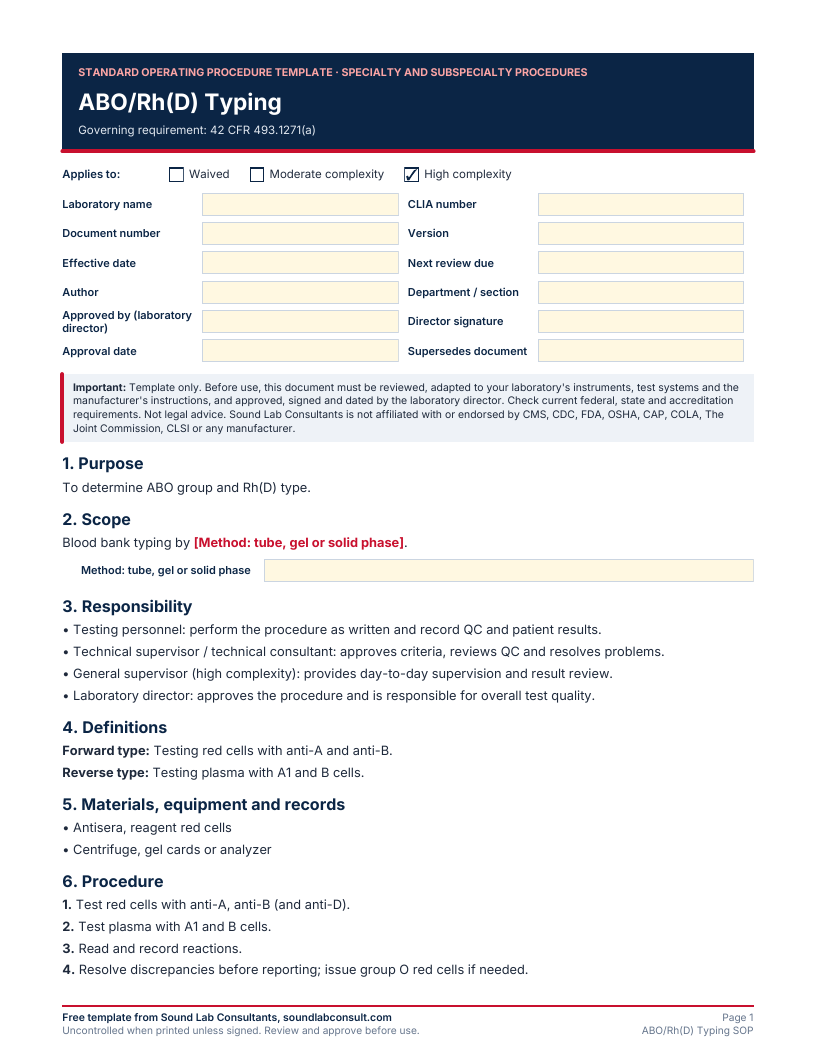
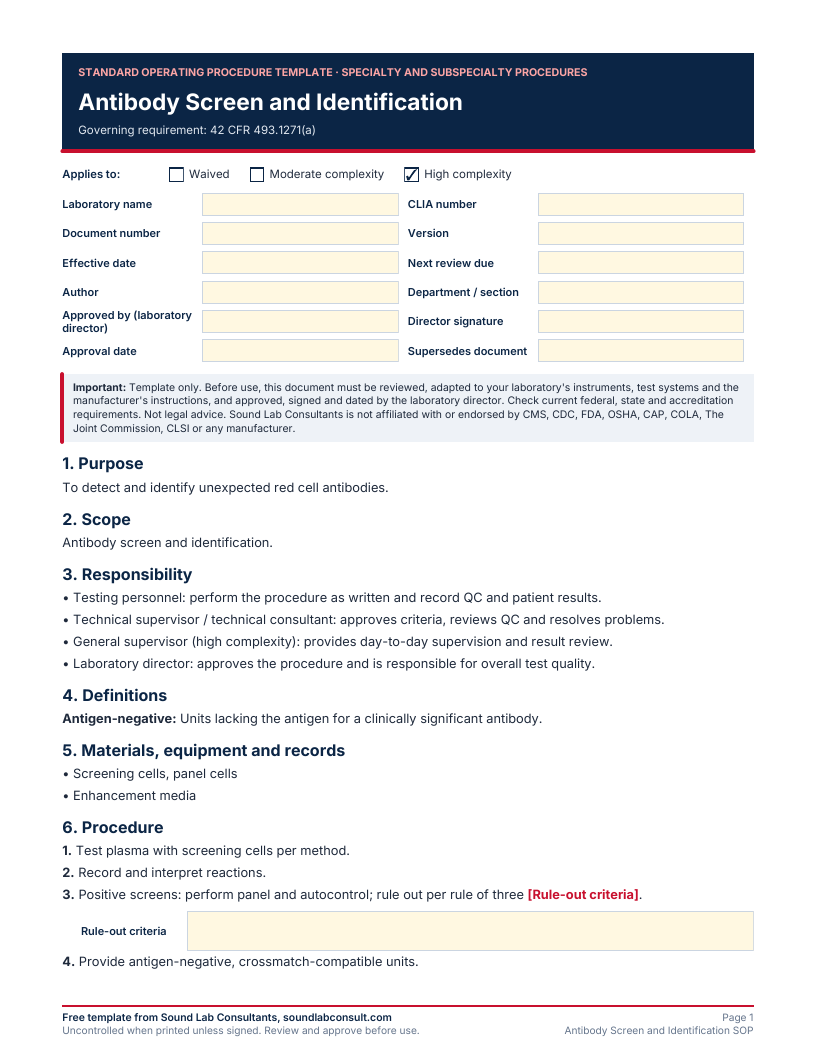
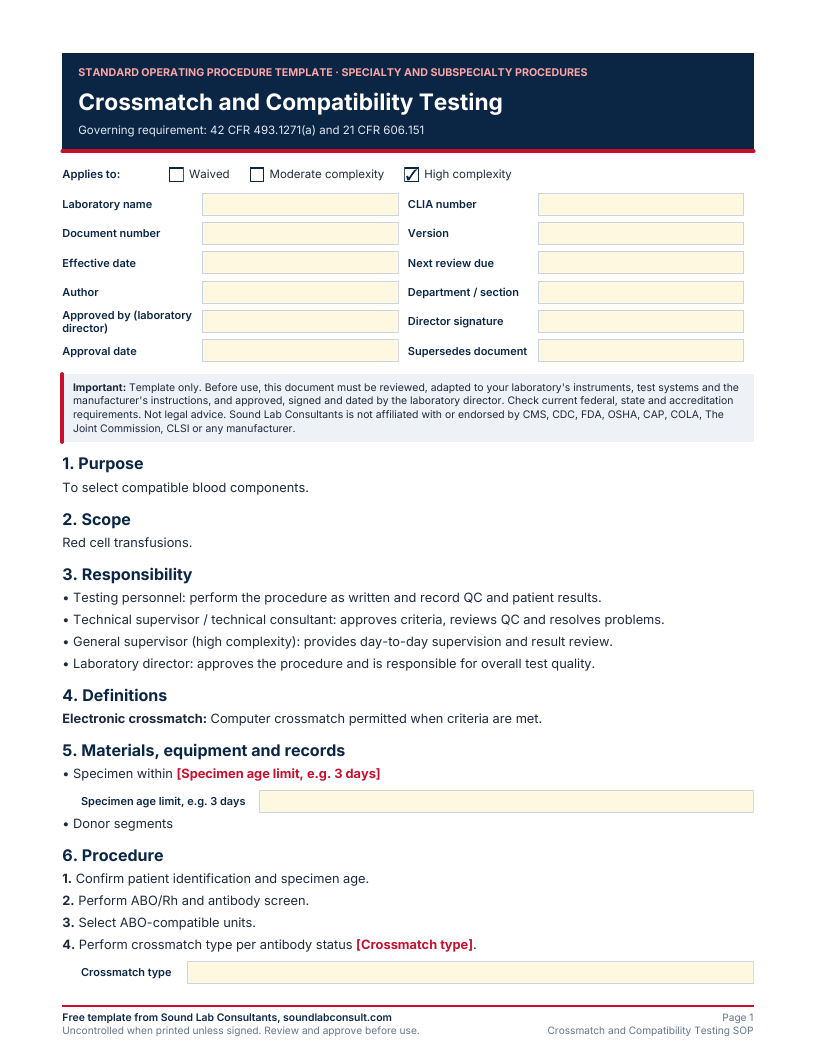
Crossmatch and Compatibility Testing
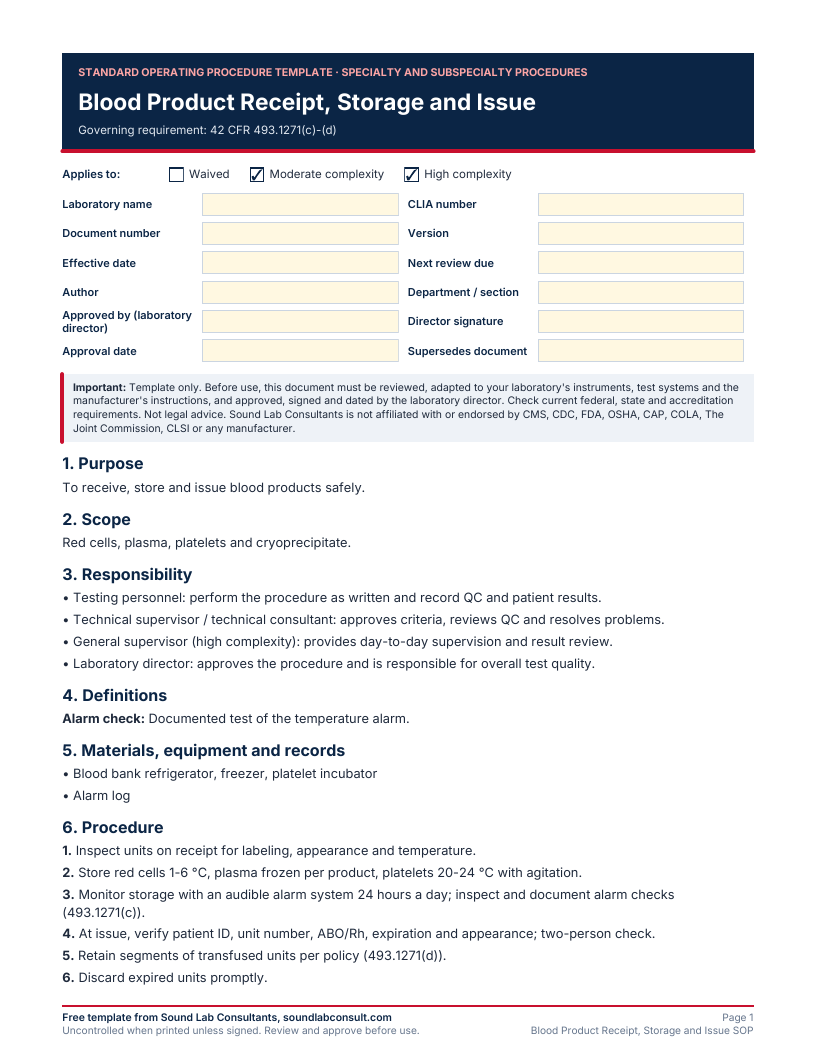
Blood Product Receipt, Storage and Issue
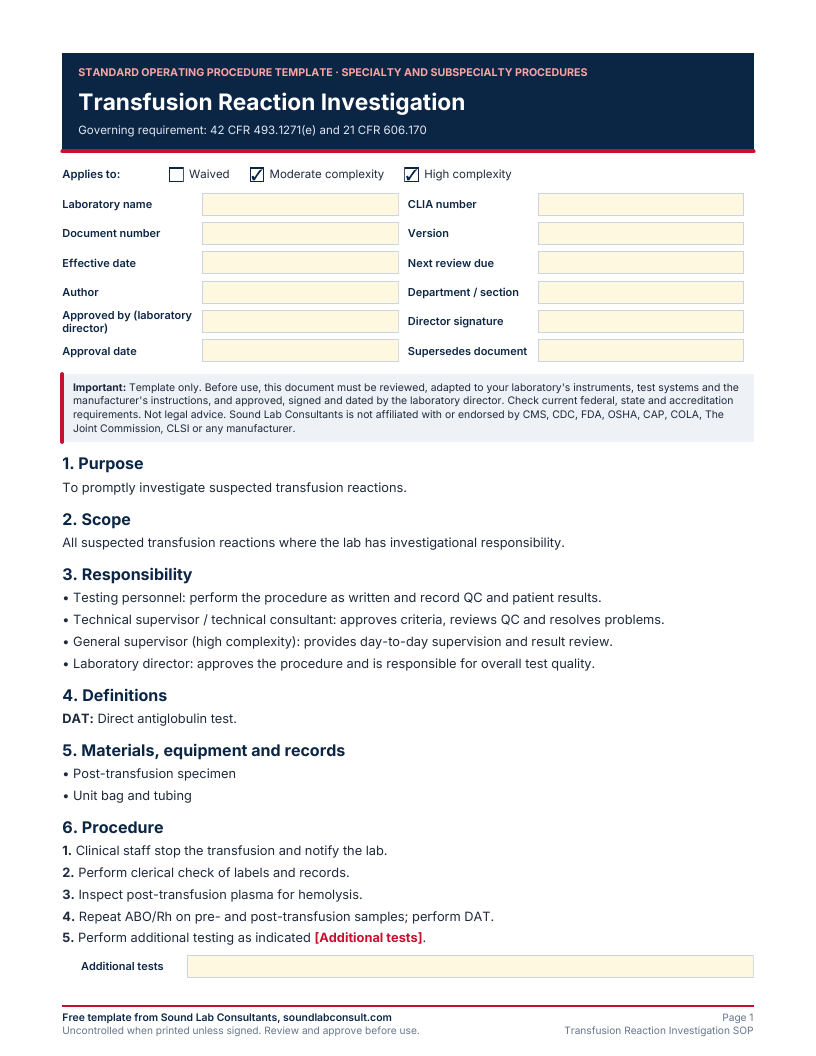
Transfusion Reaction Investigation
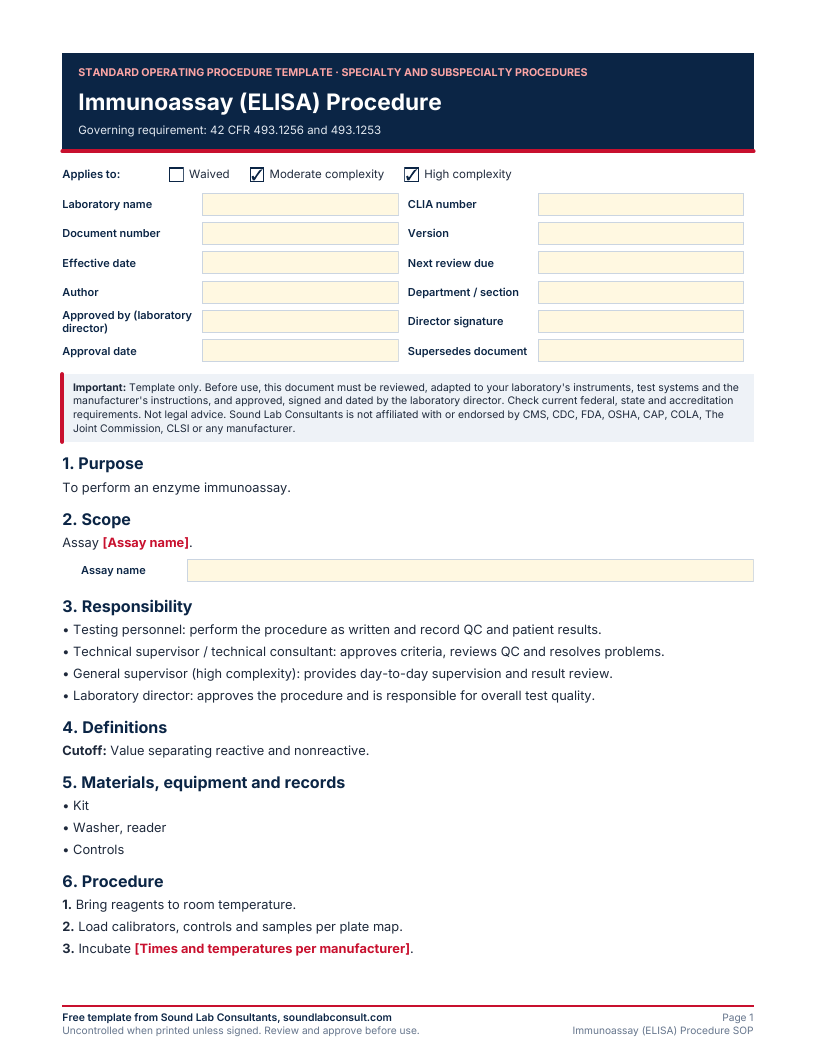
Immunoassay (ELISA) Procedure
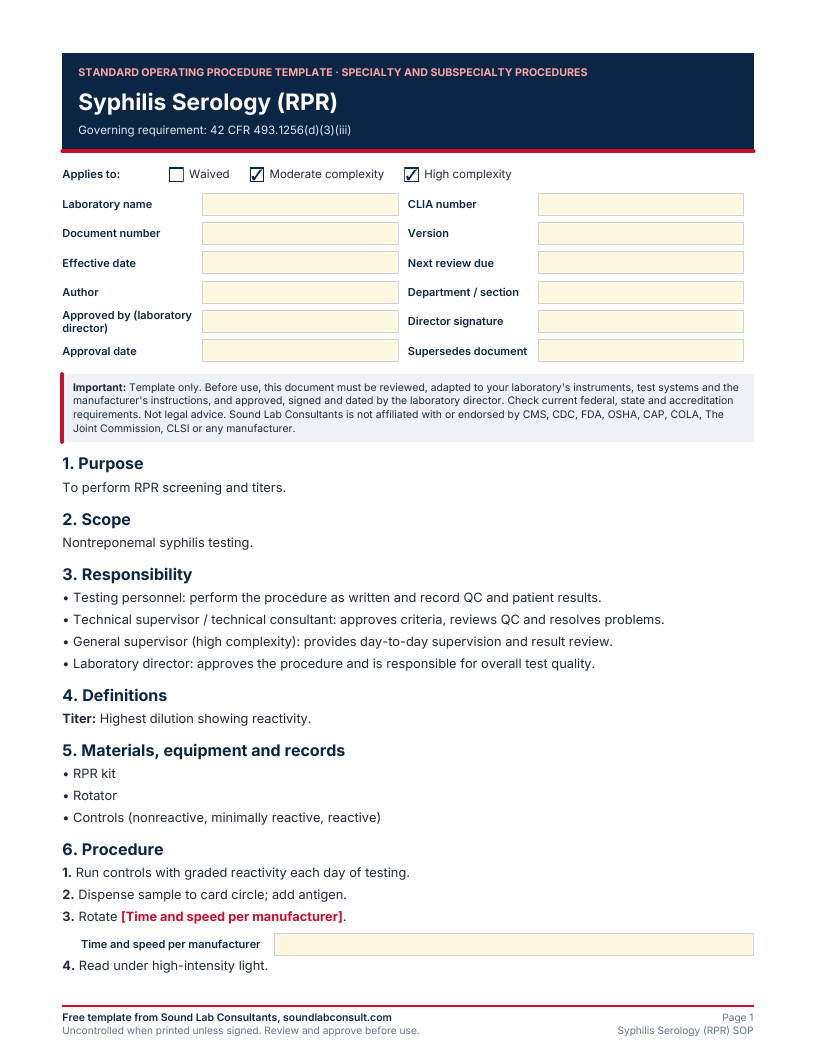
Syphilis Serology (RPR)
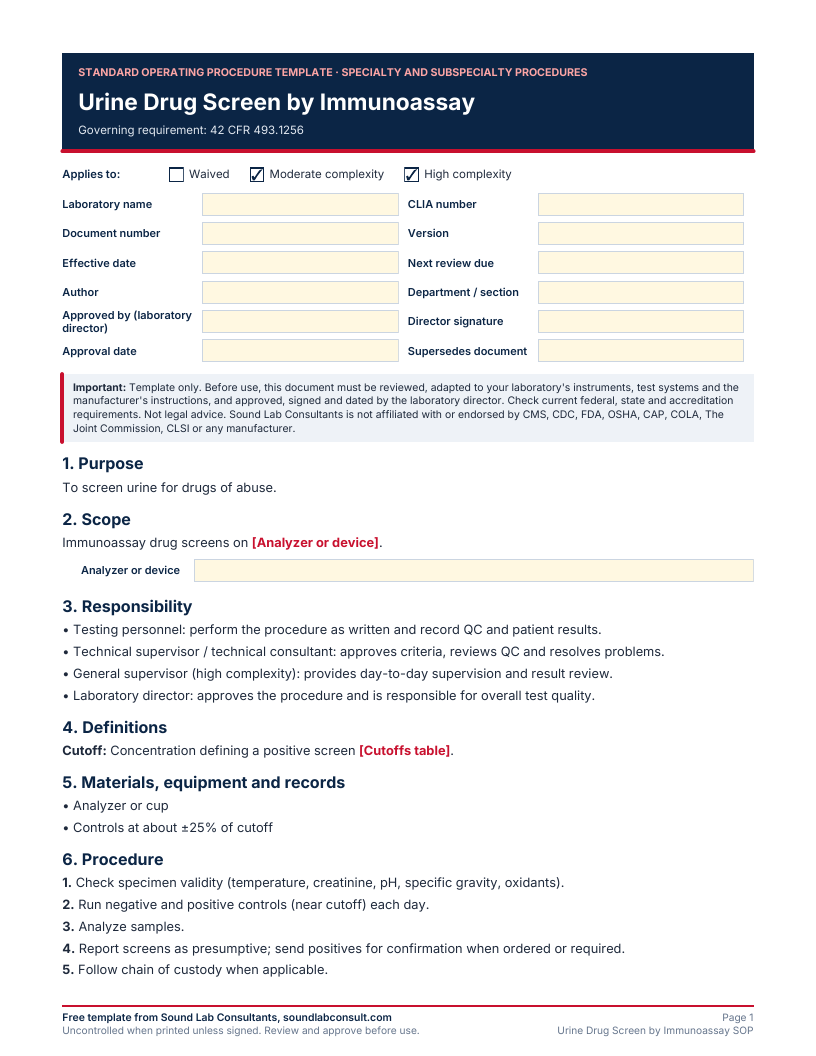
Urine Drug Screen by Immunoassay
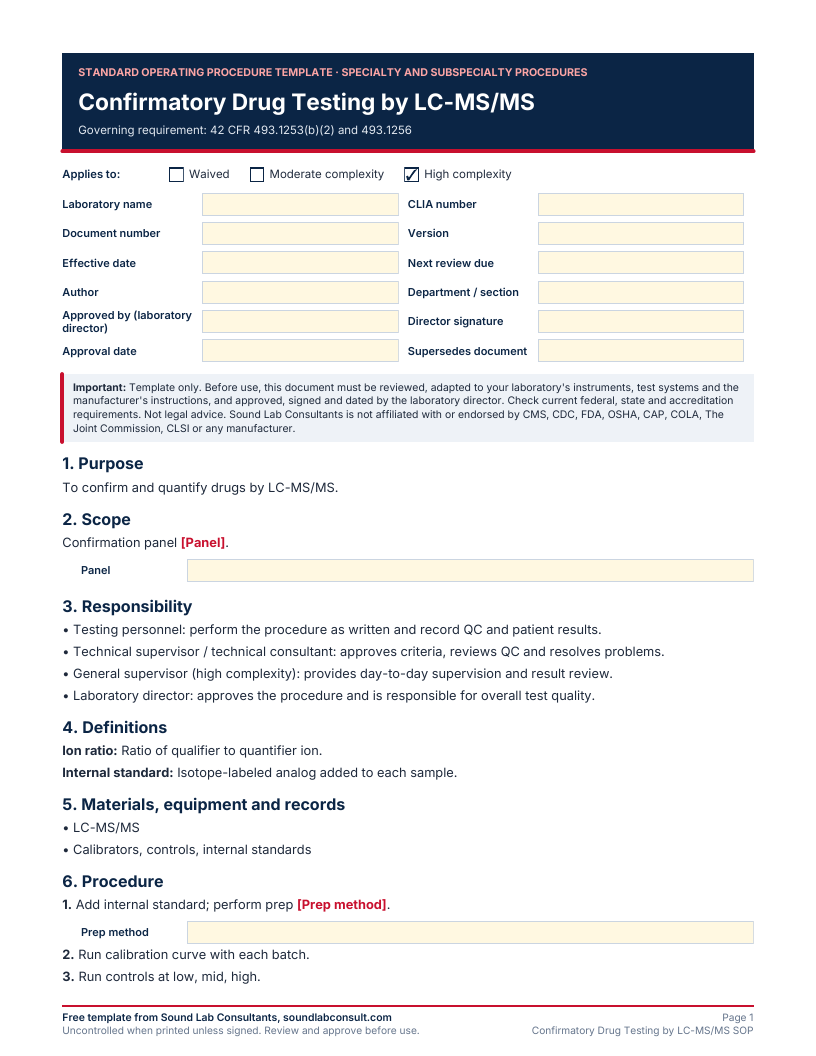
Confirmatory Drug Testing by LC-MS/MS
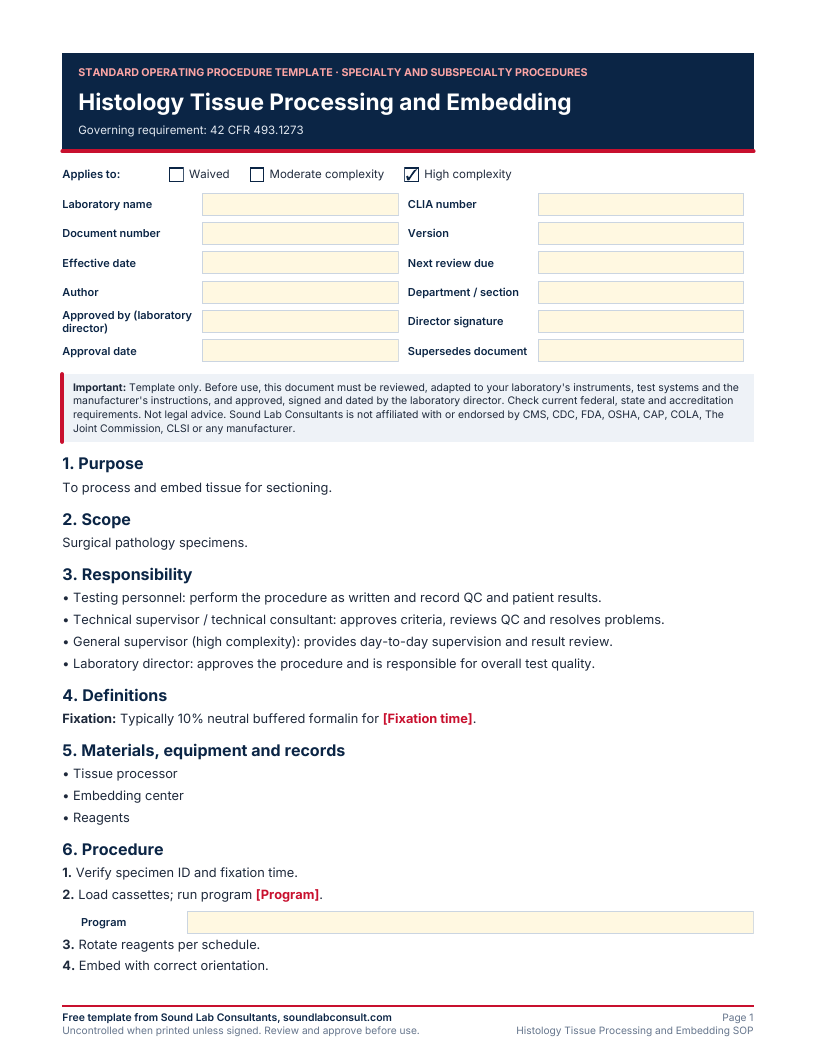
Histology Tissue Processing and Embedding
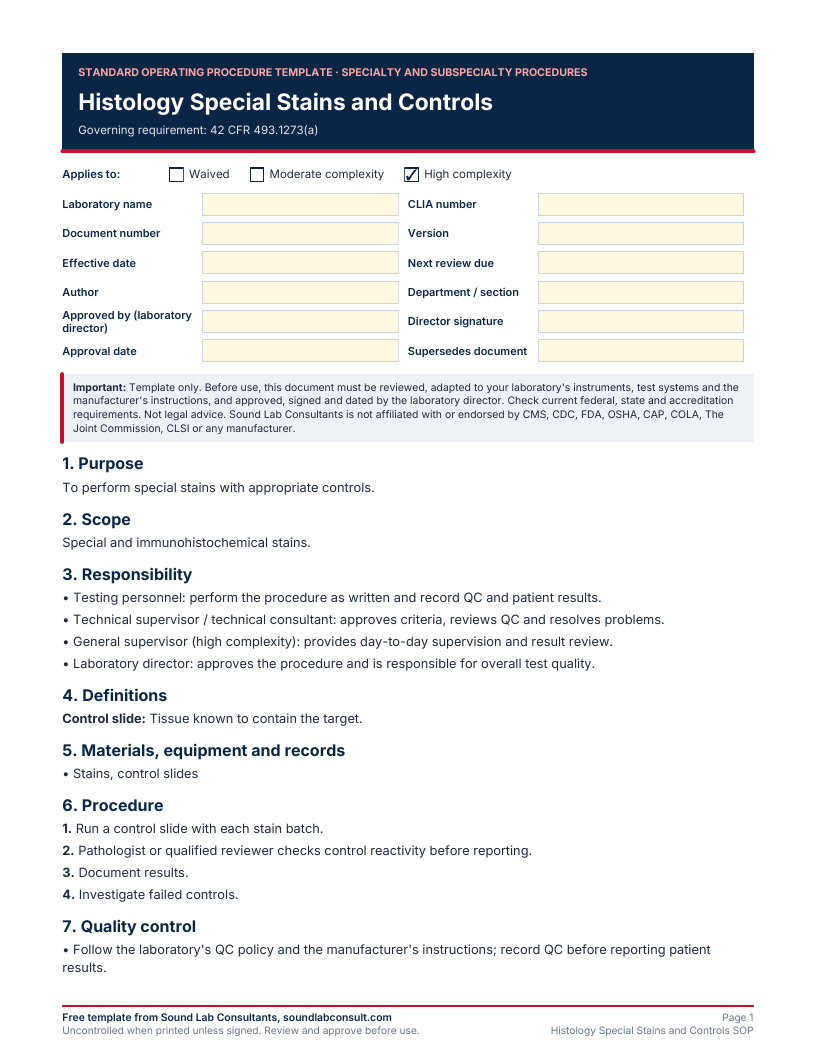
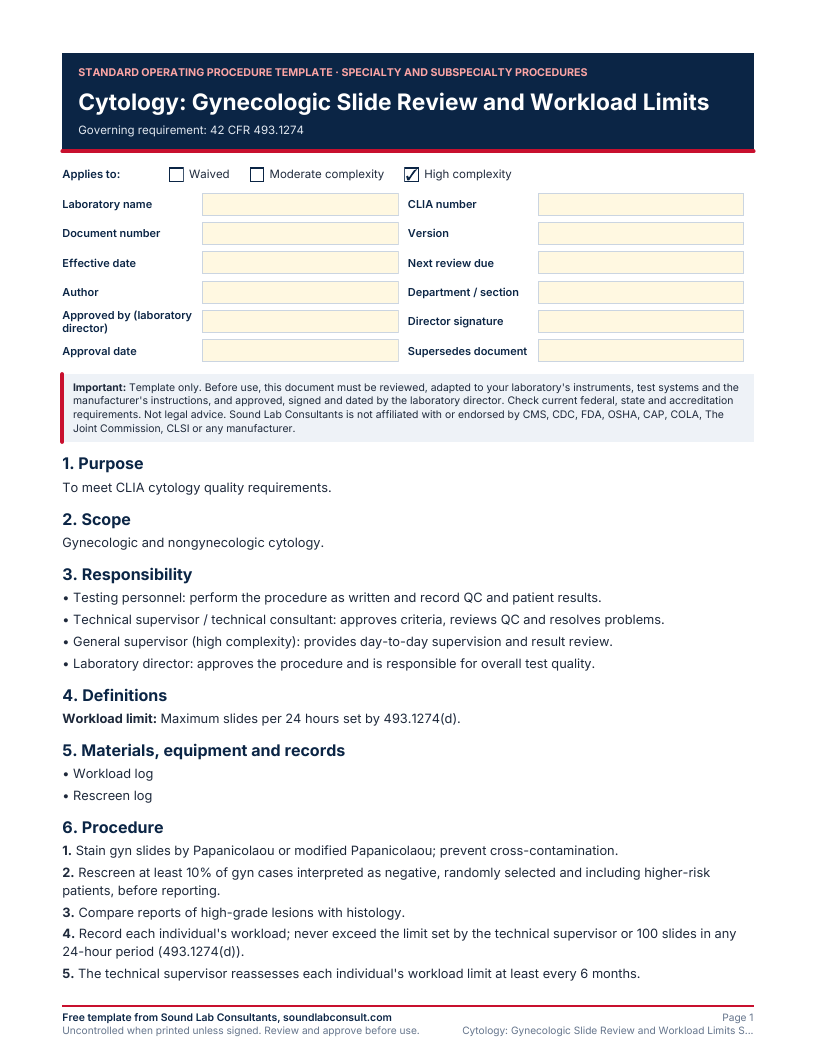
Cytology: Gynecologic Slide Review and Workload Limits
Critical Value (Panic Value) Reporting
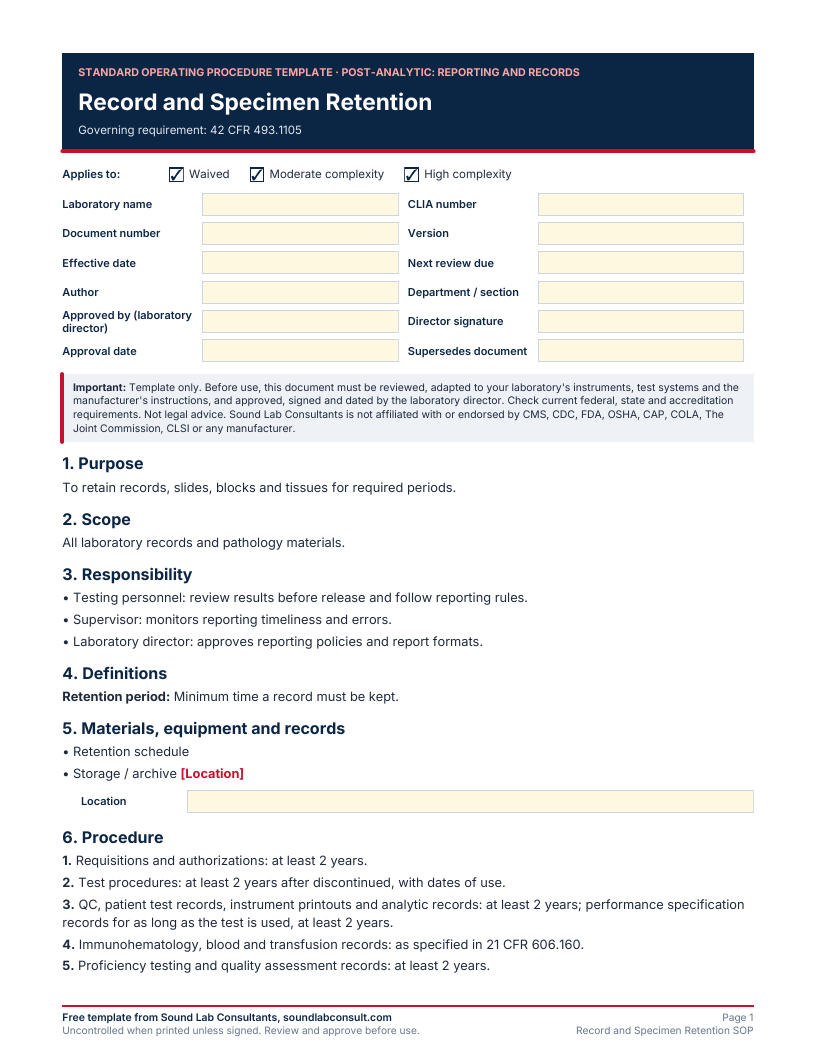
Record and Specimen Retention
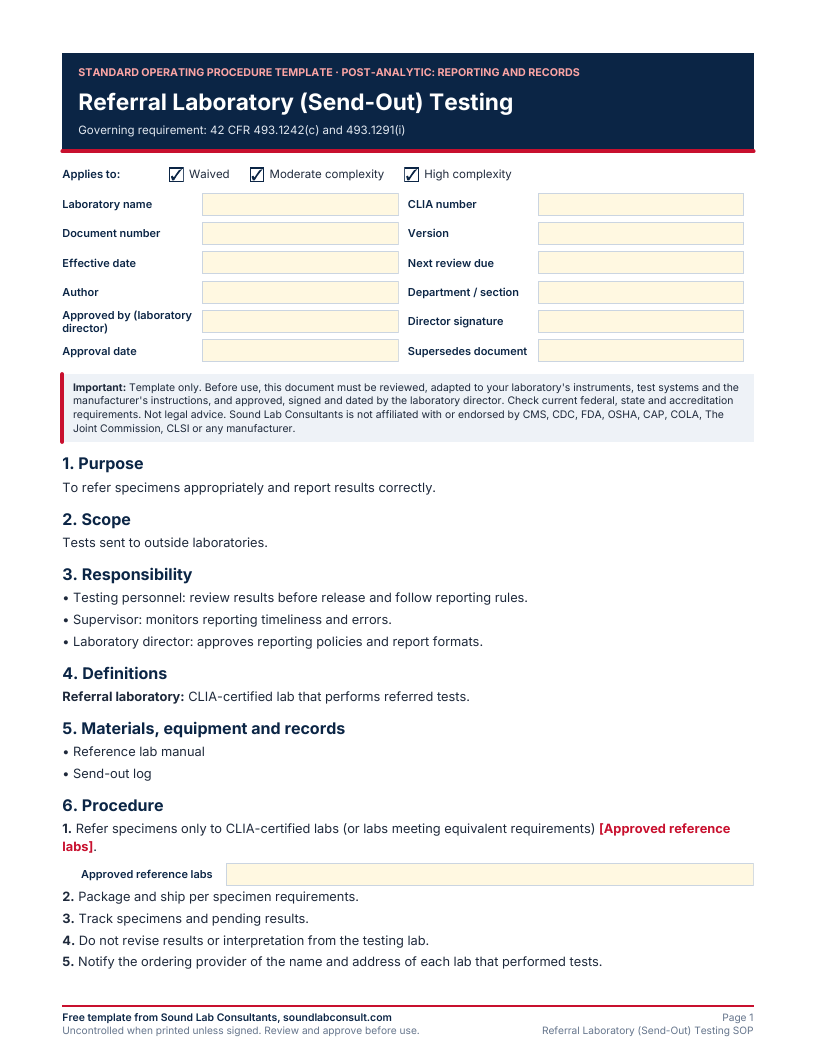
Referral Laboratory (Send-Out) Testing
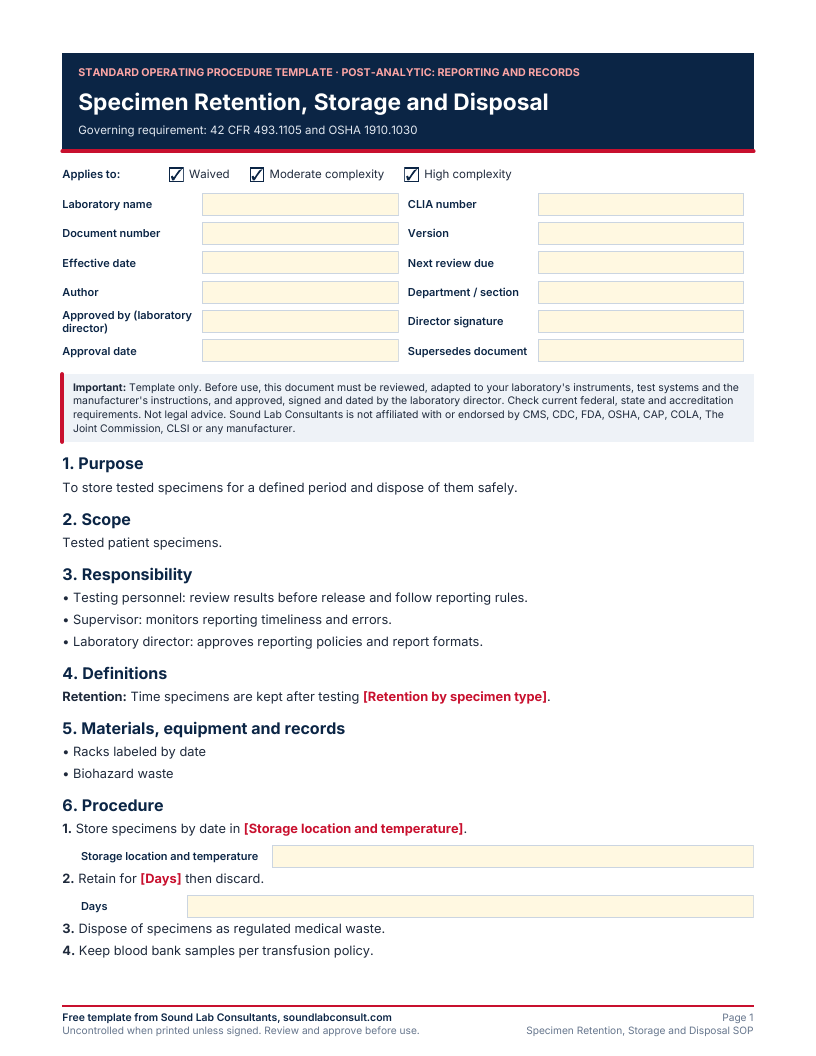
Specimen Retention, Storage and Disposal
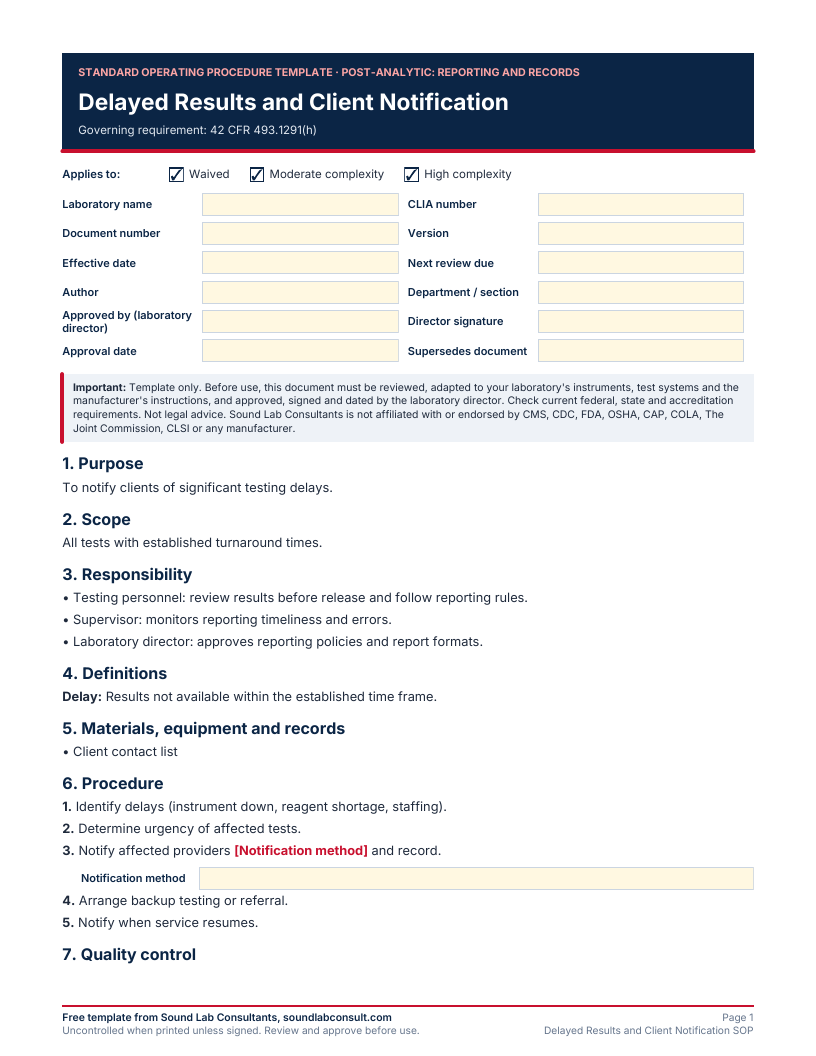
Delayed Results and Client Notification
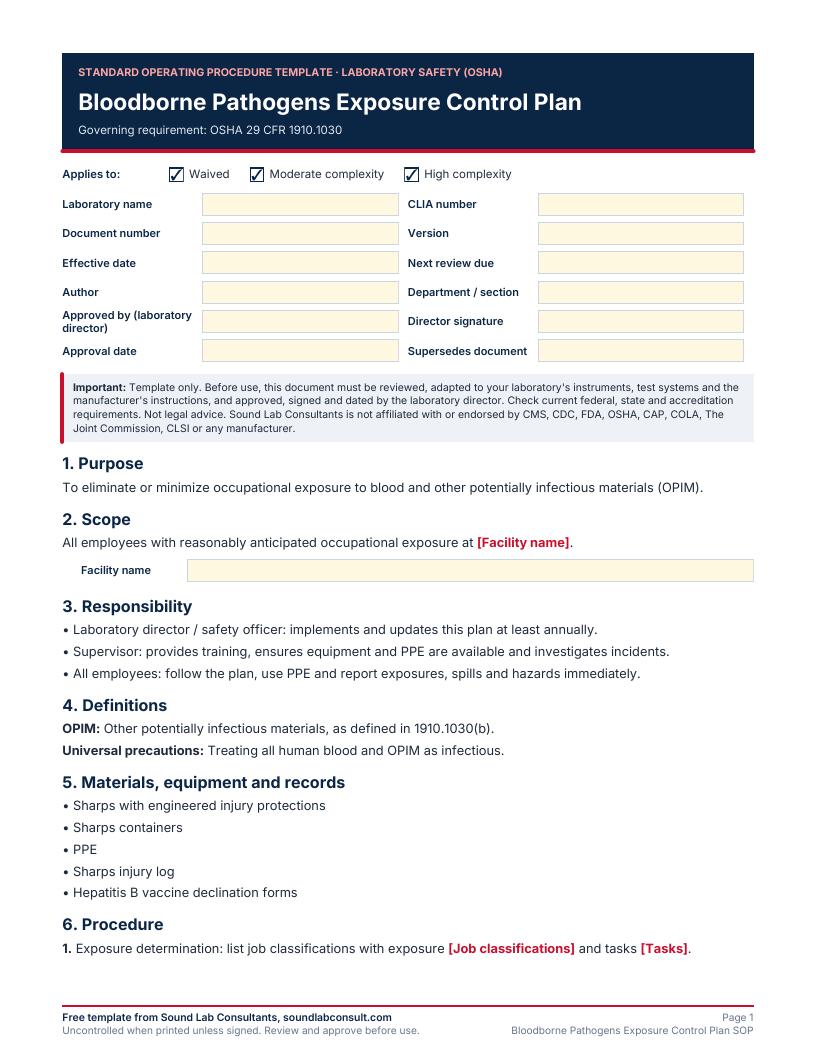
Bloodborne Pathogens Exposure Control Plan
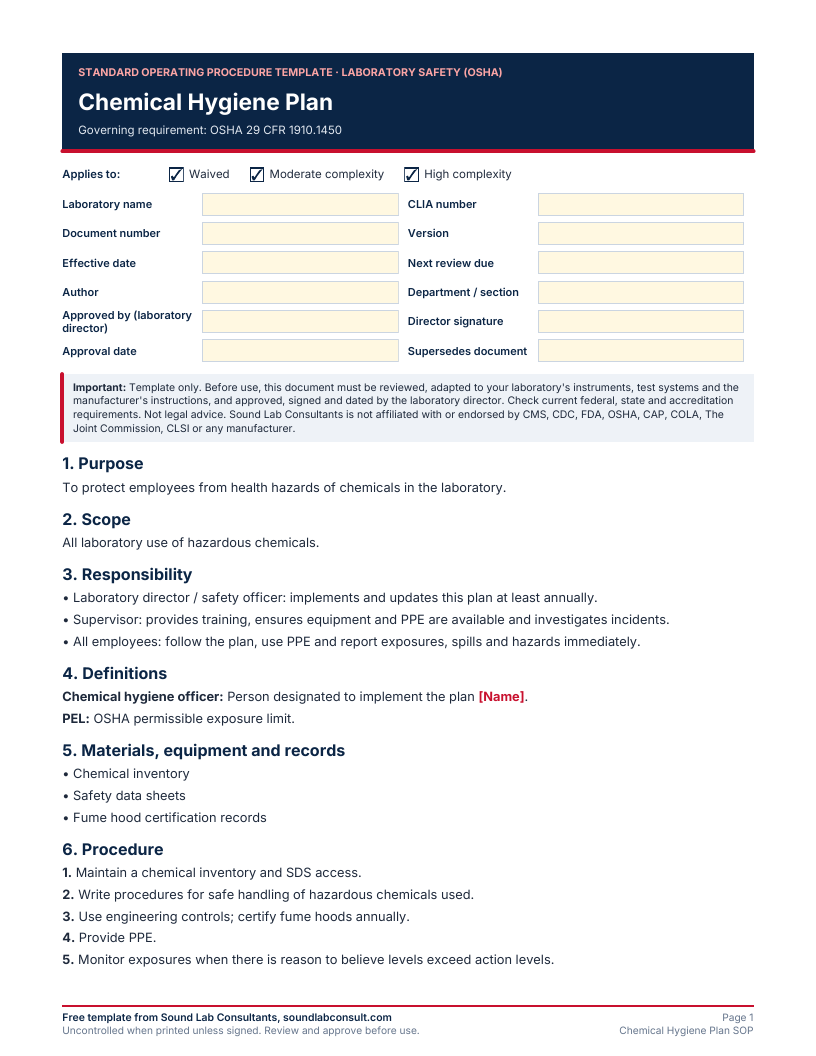
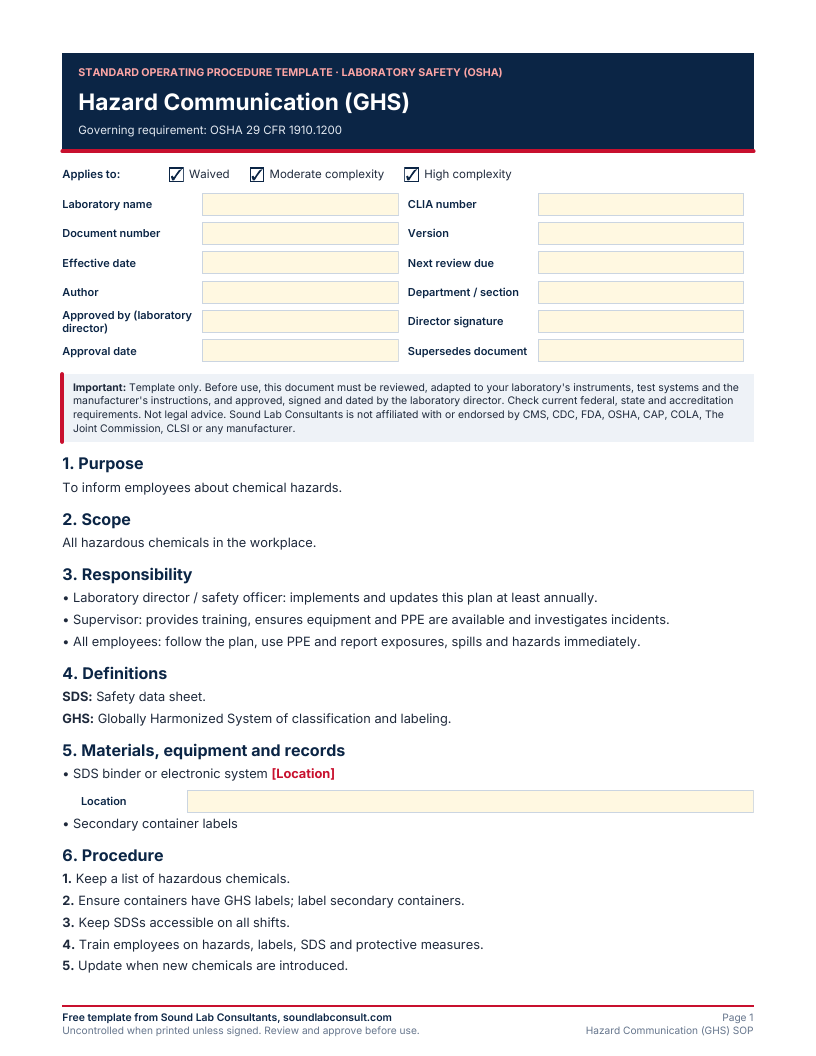
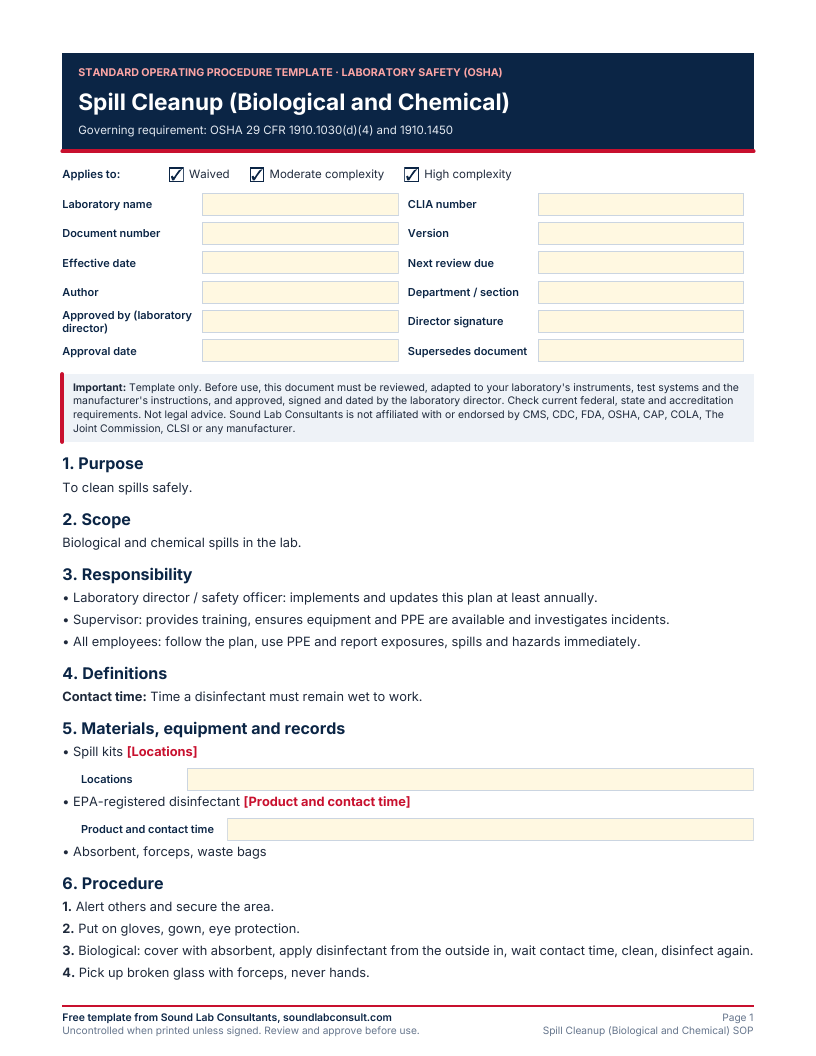
Spill Cleanup (Biological and Chemical)
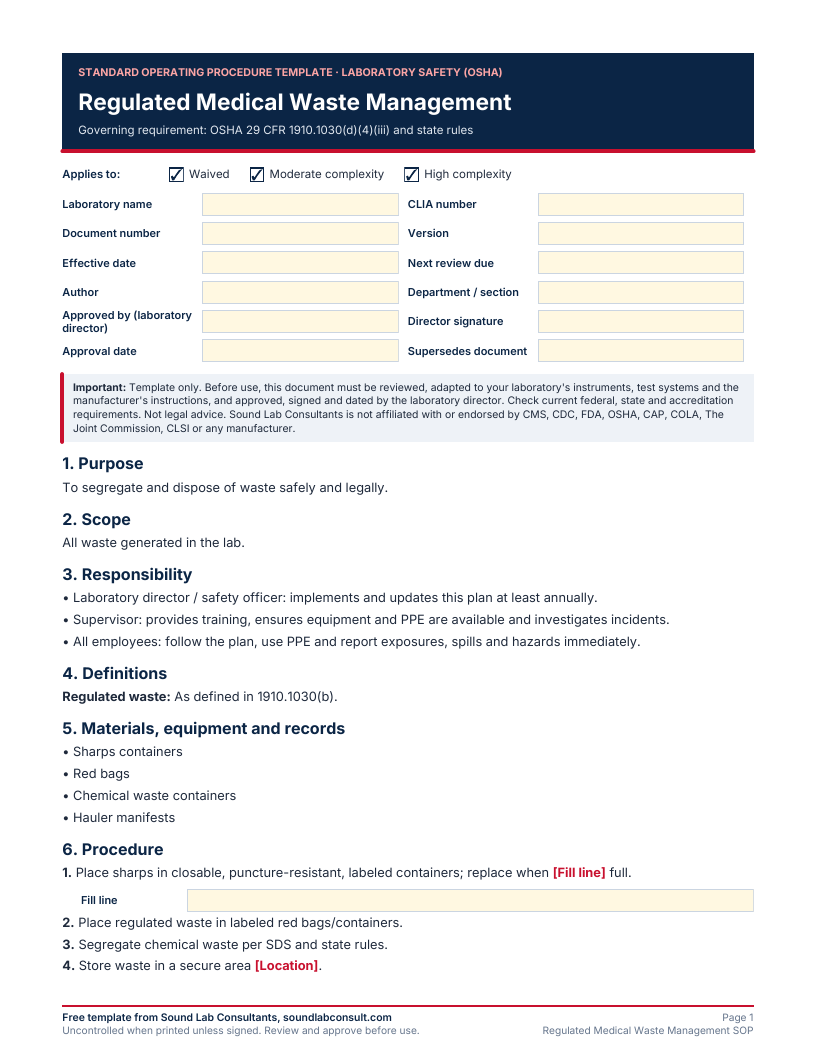
Regulated Medical Waste Management
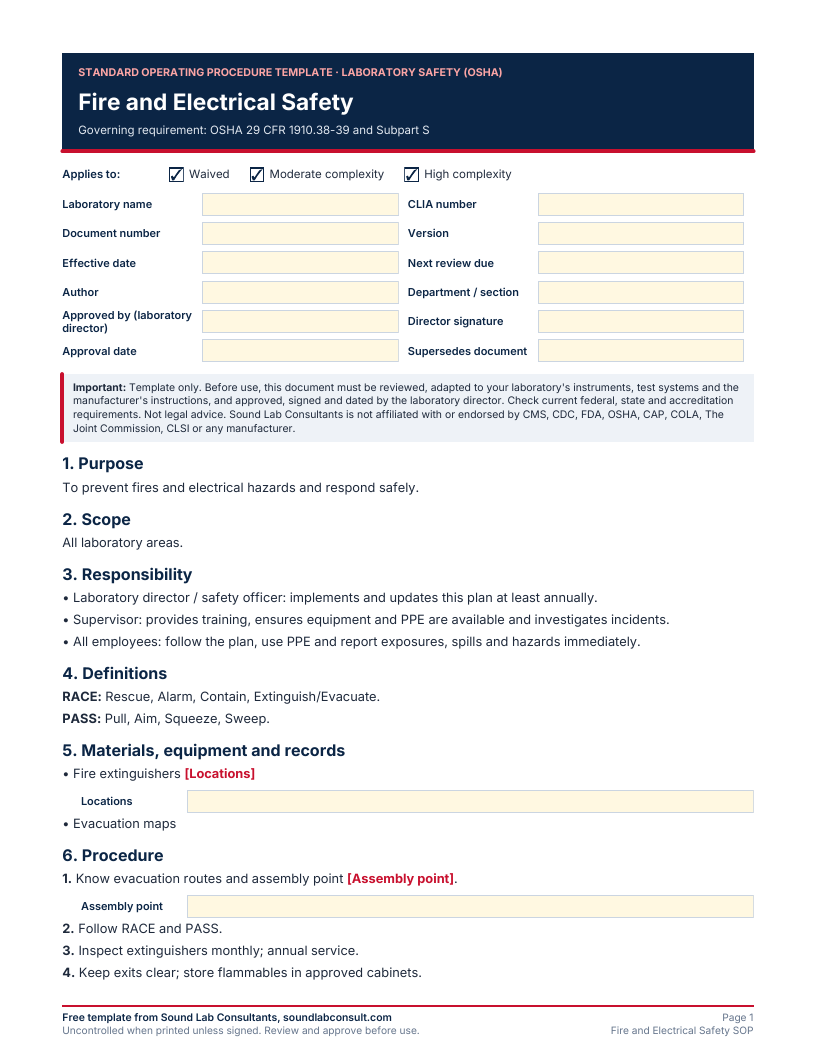
Fire and Electrical Safety
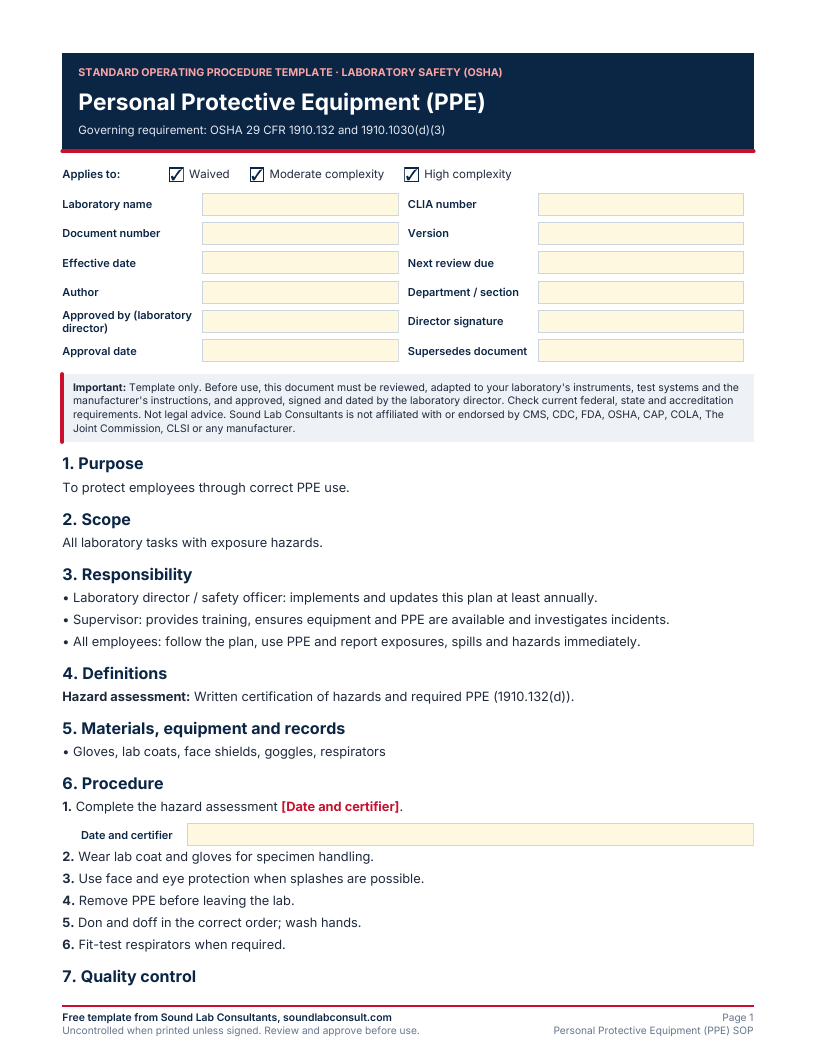
Personal Protective Equipment (PPE)
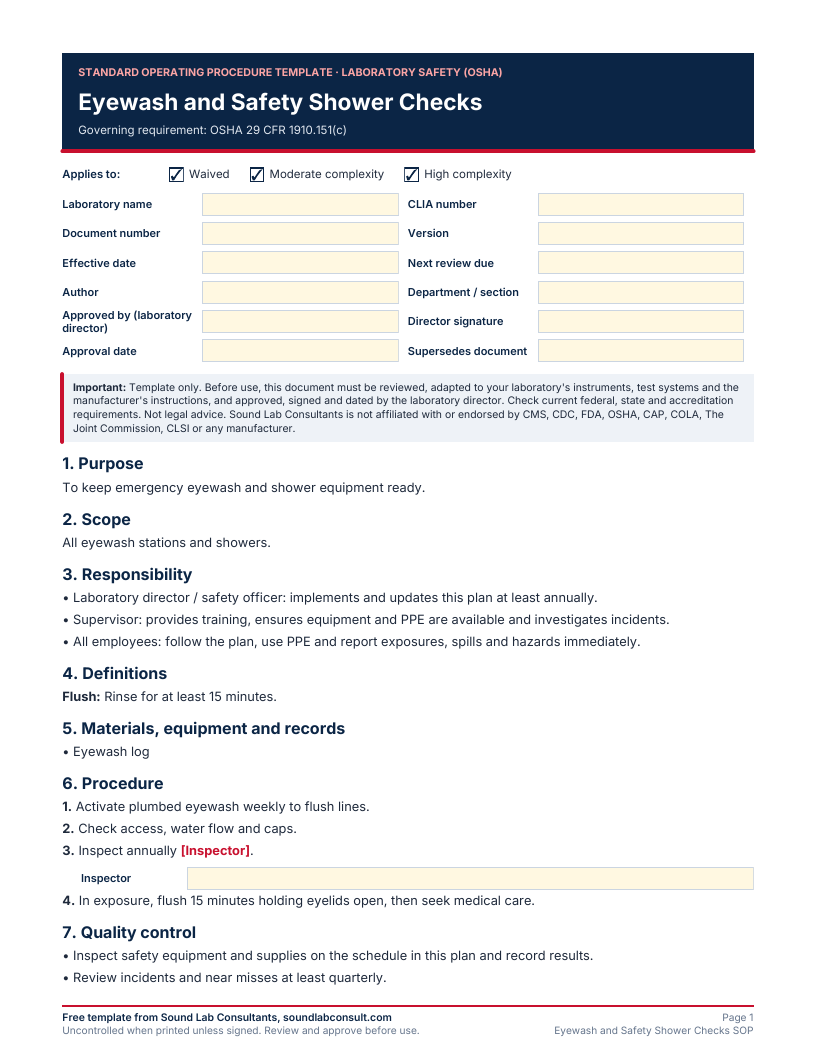
Eyewash and Safety Shower Checks
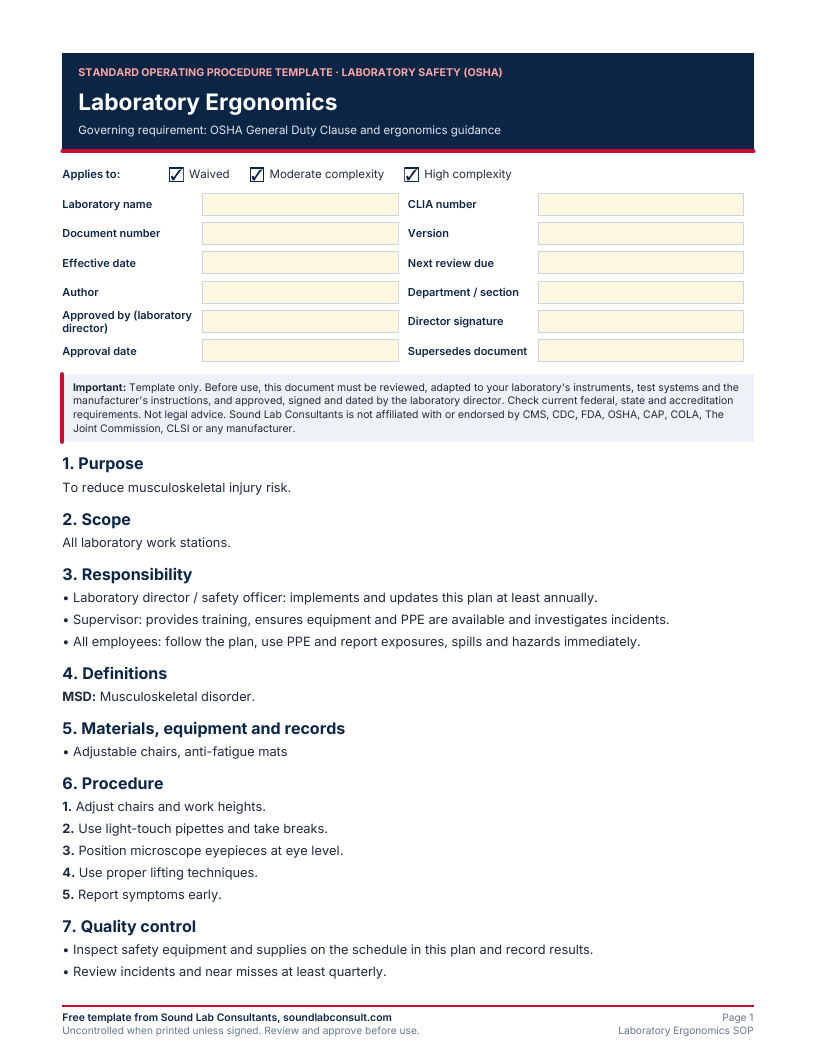
Laboratory Ergonomics
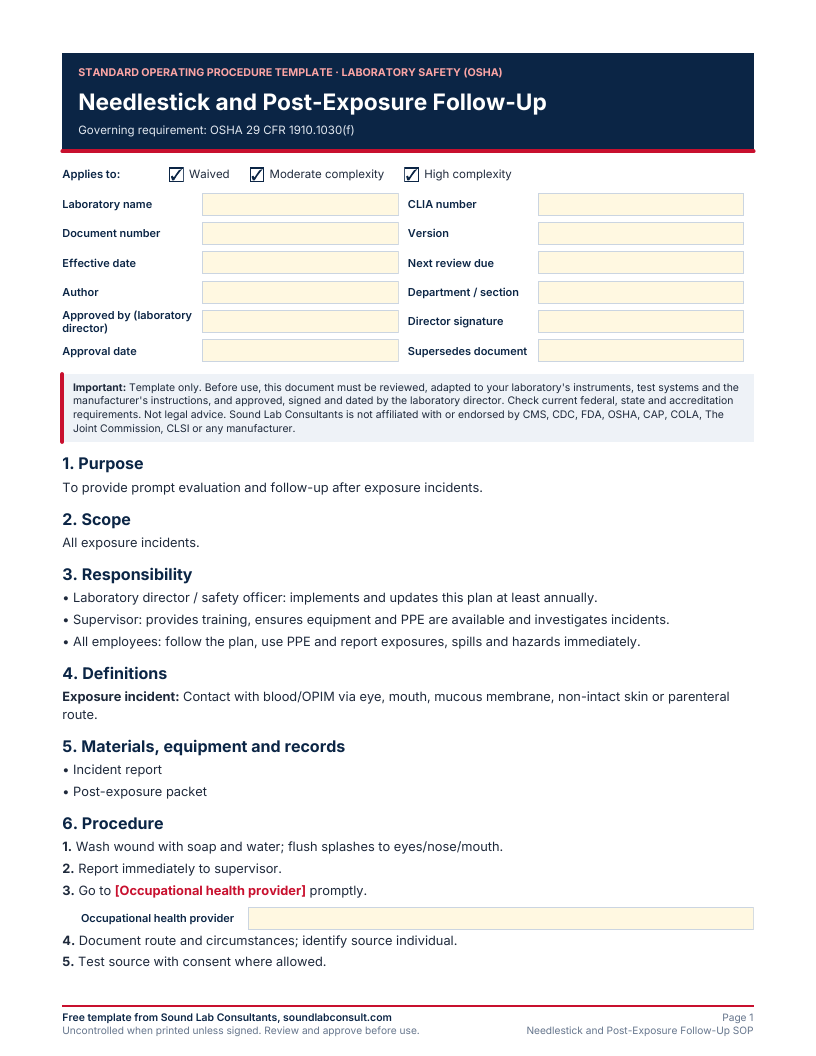
Needlestick and Post-Exposure Follow-Up
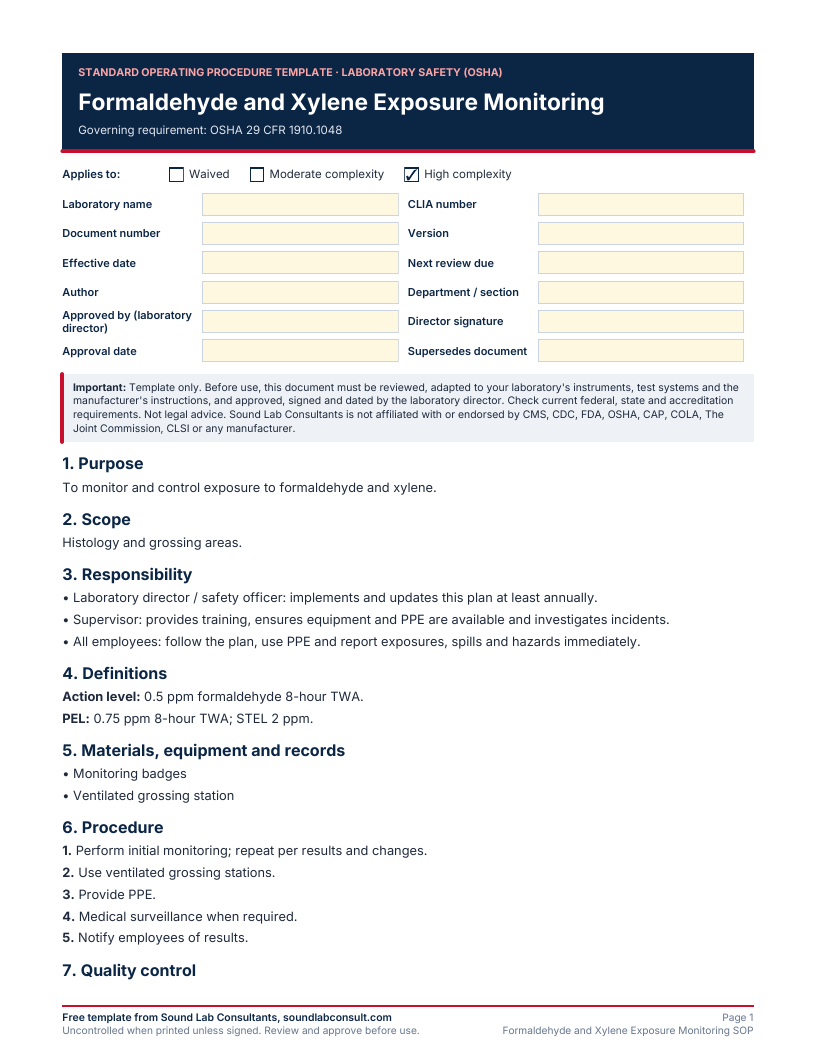
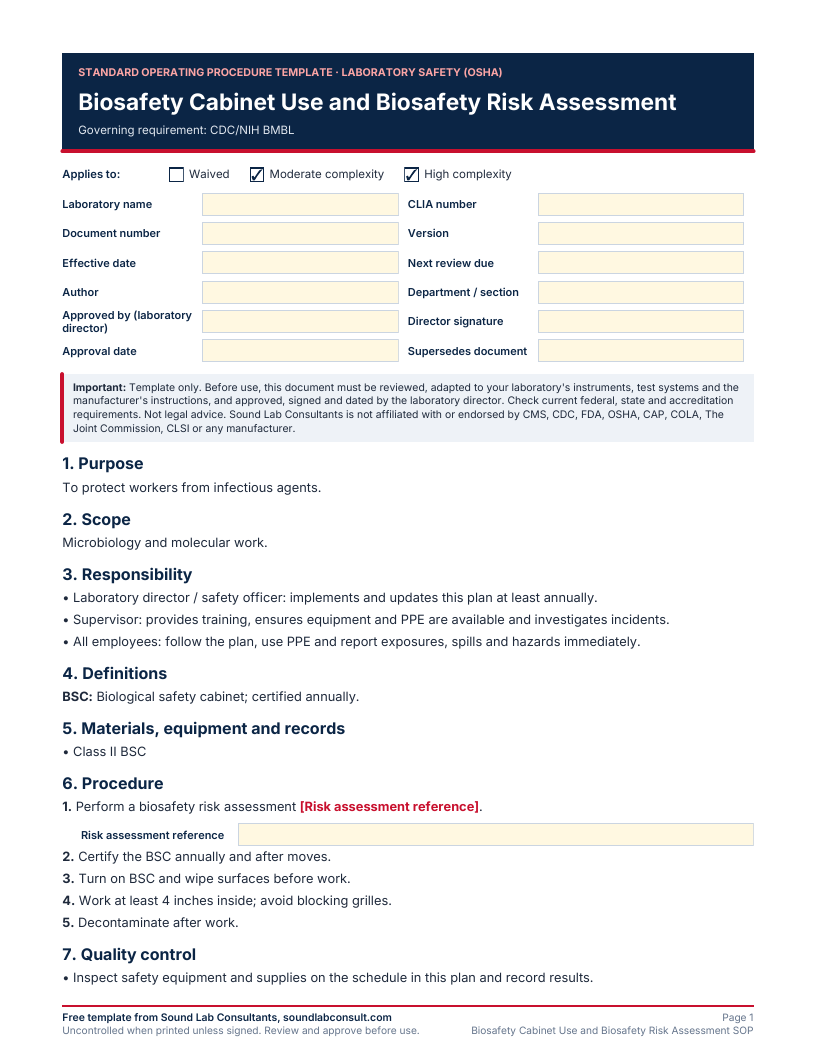
Biosafety Cabinet Use and Biosafety Risk Assessment
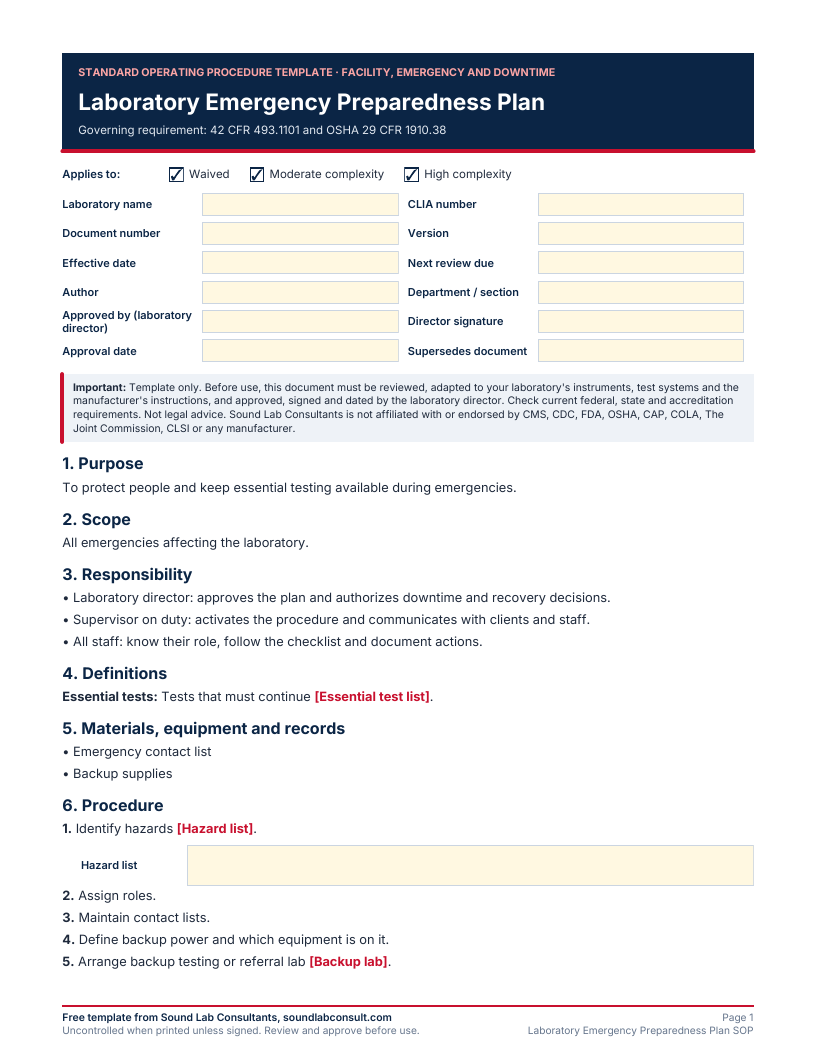
Laboratory Emergency Preparedness Plan
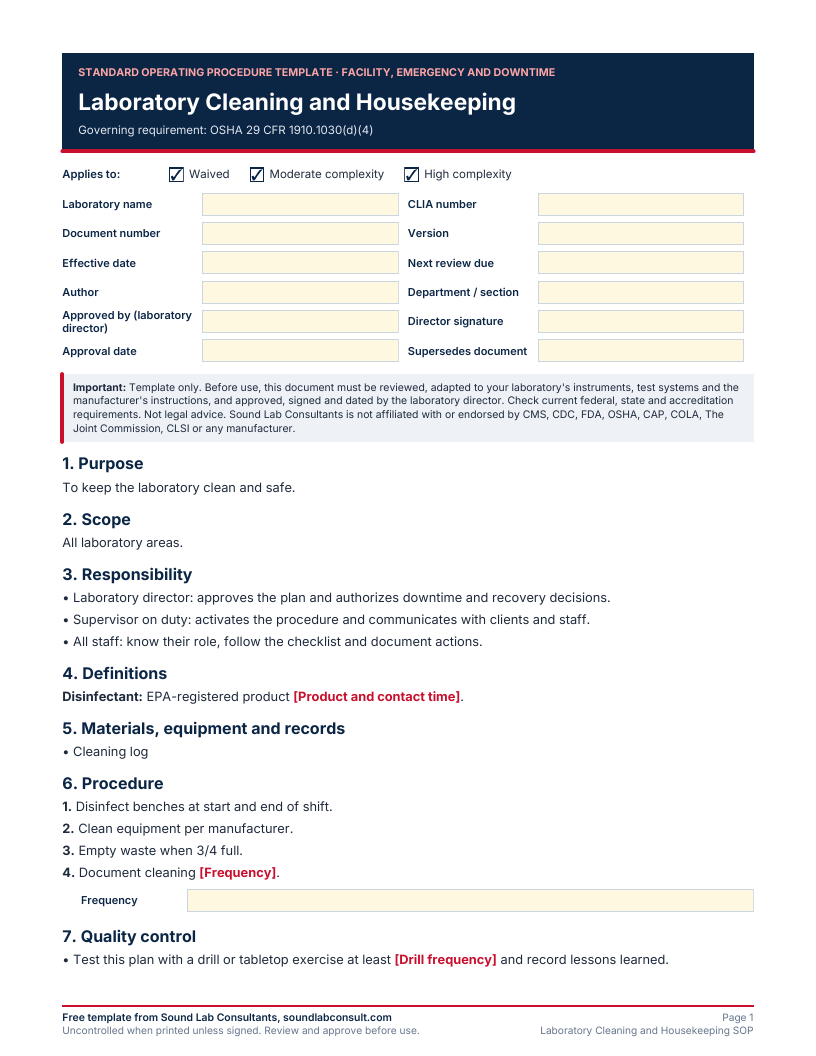
Laboratory Cleaning and Housekeeping
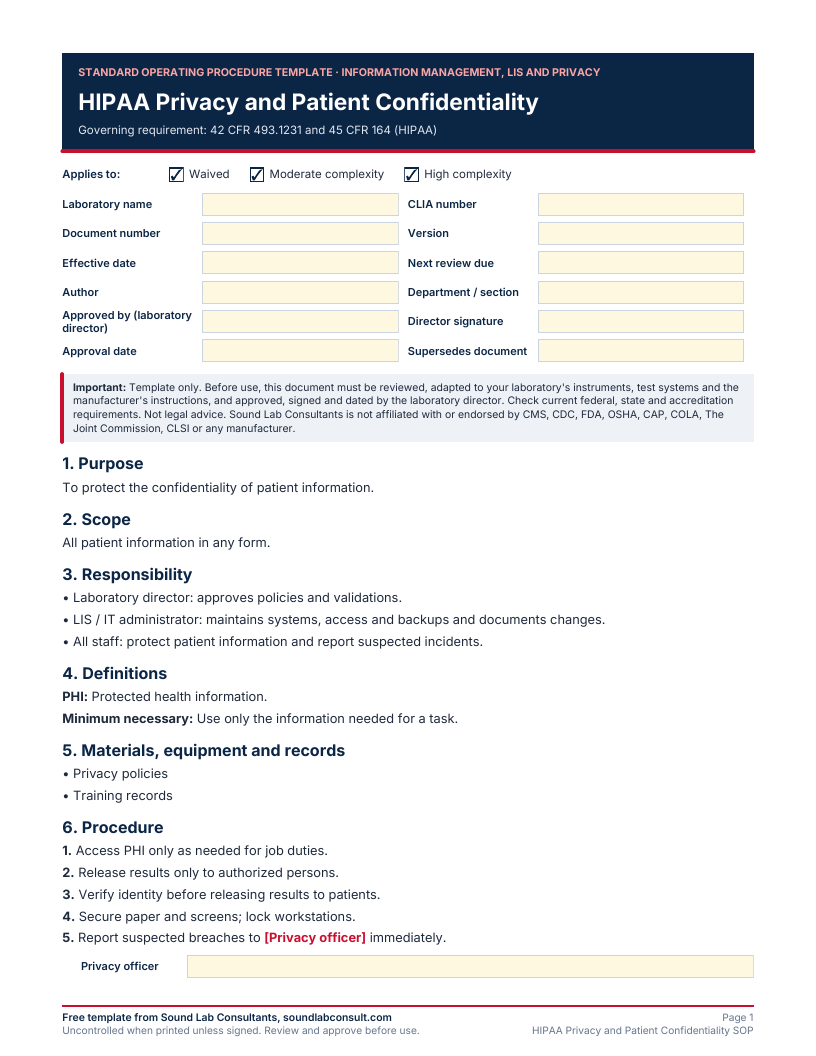
HIPAA Privacy and Patient Confidentiality
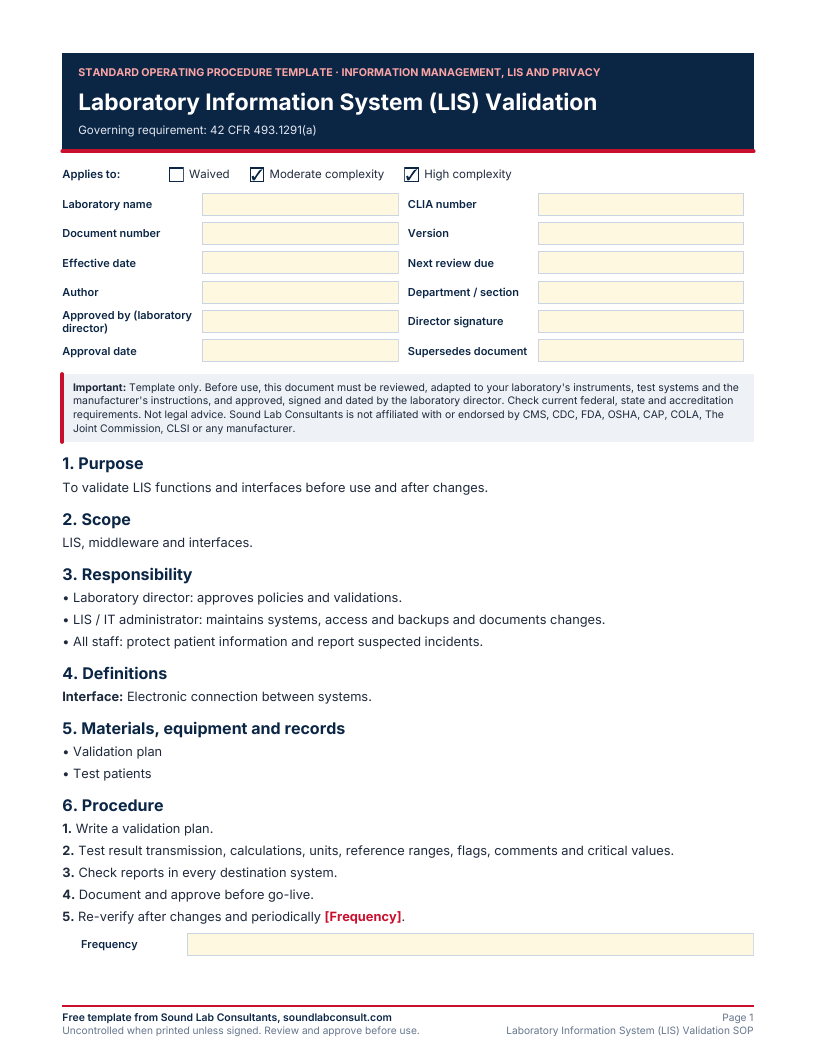
Laboratory Information System (LIS) Validation
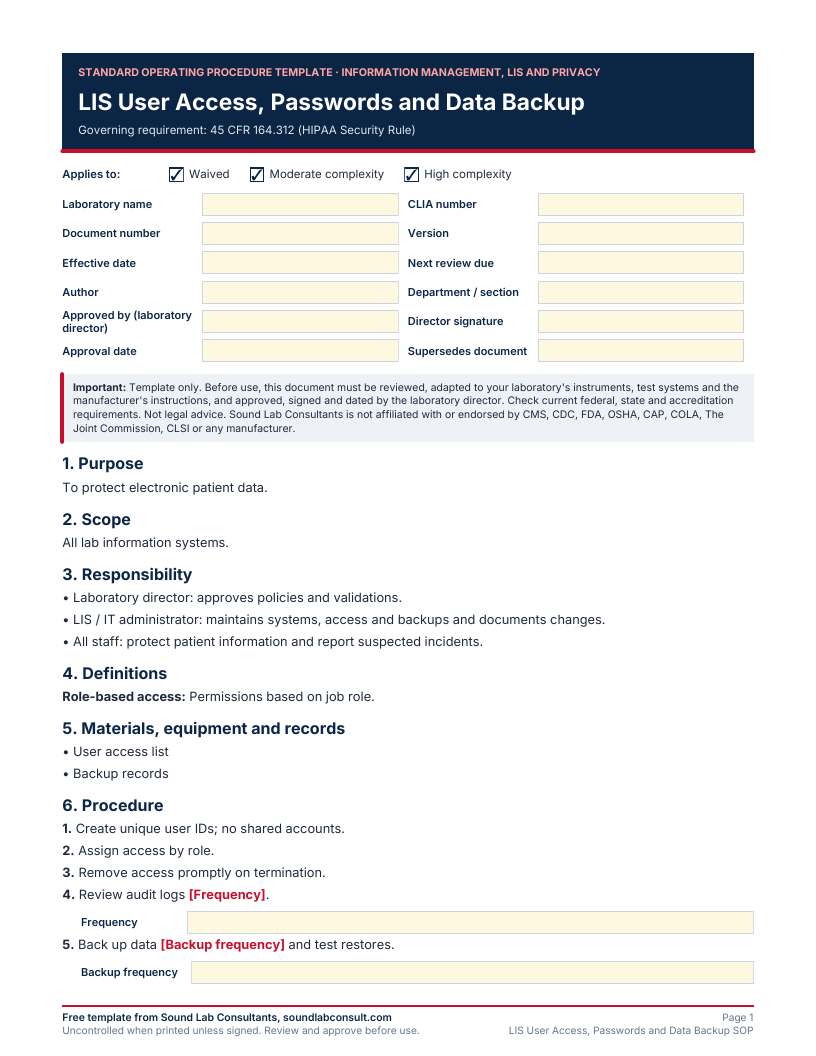
LIS User Access, Passwords and Data Backup
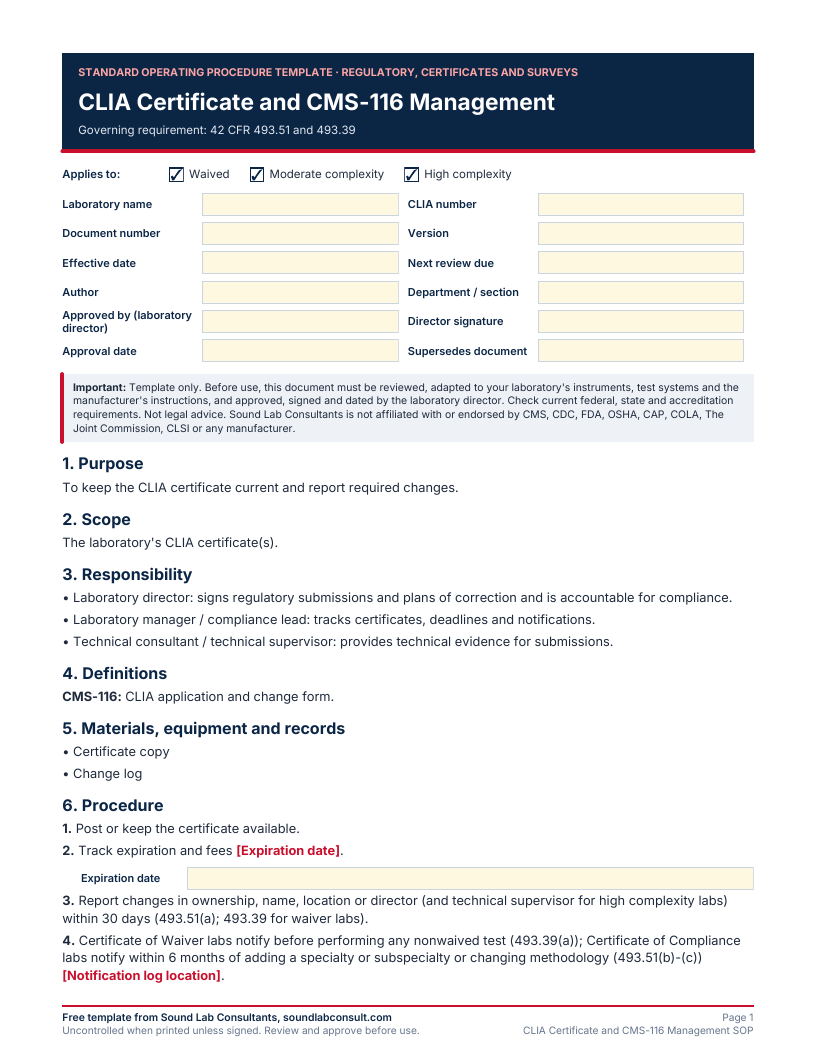
CLIA Certificate and CMS-116 Management
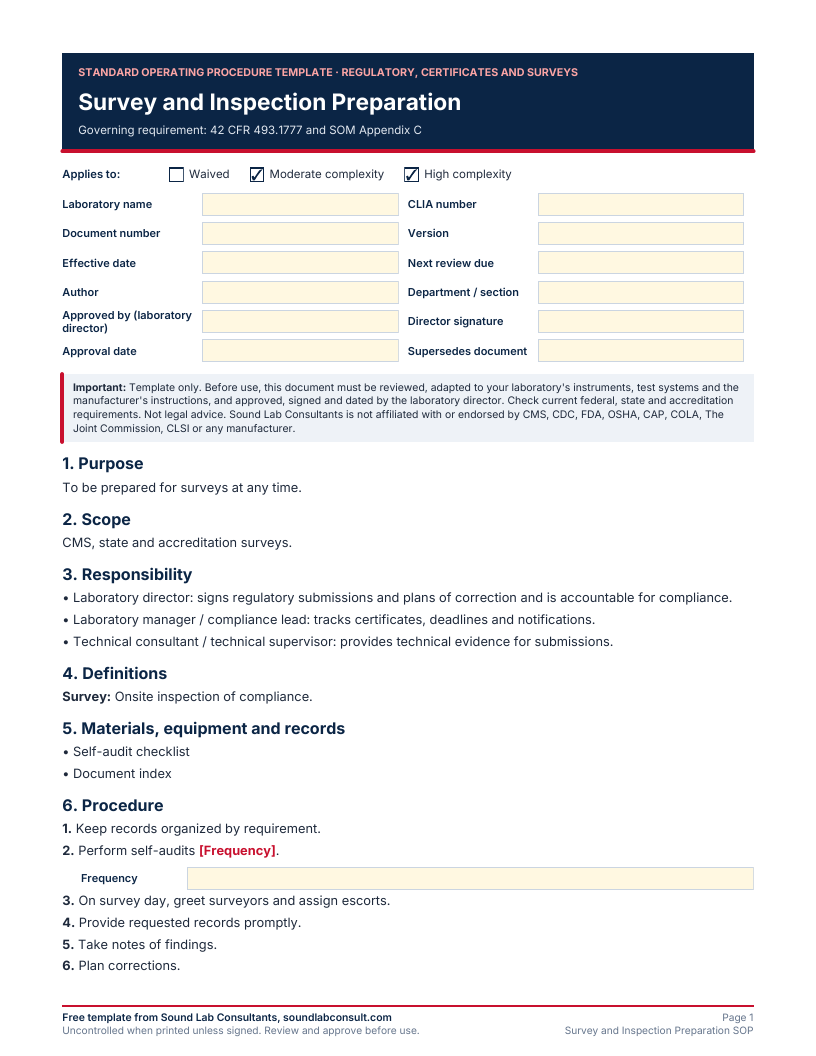
Survey and Inspection Preparation
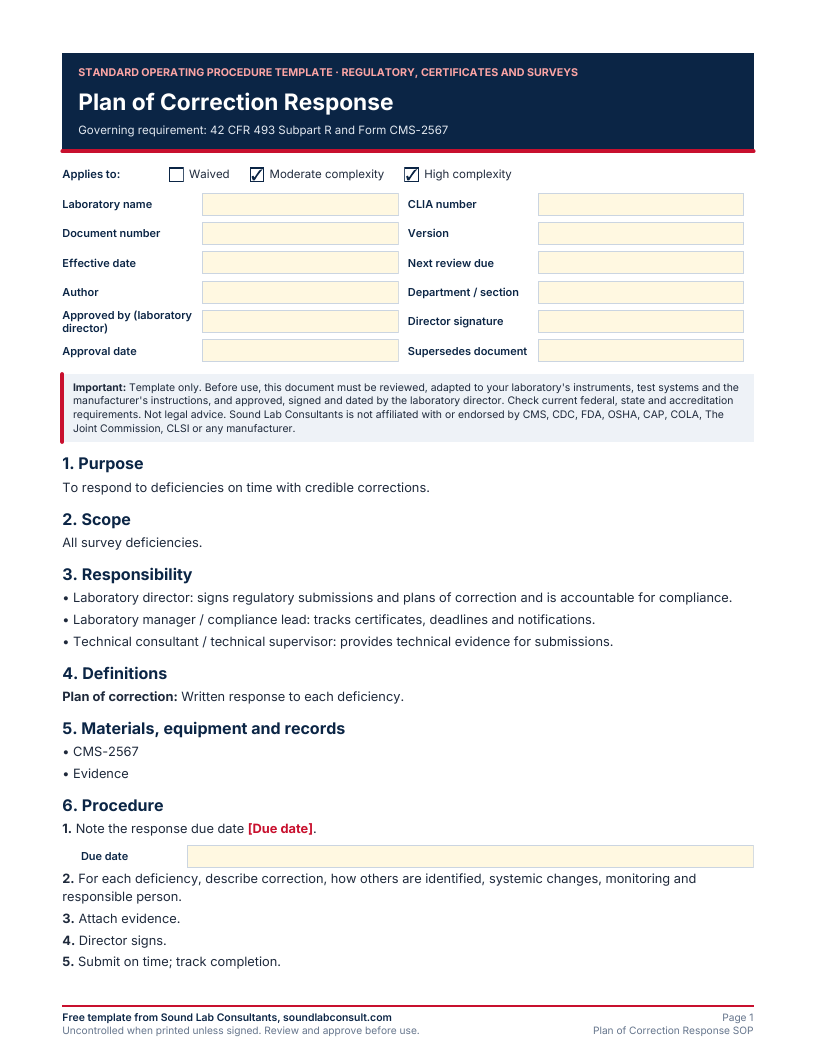
Plan of Correction Response
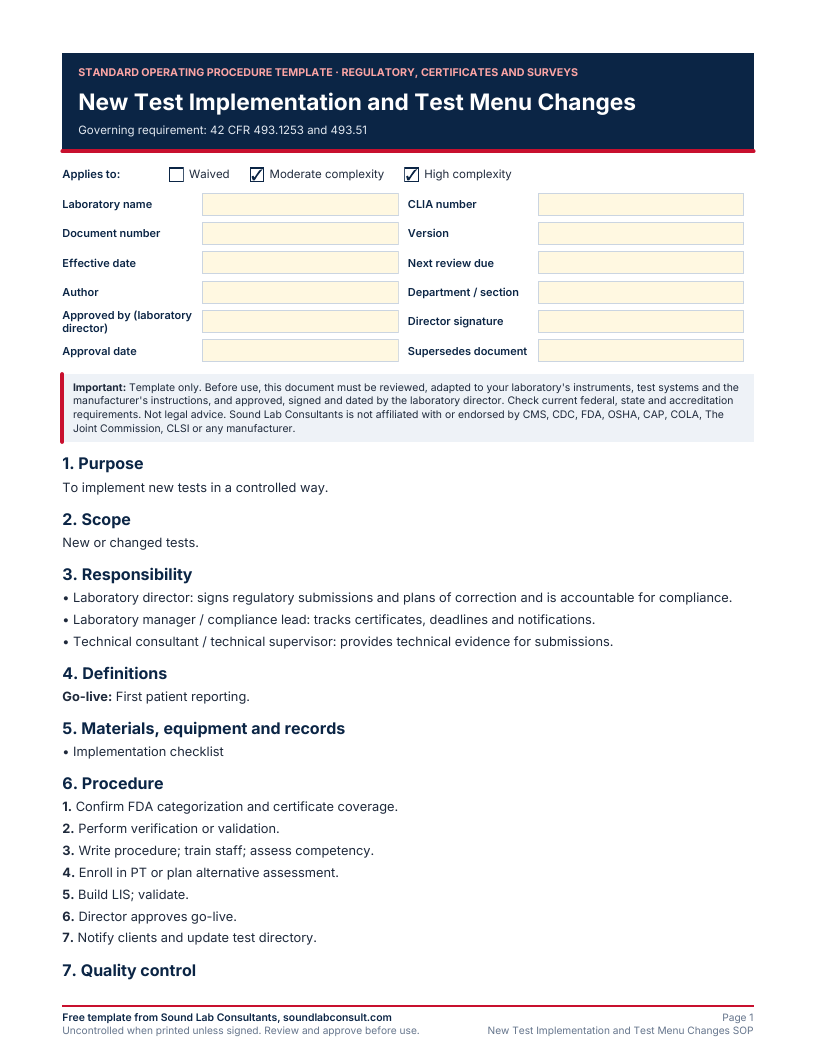
New Test Implementation and Test Menu Changes
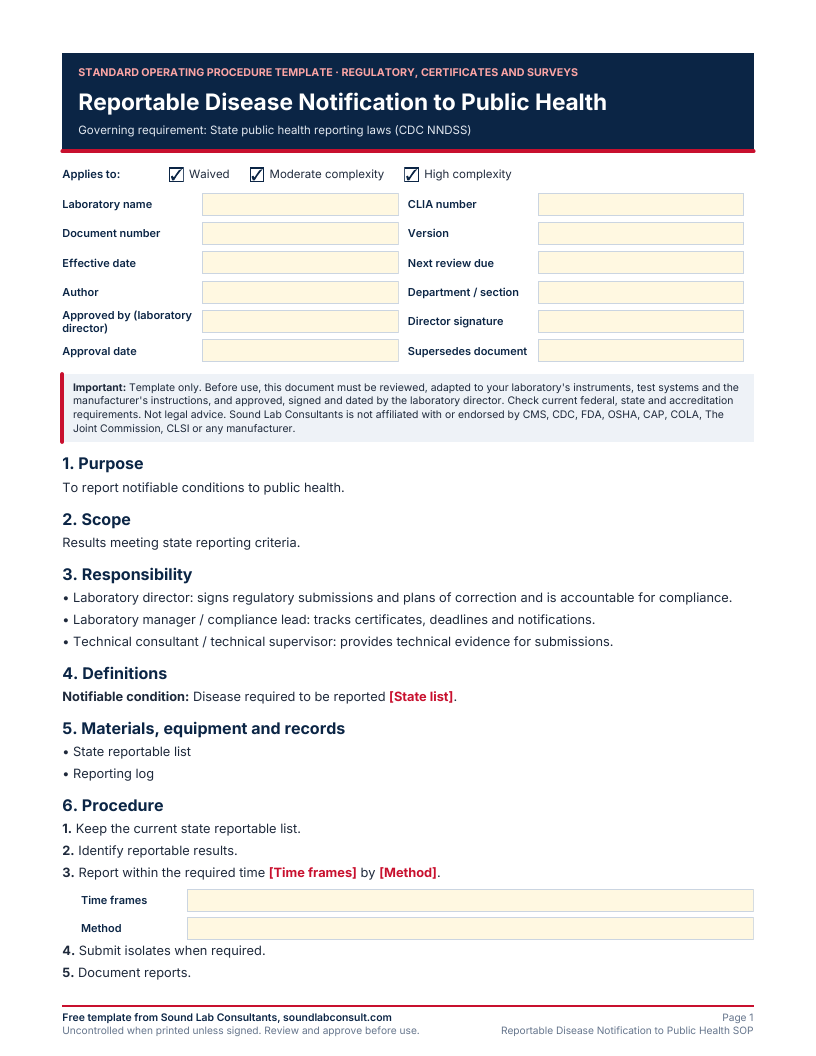
Reportable Disease Notification to Public Health
Want your whole procedure manual written for you?
Sound Lab Consultants writes complete, instrument-specific procedure manuals and quality systems for new and existing labs. Book a free consultation to talk through your test menu.
Book a free consultationWhat is a laboratory SOP?
A laboratory standard operating procedure is a controlled document that tells trained staff exactly how to perform a task: collecting a specimen, running QC, calibrating an analyzer, reporting a critical value or cleaning up a spill. Good SOPs make results consistent from person to person and shift to shift, and they are the first thing a CLIA surveyor or accreditation inspector reviews.
What every CLIA test procedure must include
For nonwaived testing, 42 CFR 493.1251(b) lists what the procedure manual must include when applicable:
- Patient preparation; specimen collection, labeling, storage, preservation, transport, processing and referral; acceptability and rejection criteria
- Microscopic examination, including detecting inadequately prepared slides
- Step-by-step performance, calculations and interpretation
- Preparation of slides, solutions, calibrators, controls, reagents and stains
- Calibration and calibration verification
- Reportable range
- Control procedures
- Corrective action when calibration or controls fail
- Limitations, including interfering substances
- Reference intervals
- Critical (panic or alert) values
- Pertinent literature references
- How results are entered and reported, including critical values
- What to do if the test system becomes inoperable
Manufacturer package inserts and operator manuals can cover some of these items, but anything they leave out must be written by the lab. The laboratory director must approve, sign and date every procedure and every change before use, and the lab must keep retired procedures at least 2 years with their dates of use (42 CFR 493.1105). Start with the procedure manual format template, the SOP on SOPs and the document control SOP.
Which SOPs does your lab need?
- Certificate of Waiver labs: the waived testing program policy, a procedure and QC log for each waived test, patient identification, specimen collection, result reporting, record retention and the OSHA safety plans.
- Moderate complexity labs: everything above plus method verification, calibration and calibration verification, QC, proficiency testing, competency assessment, quality assessment and the 493.1251 procedure for each test.
- High complexity labs: all of the moderate complexity set plus the specialty procedures for your test menu, method validation for laboratory-developed or modified tests, and the high complexity personnel roles.
All SOP templates by category
Administration and quality management (13)
- Document Control SOP template
- Writing and Formatting SOPs (SOP on SOPs) SOP template
- Quality Management System Plan (12 Quality System Essentials) SOP template
- Quality Assessment Program SOP template
- Corrective and Preventive Action (CAPA) SOP template
- Occurrence and Nonconforming Event Management SOP template
- Complaint Investigation SOP template
- Laboratory Risk Assessment SOP template
- Internal Audit SOP template
- Management Review SOP template
- Purchasing, Inventory and Supplier Qualification SOP template
- Laboratory Director Responsibilities Policy SOP template
- Quality Indicators and Turnaround Time Monitoring SOP template
Personnel, training and competency (12)
- Personnel Qualifications and Records Policy SOP template
- Job Description: Laboratory Director SOP template
- Job Description: Technical Consultant SOP template
- Job Description: Technical Supervisor SOP template
- Job Description: General Supervisor SOP template
- Job Description: Clinical Consultant SOP template
- Job Description: Testing Personnel SOP template
- New Employee Orientation and Training SOP template
- Competency Assessment (Six Required Elements) SOP template
- Delegation of Duties SOP template
- Continuing Education and Annual Training SOP template
- Phlebotomy Training and Competency SOP template
Pre-analytic: ordering, collection and specimen handling (15)
- Test Ordering and Requisitions SOP template
- Verbal and Add-On Test Orders SOP template
- Patient Identification SOP template
- Venipuncture (Routine Blood Collection) SOP template
- Capillary Blood Collection (Fingerstick and Heelstick) SOP template
- Urine Specimen Collection (Random, Clean-Catch and 24-Hour) SOP template
- Swab Specimen Collection (Nasopharyngeal, Nasal, Throat and Wound) SOP template
- Blood Culture Collection SOP template
- Specimen Labeling SOP template
- Specimen Transport and Storage SOP template
- Specimen Acceptance and Rejection Criteria SOP template
- Chain of Custody Specimen Collection SOP template
- Specimen Receiving and Accessioning SOP template
- Specimen Processing and Centrifugation SOP template
- Specimen Packaging and Shipping (UN3373) SOP template
Analytic: QC, calibration, verification and equipment (22)
- Procedure Manual (42 CFR 493.1251 Format) SOP template
- Method Verification for FDA-Cleared or Approved Tests SOP template
- Method Validation for Laboratory-Developed and Modified Tests SOP template
- Calibration SOP template
- Calibration Verification and Reportable Range (AMR) Verification SOP template
- Quality Control Policy (Nonwaived Tests) SOP template
- QC Review with Levey-Jennings Charts and Westgard Rules SOP template
- Individualized Quality Control Plan (IQCP) SOP template
- Reference Interval Verification SOP template
- Proficiency Testing Handling SOP template
- Proficiency Testing Failure Investigation SOP template
- Alternative Performance Assessment (Tests Without PT) SOP template
- Comparison of Test Results (Multiple Instruments or Sites) SOP template
- Instrument Maintenance and Function Checks SOP template
- Reagent Lot-to-Lot Verification SOP template
- Reagent Labeling, Storage and Expiration SOP template
- Temperature Monitoring (Refrigerators, Freezers, Incubators and Room) SOP template
- Laboratory Water Quality (CLRW) Testing SOP template
- Pipette Calibration Verification SOP template
- Centrifuge Maintenance and Speed Verification SOP template
- Thermometer and Timer Verification SOP template
- Autoverification of Results SOP template
Waived testing and point-of-care testing (12)
- Waived Testing Program Policy (Certificate of Waiver) SOP template
- Blood Glucose Meter Testing (Waived POCT) SOP template
- Urine Dipstick (Reagent Strip) Testing SOP template
- Urine hCG Pregnancy Test SOP template
- Rapid Strep A Antigen Test SOP template
- Rapid Influenza and SARS-CoV-2 Antigen Testing SOP template
- Hemoglobin A1c (Waived POCT) SOP template
- Fecal Occult Blood and FIT Testing SOP template
- Hemoglobin Testing (Waived POCT) SOP template
- Prothrombin Time / INR (Waived POCT) SOP template
- Point-of-Care Testing (POCT) Program SOP template
- Provider-Performed Microscopy (PPM) Procedures SOP template
Specialty and subspecialty procedures (30)
- Chemistry Analyzer Operation SOP template
- Serum Indices: Hemolysis, Icterus and Lipemia SOP template
- Blood Gas Analysis SOP template
- Complete Blood Count (CBC) on an Automated Hematology Analyzer SOP template
- Peripheral Blood Smear and Manual Differential SOP template
- Body Fluid Cell Count SOP template
- Coagulation Testing: PT/INR and aPTT SOP template
- Urinalysis: Chemical and Microscopic Examination SOP template
- Gram Stain SOP template
- Urine Culture SOP template
- Blood Culture Processing SOP template
- Antimicrobial Susceptibility Testing SOP template
- Microbiology Media and Reagent Quality Control SOP template
- PCR Workflow and Contamination Control SOP template
- Nucleic Acid Extraction SOP template
- Real-Time PCR Assay SOP template
- ABO/Rh(D) Typing SOP template
- Antibody Screen and Identification SOP template
- Crossmatch and Compatibility Testing SOP template
- Blood Product Receipt, Storage and Issue SOP template
- Transfusion Reaction Investigation SOP template
- Immunoassay (ELISA) Procedure SOP template
- Syphilis Serology (RPR) SOP template
- Urine Drug Screen by Immunoassay SOP template
- Confirmatory Drug Testing by LC-MS/MS SOP template
- Histology Tissue Processing and Embedding SOP template
- Histology Special Stains and Controls SOP template
- Cytology: Gynecologic Slide Review and Workload Limits SOP template
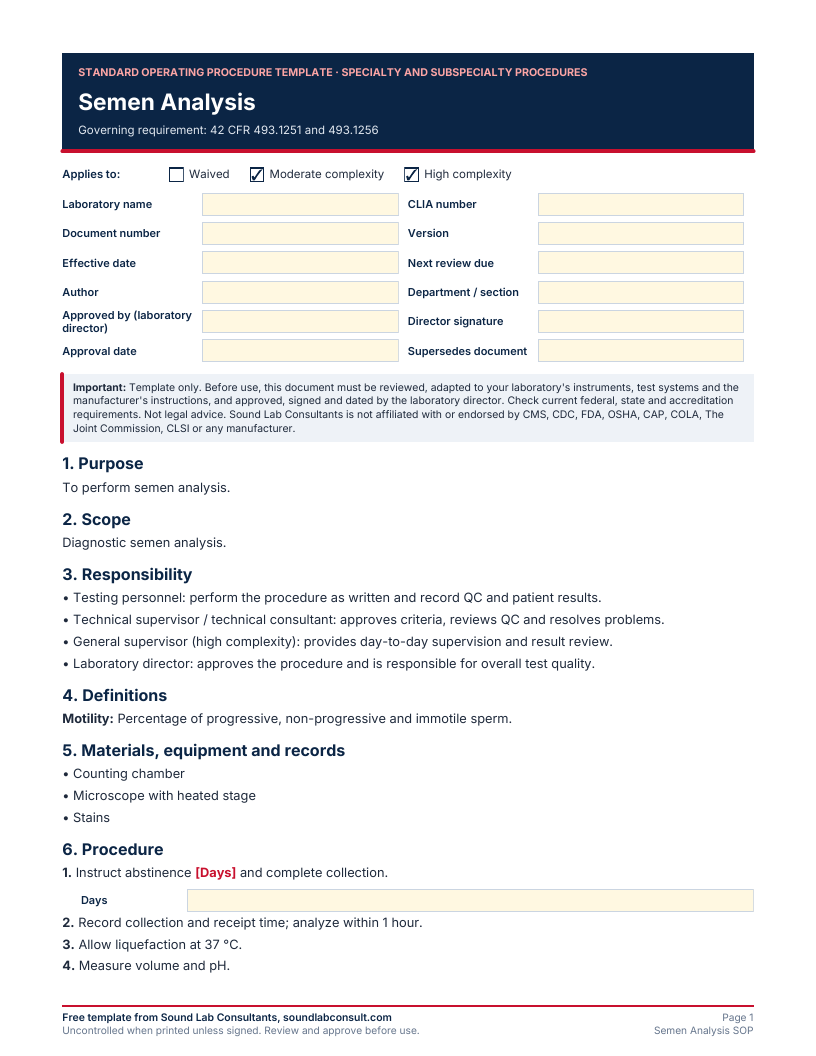
- Semen Analysis SOP template
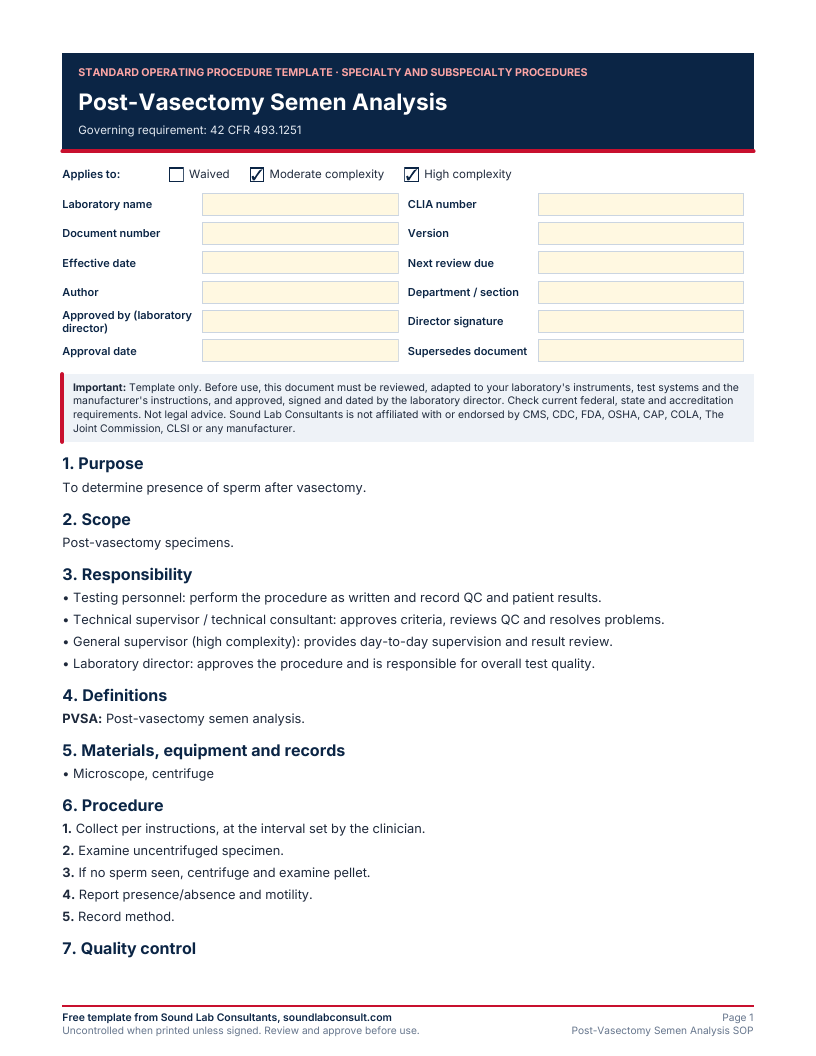
- Post-Vasectomy Semen Analysis SOP template
Post-analytic: reporting and records (7)
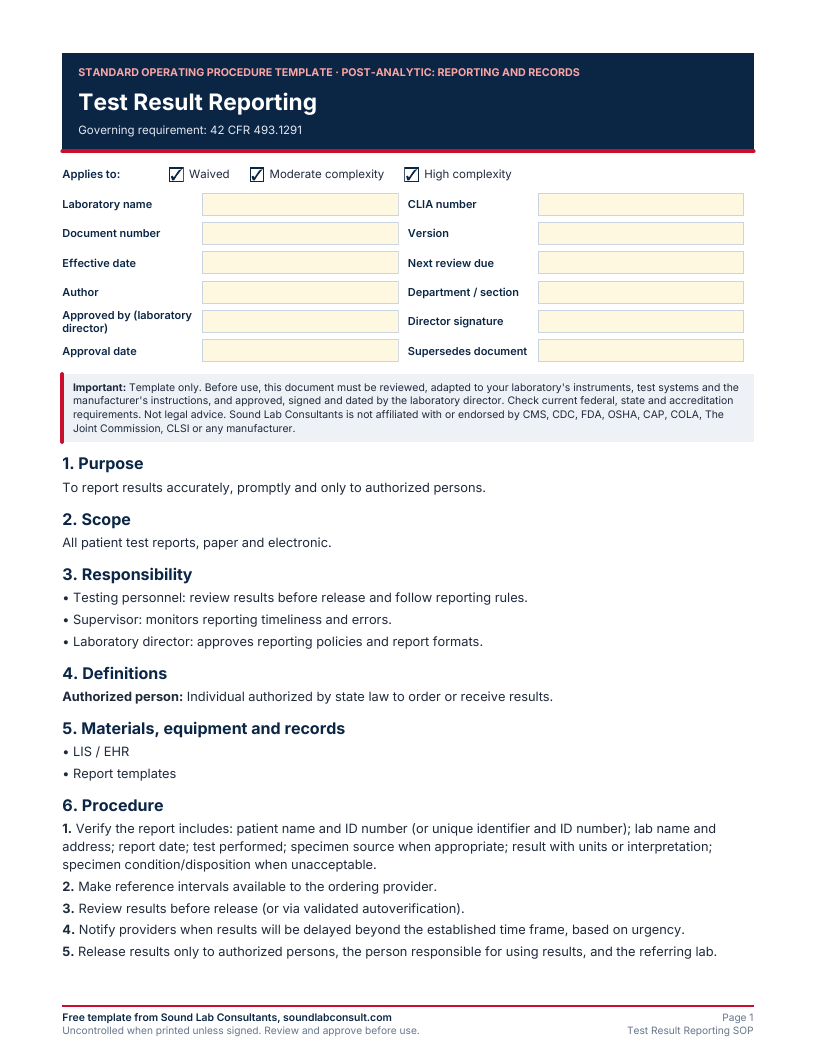
- Test Result Reporting SOP template
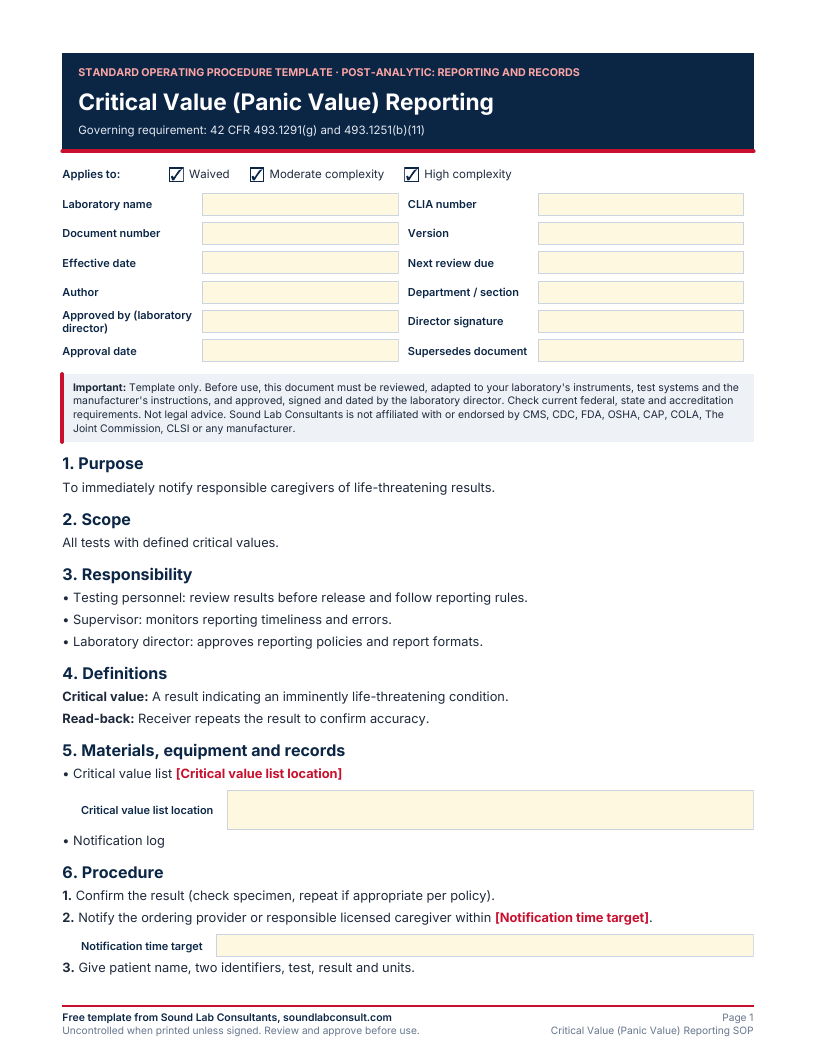
- Critical Value (Panic Value) Reporting SOP template
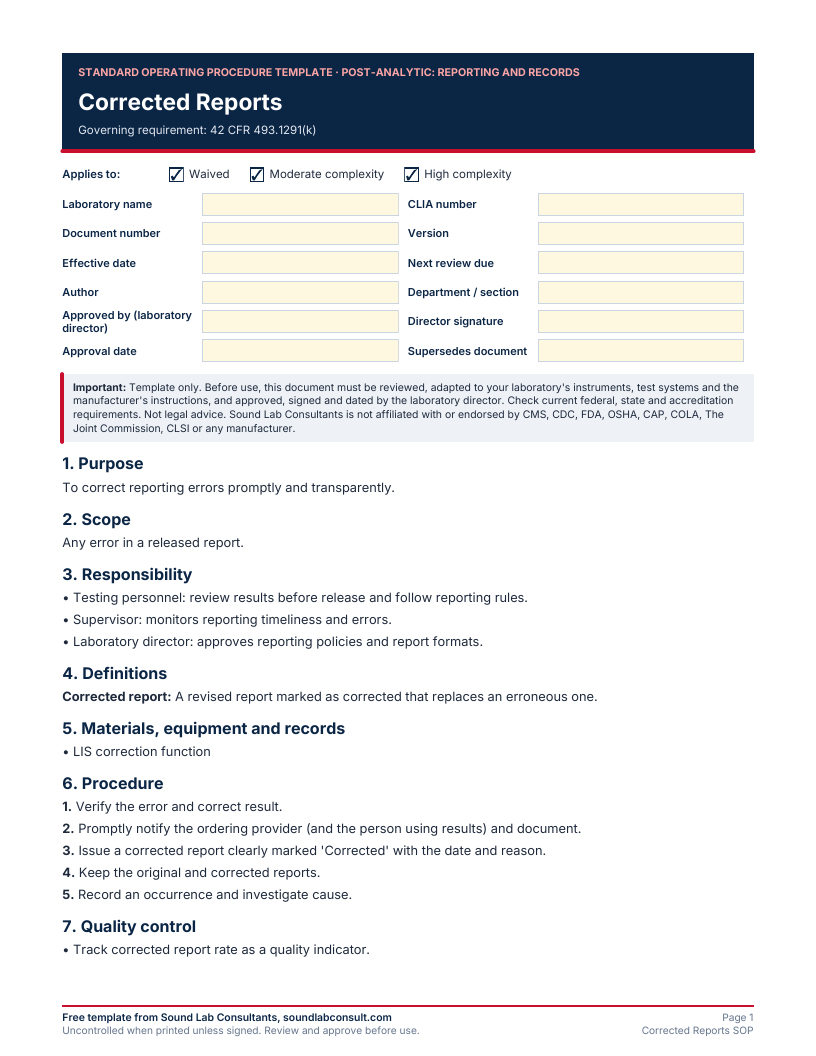
- Corrected Reports SOP template
- Record and Specimen Retention SOP template
- Referral Laboratory (Send-Out) Testing SOP template
- Specimen Retention, Storage and Disposal SOP template
- Delayed Results and Client Notification SOP template
Laboratory safety (OSHA) (13)
- Bloodborne Pathogens Exposure Control Plan SOP template
- Chemical Hygiene Plan SOP template
- Hazard Communication (GHS) SOP template
- Spill Cleanup (Biological and Chemical) SOP template
- Regulated Medical Waste Management SOP template
- Fire and Electrical Safety SOP template
- Personal Protective Equipment (PPE) SOP template
- Eyewash and Safety Shower Checks SOP template
- Laboratory Ergonomics SOP template
- Needlestick and Post-Exposure Follow-Up SOP template
- Formaldehyde and Xylene Exposure Monitoring SOP template
- Biosafety Cabinet Use and Biosafety Risk Assessment SOP template
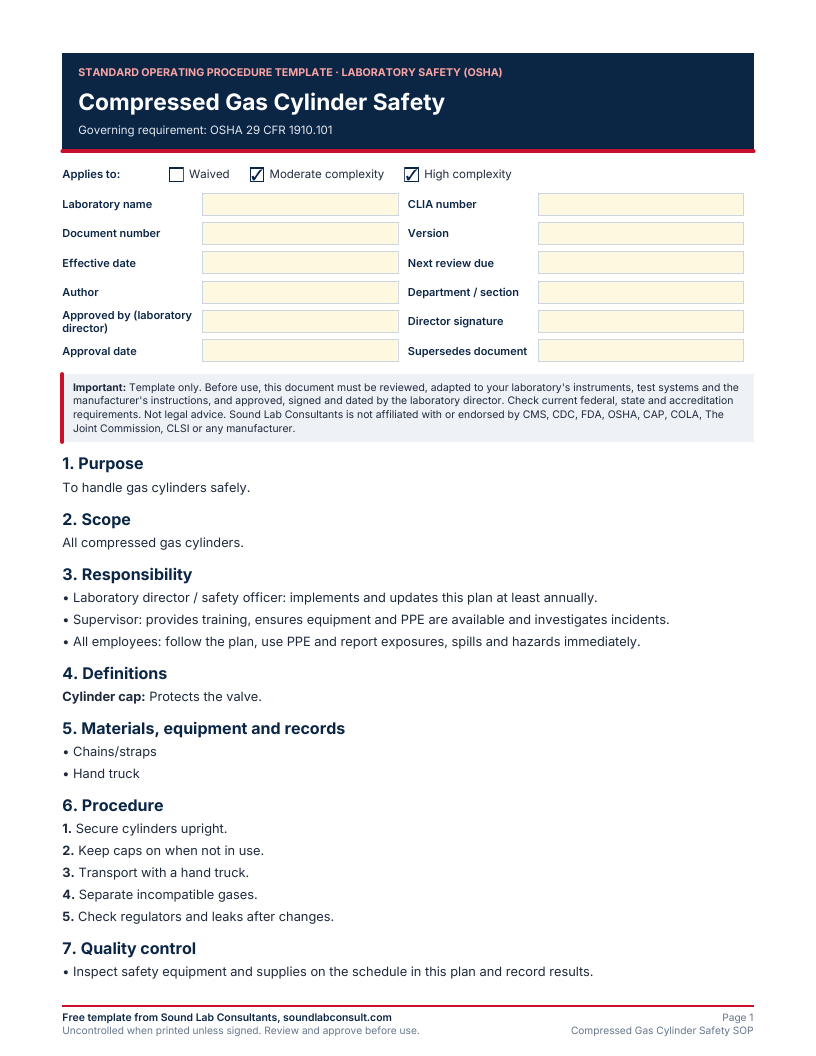
- Compressed Gas Cylinder Safety SOP template
Facility, emergency and downtime (4)
- Laboratory Emergency Preparedness Plan SOP template
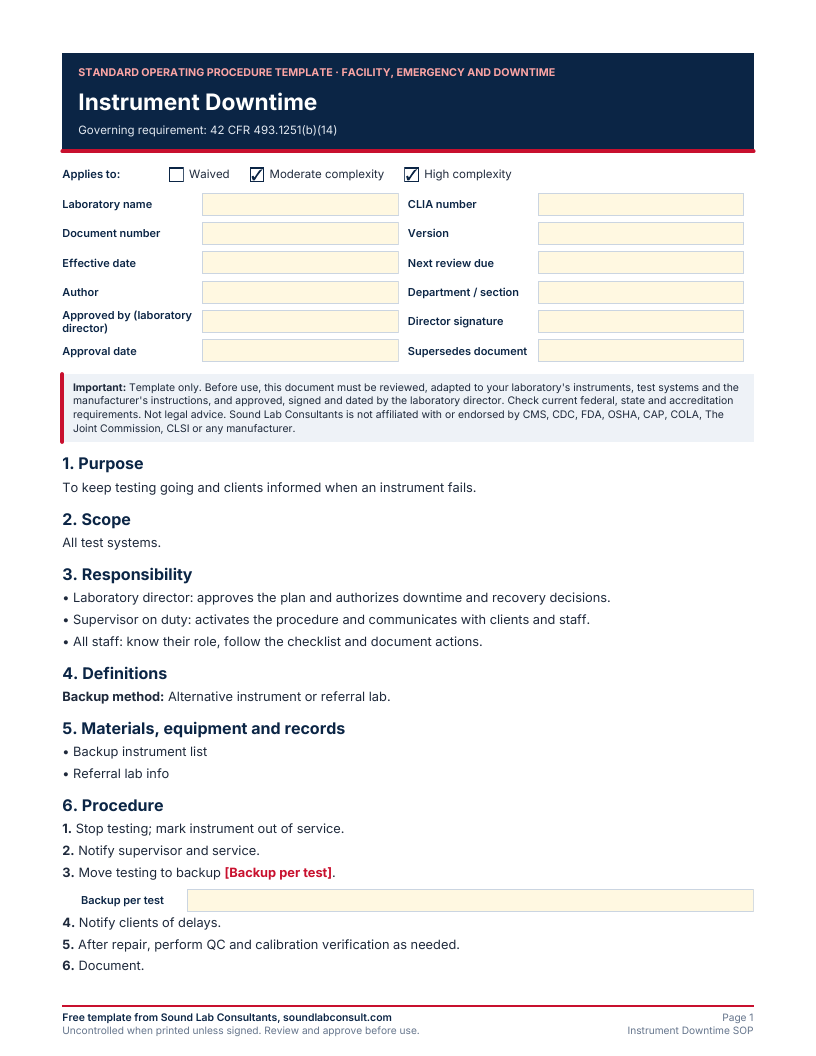
- Instrument Downtime SOP template
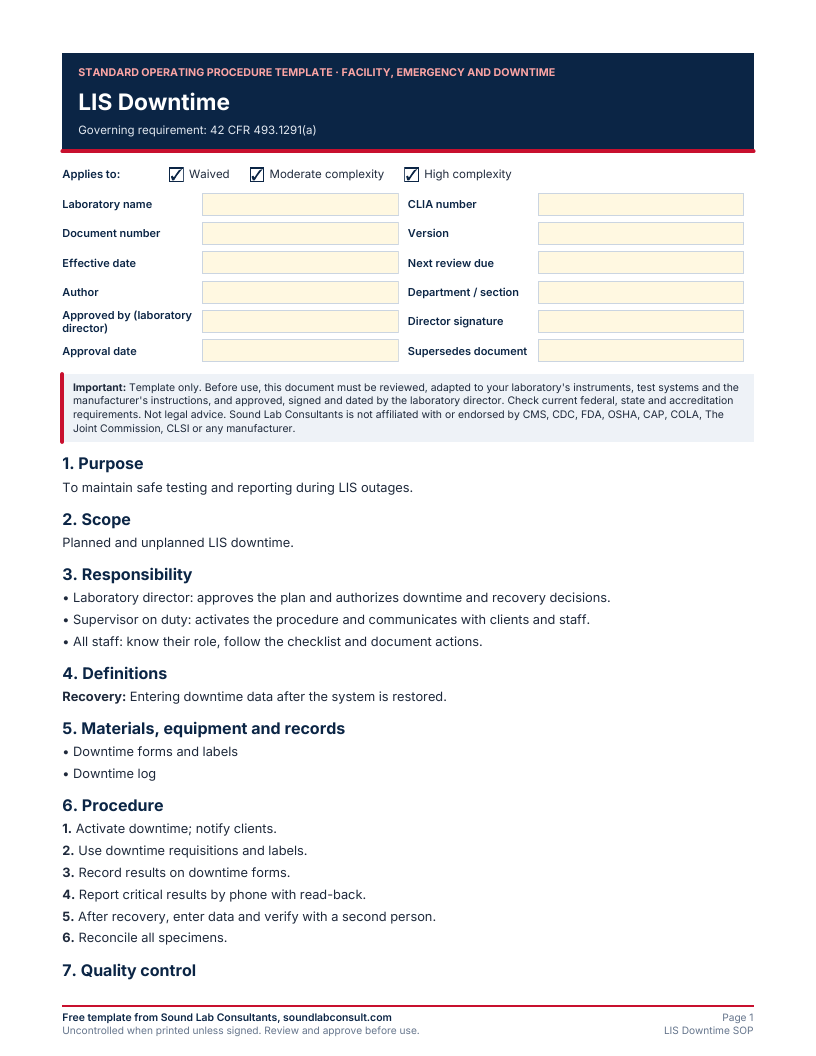
- LIS Downtime SOP template
- Laboratory Cleaning and Housekeeping SOP template
Information management, LIS and privacy (3)
- HIPAA Privacy and Patient Confidentiality SOP template
- Laboratory Information System (LIS) Validation SOP template
- LIS User Access, Passwords and Data Backup SOP template
Regulatory, certificates and surveys (5)
- CLIA Certificate and CMS-116 Management SOP template
- Survey and Inspection Preparation SOP template
- Plan of Correction Response SOP template
- New Test Implementation and Test Menu Changes SOP template
- Reportable Disease Notification to Public Health SOP template
How to use these templates
- Pick the templates that match your certificate type and test menu.
- Fill in the header block and highlighted fields, using your package inserts for anything marked "per manufacturer".
- Edit steps to match your workflow, state rules and accreditation standards.
- Have the laboratory director approve, sign and date each one before use.
- Train staff, record their review and add each SOP to your document control master list.
Need a single master format instead? See the master lab SOP template and the guide to what a CLIA procedure manual needs. For a full manual written to your instruments, see laboratory SOP writing services.
Frequently asked questions
Are these laboratory SOP templates really free?
Yes. All 136 templates are free to download as fillable PDF and Word files. There is no email gate, account or sign-up.
What is a laboratory SOP?
A laboratory standard operating procedure (SOP) is a written, director-approved instruction for performing a task the same way every time. For nonwaived testing, 42 CFR 493.1251 requires a written procedure manual for all tests that staff must follow.
What must a CLIA procedure include?
When applicable: specimen requirements and rejection criteria, step-by-step performance, calculations, reagent and control preparation, calibration and calibration verification, reportable range, control procedures, corrective action, limitations and interferences, reference intervals, critical values, references, the reporting system and what to do if the test system becomes inoperable (42 CFR 493.1251(b)).
Do waived labs need SOPs?
Certificate of Waiver labs must follow the manufacturer's instructions exactly. CDC recommends written procedures, training records and QC logs, and the waived templates here are built for that.
Can I use a template without changes?
No. Every template must be adapted to your instruments, test systems and the manufacturer's instructions, and approved, signed and dated by the laboratory director before use.
How do I fill in the forms?
Open the PDF in a reader that supports forms and type in the shaded fields, or open the Word file and type over the highlighted content controls. Each template includes a header block, revision history and an annual review log.
Official sources
- eCFR, 42 CFR Part 493 Laboratory Requirements (CLIA)
- eCFR, 42 CFR 493.1251 Procedure manual
- CMS, Clinical Laboratory Improvement Amendments (CLIA)
- CDC, Waived tests
- OSHA, 29 CFR 1910.1030 Bloodborne pathogens
- OSHA, 29 CFR 1910.1450 Laboratory standard
Related pages
These templates are free, general starting points, not legal or regulatory advice. Every template must be reviewed and approved, signed and dated by your laboratory director, and adapted to your lab's instruments, test systems and the manufacturer's instructions, your state rules and your accreditation organization's standards before use. Sound Lab Consultants is not affiliated with or endorsed by CMS, CDC, FDA, OSHA, HHS, CAP, COLA, The Joint Commission, CLSI, any state agency, or any instrument or reagent manufacturer. CLSI and other standards are referenced by name only. Sound Lab Consultants, 25 Arizona Pl, Chandler, AZ 85225.