
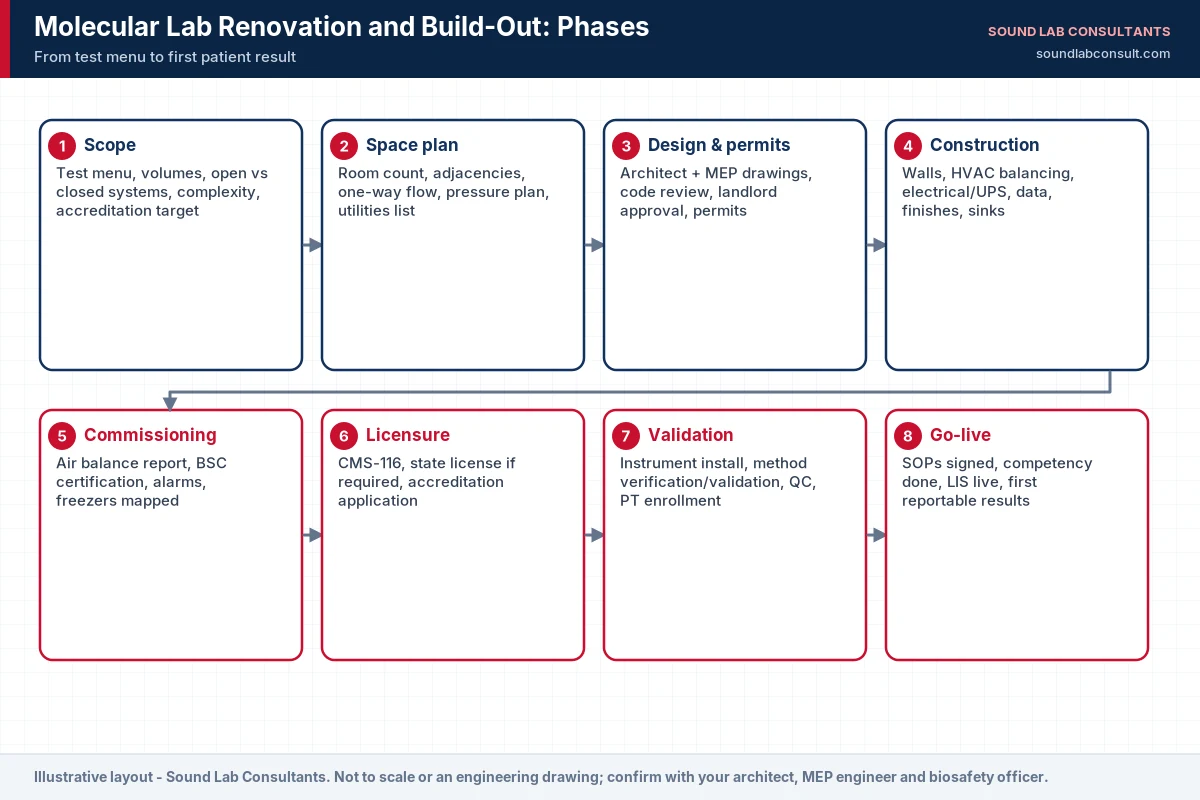
Short answer: Build a molecular lab in eight phases: define scope (menu, volume, open vs closed); plan the space (rooms, adjacencies, one-way flow, pressure, utilities); complete design and permits; construct; commission (air balance, BSC certification, alarms, freezer mapping); obtain licensure (CMS-116, state license, accreditation); install and validate instruments; and go live with signed SOPs, competency and LIS. Design review before construction prevents most costly changes.
Last reviewed November 25, 2026. Primary sources: 42 CFR 493.1101, CMS Form CMS-116, 42 CFR 493.1253.
The Eight Phases
1. Scope
- Test menu now and in three to five years; specimen types and daily volume.
- Open vs closed platforms; LDTs planned or not.
- Complexity and certificate type; accreditation target; states you will test for.
- Staffing model and hours.
2. Space Plan
- Room program: reagent prep, specimen prep, post-amp, anterooms, support.
- Adjacencies and one-way flow drawn on the plan.
- Pressure intent for each room and door.
- Utility list per room: circuits, UPS, data, sinks, eyewash, exhaust.
- Equipment list with footprints and clearances.
3. Design and Permits
- Architect and MEP engineer engaged; lab design intent memo issued.
- Code review including occupancy, egress, fire protection for lab chemicals (NFPA 45 where adopted).
- Landlord approval for HVAC, exhaust and floor loading.
- Building permits; any state facility approvals.
Review each drawing set (schematic, design development, construction documents) against the intent memo. Moving a wall on paper costs little; moving it later costs a lot.
Room-by-Room Equipment Guide
Plan equipment, power and bench space room by room. Each card opens a render, a numbered layout and a placement table.
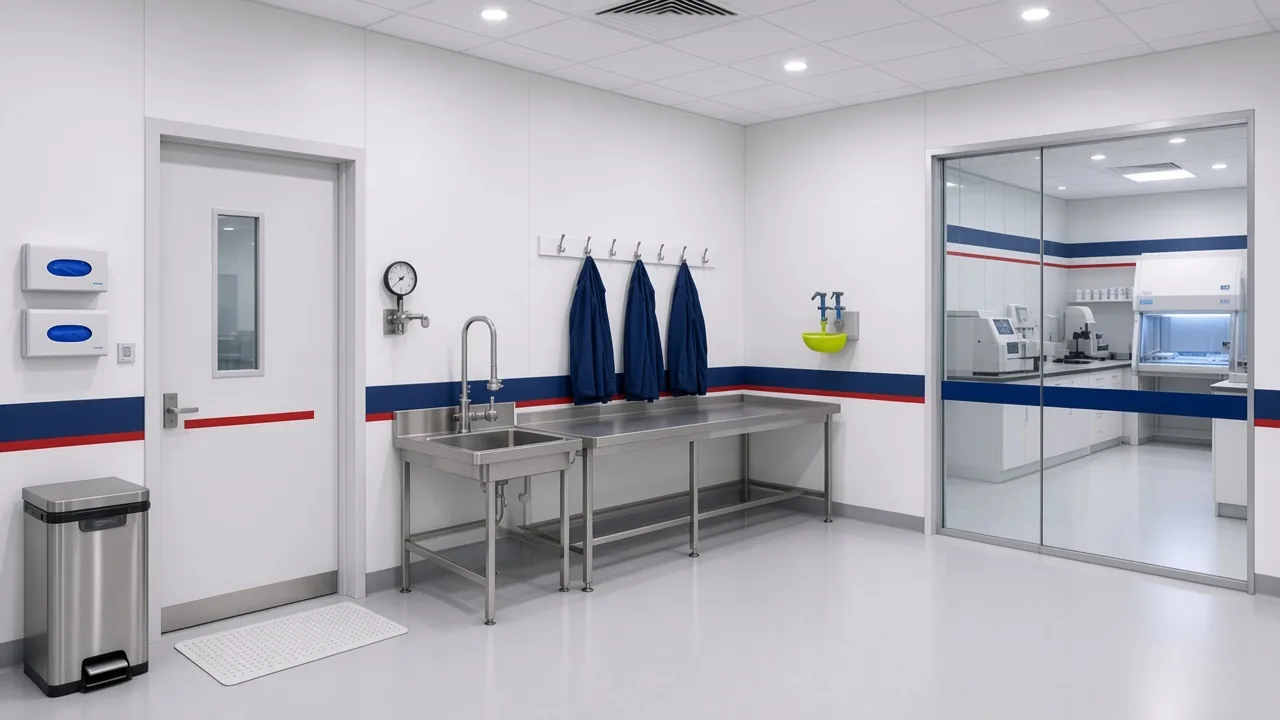 Gowning AnteroomEntry to clean rooms: 9 items with placement
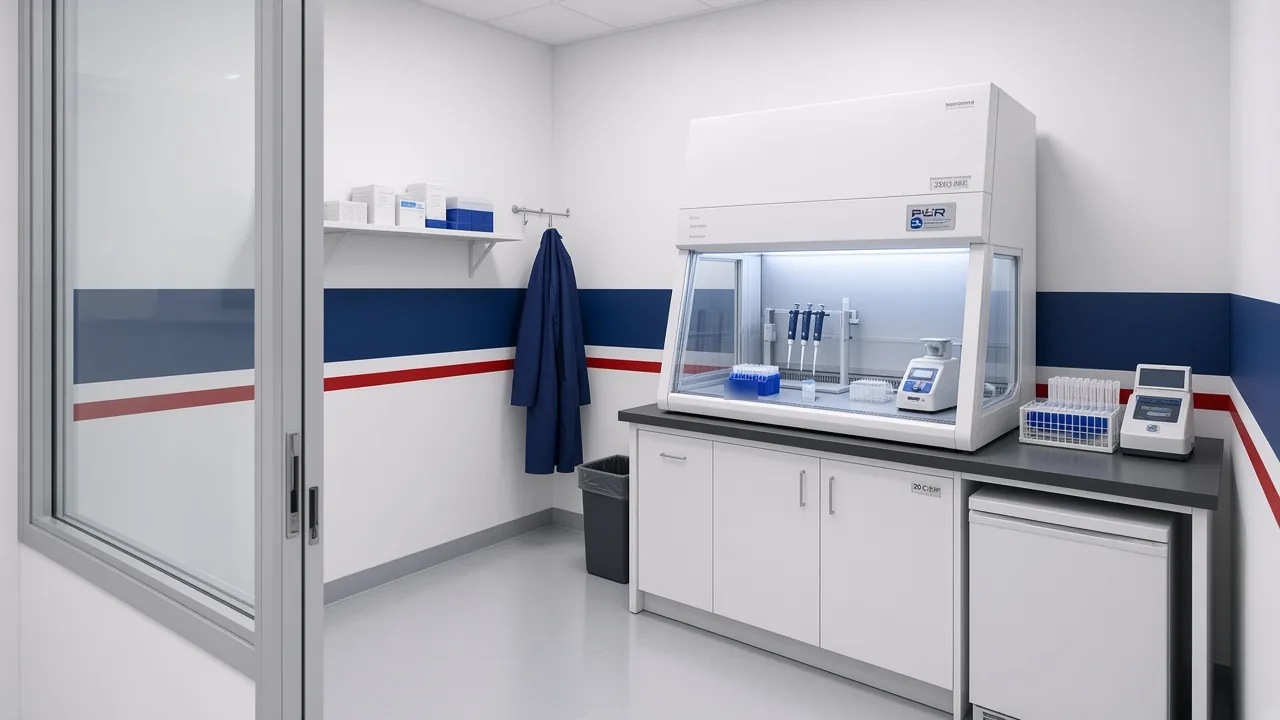 PCR Reagent Preparation RoomPre-amplification (cleanest room): 10 items with placement
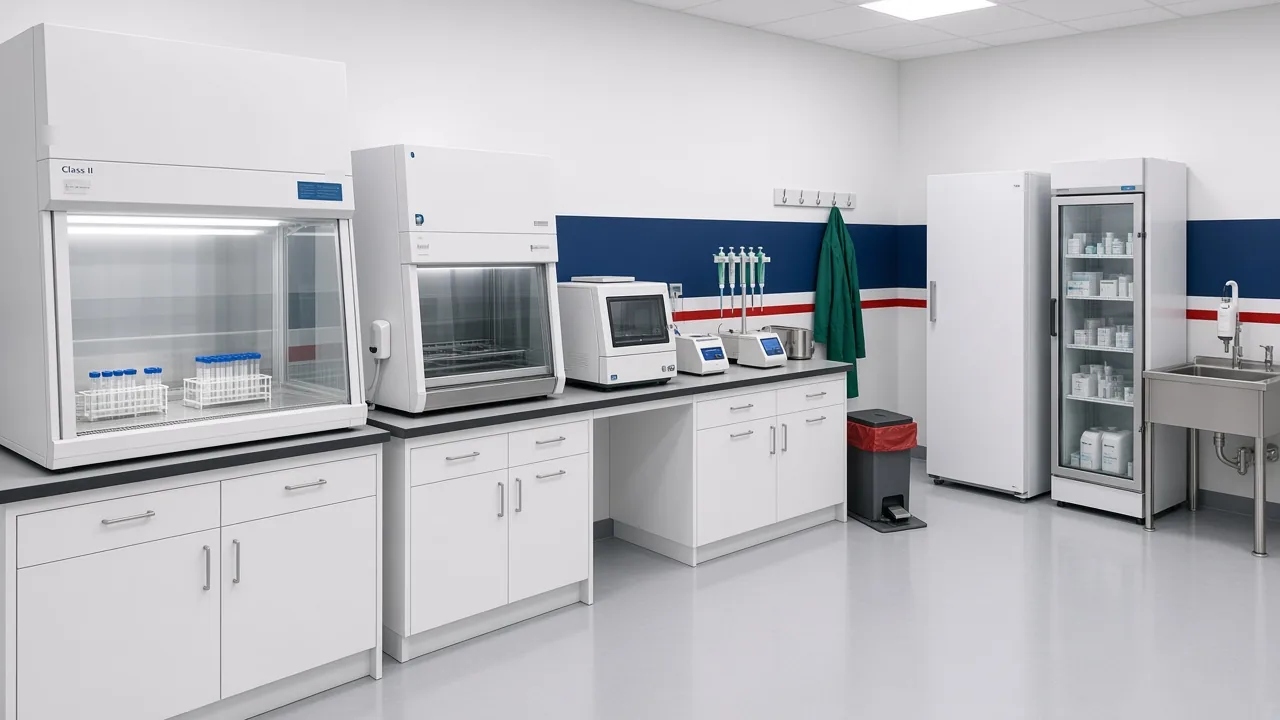 Specimen Preparation and Extraction RoomPre-amplification: 11 items with placement
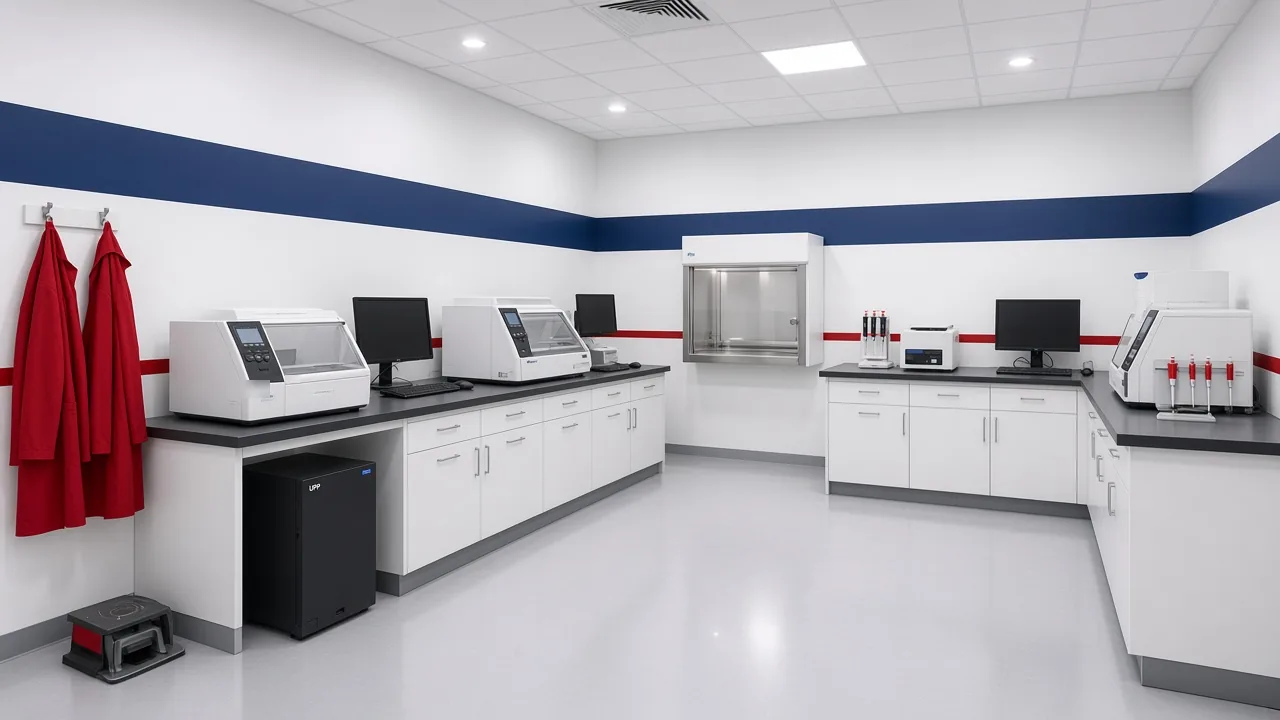 Amplification and Detection RoomPost-amplification: 10 items with placement
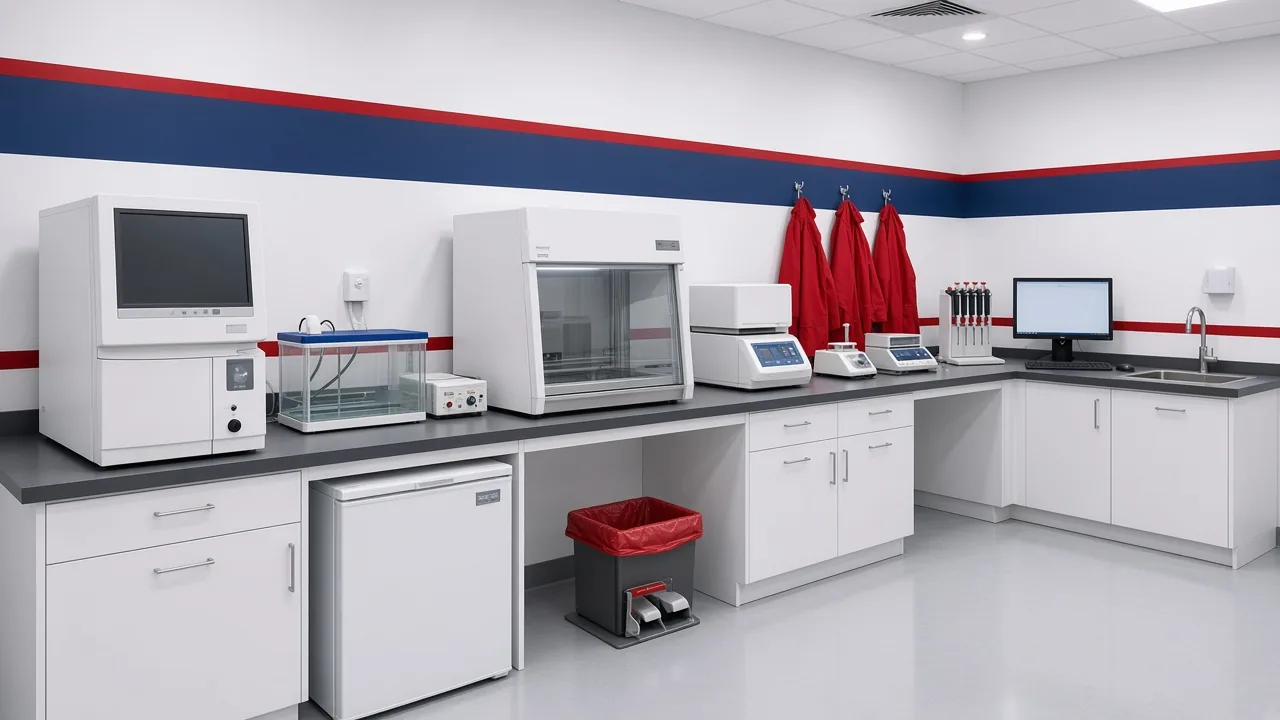 Post-Amplification Analysis RoomPost-amplification (product detection): 11 items with placement
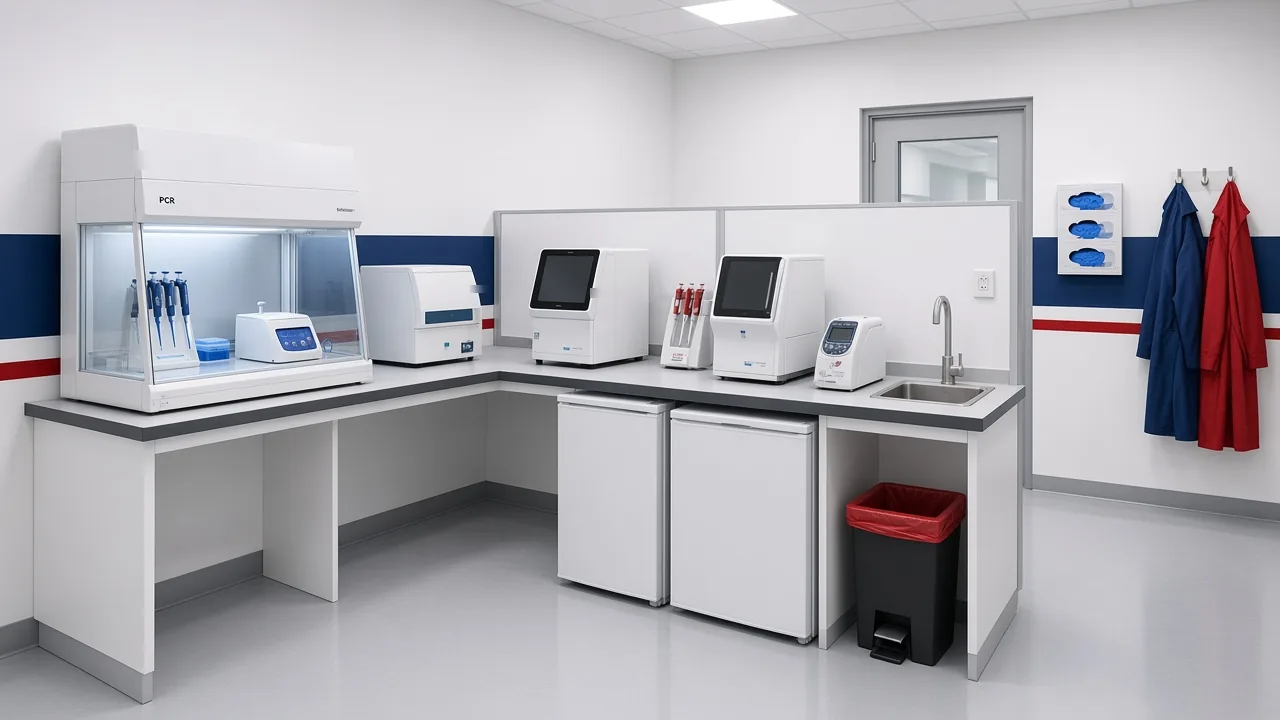 Physician Office Molecular Lab (One Room)Clean end and testing end in one room: 11 items with placement
Planning a new lab or a renovation?
Send us your floor plan or test menu. Sound Lab Consultants reviews layouts against CLIA, accreditation and biosafety expectations before you build.
Book a free consultation4. Construction
- Walls to deck where pressure separation needs it; sealed penetrations.
- HVAC ductwork, exhaust and controls; door undercuts and transfer grilles per design.
- Electrical, UPS and emergency circuits; network drops.
- Casework, sinks, eyewash, flooring and finishes.
5. Commissioning
- Test and balance report confirming pressure relationships and airflow.
- BSC certification after installation; PCR workstation UV and airflow checks.
- Freezer and refrigerator temperature mapping and alarm tests.
- Pressure monitors and alarms tested; punch list closed.
6. Licensure and Accreditation
File Form CMS-116 for the right certificate, add any state license, and apply to your accreditor if you choose accreditation. Licensure timelines vary by state; start early. See how to start a molecular PCR lab.
7. Validation
Install and qualify instruments, then verify FDA-cleared tests or validate LDTs under 42 CFR 493.1253, set QC, enroll in proficiency testing and complete competency. Guides: PCR method verification and molecular LDT validation.
8. Go-Live
- Director-approved SOPs and procedure manual.
- Competency documented for every tester.
- LIS orders and results verified end to end.
- First patient results reviewed; environmental monitoring baseline in place.
How Sound Lab Consultants Helps
Molecular lab build-out management: scope and space program, design review at each drawing stage, commissioning checklists, CLIA and state applications, instrument verification or validation, SOPs and competency through go-live.
- Floor plan and workflow review before construction, not after a survey finding
- Independent of instrument, casework and construction vendors
- Written design memos, SOPs and validation plans your director can sign
- Remote and on-site support in all 50 states, from Chandler, Arizona
Design your lab right the first time
Sound Lab Consultants helps practices, hospitals, reference labs and diagnostic companies plan, build, validate and run molecular and NGS laboratories under CLIA, remotely or on site, in all 50 states.
Book a free consultationFrequently asked questions
How long does it take to build a molecular lab?
It depends on construction scope, permits and state licensure. Design, permitting, construction, commissioning and validation each take weeks to months; planning them in parallel where possible shortens the path.
When should I involve a lab consultant in a build-out?
Before the space plan is final, so the room program, airflow intent and utilities match the test menu and CLIA requirements.
What is lab commissioning?
Verification that the built systems work as designed: air balance and pressure, alarms, BSC certification, freezer mapping and utilities, documented before validation begins.
Can I validate tests before construction is finished?
Validation should happen in the final, commissioned environment with the instruments in place, because the environment is part of the test system.
Sources
- 42 CFR 493.1101, Facilities (unidirectional workflow)
- CMS Form CMS-116, CLIA application for certification
- 42 CFR 493.1253, Establishment and verification of performance specifications
- CDC/NIH Biosafety in Microbiological and Biomedical Laboratories (BMBL), 6th edition
- NIH Office of Research Facilities, Design Requirements Manual (laboratory design reference)
- NFPA 45, Fire Protection for Laboratories Using Chemicals
- CLSI MM19, Establishing Molecular Testing in Clinical Laboratory Environments
Related lab design guides
Diagrams and renders on this page are original illustrations by Sound Lab Consultants, not engineering drawings; final designs need a licensed architect and engineer and must meet local codes. Sound Lab Consultants is an independent laboratory consulting firm. We are not affiliated with or endorsed by CMS, FDA, CDC, NIH, CAP, COLA, The Joint Commission, CLSI, any state agency or any instrument manufacturer. This page is general information, not legal advice. Sound Lab Consultants, 25 Arizona Pl, Chandler, AZ 85225.