
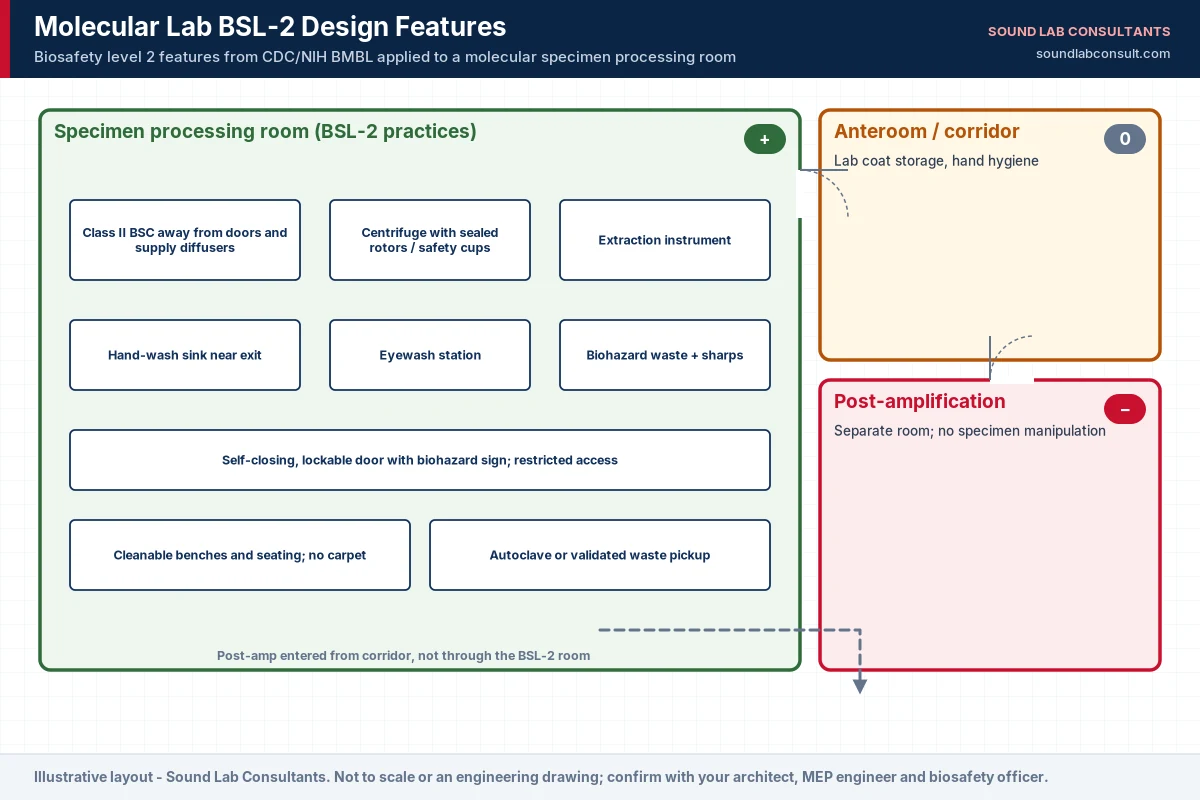
Short answer: Clinical molecular specimen processing is generally done at BSL-2 based on a risk assessment. BSL-2 facility features described in the CDC/NIH BMBL include self-closing, lockable doors with biohazard signage, a hand-wash sink near the exit, an eyewash station, cleanable surfaces and a certified Class II biosafety cabinet for aerosol-generating work, plus a decontamination method for waste. These are added to, not substituted for, the molecular contamination-control layout.
Last reviewed November 25, 2026. Primary sources: CDC/NIH Biosafety in Microbiological and Biomedical Laboratories (BMBL), OSHA Bloodborne Pathogens Standard, 42 CFR 493.1101.
Start With a Risk Assessment
The BMBL frames biosafety around risk assessment: the agents likely present in specimens, the procedures (especially aerosol-generating steps like vortexing, centrifugation and opening tubes), staff experience, and the facility. Most clinical molecular testing on routine specimens is performed using BSL-2 practices and containment; some agents and procedures call for enhanced precautions. Document the assessment and revisit it when the menu changes.
BSL-2 Facility Features
- Lab doors that are self-closing and lockable, with biohazard signage at the entrance where required.
- A sink for hand washing, ideally hands-free, located near the exit.
- An eyewash station readily available.
- Benches, floors, chairs and casework that can be cleaned and disinfected; no carpet.
- Class II biosafety cabinets installed so room air supply and exhaust do not disrupt their operation, away from doors and traffic.
- A method for decontaminating waste (for example autoclave or a validated waste vendor).
- Windows that open, if any, fitted with screens.
Confirm the current text of the BMBL for the full list; this summary is not a substitute.
Biosafety Cabinet Selection and Certification
Class II Type A2 cabinets are common in clinical labs. Cabinets should be certified at installation, after relocation and at least annually, typically to NSF/ANSI 49 field-testing methods by a qualified certifier. Plan electrical, clearance and, if ducted, exhaust connections early.
Planning a new lab or a renovation?
Send us your floor plan or test menu. Sound Lab Consultants reviews layouts against CLIA, accreditation and biosafety expectations before you build.
Book a free consultationWhat Each Room Looks Like, Down to the Equipment
What each room looks like when it is finished, down to the equipment: a render, a numbered layout and a placement table.
Specimen Preparation and Extraction Room
Specimens are opened, nucleic acid is extracted and template is added to the master mix here. Plates leave sealed and move forward to amplification.
Zone: Pre-amplification · Air: positive pressure (design intent; your engineer sets values)
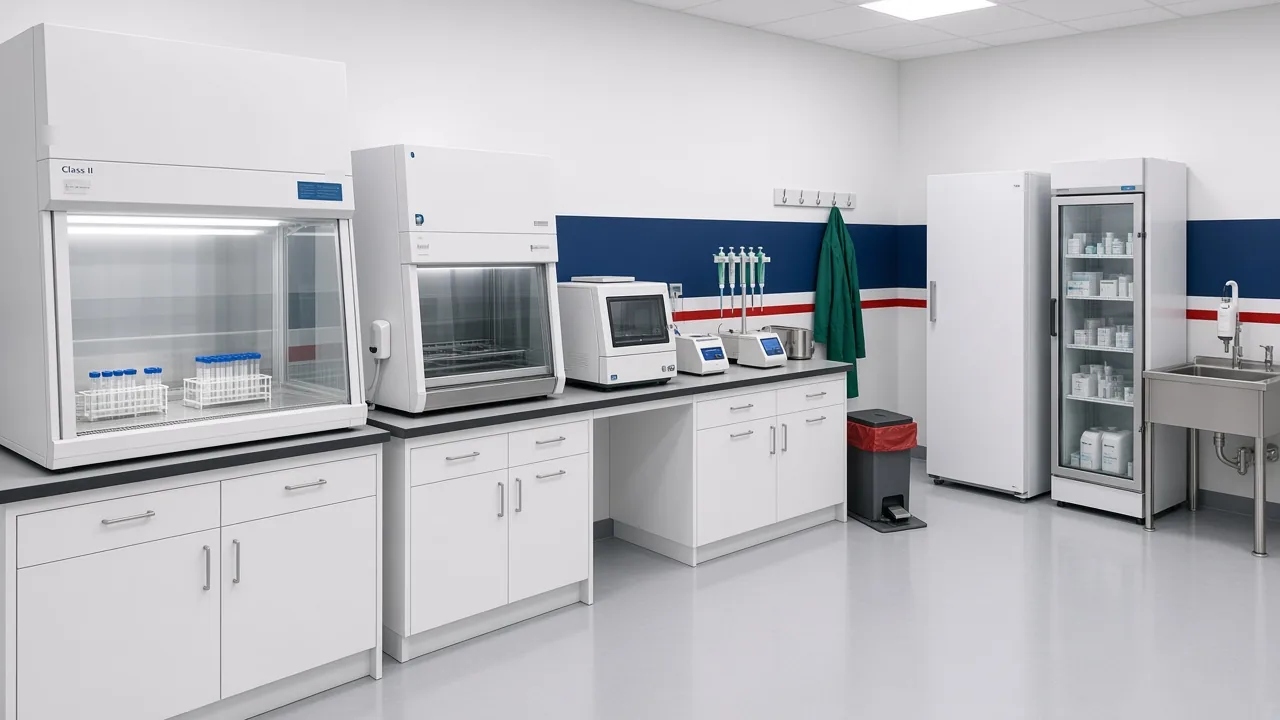
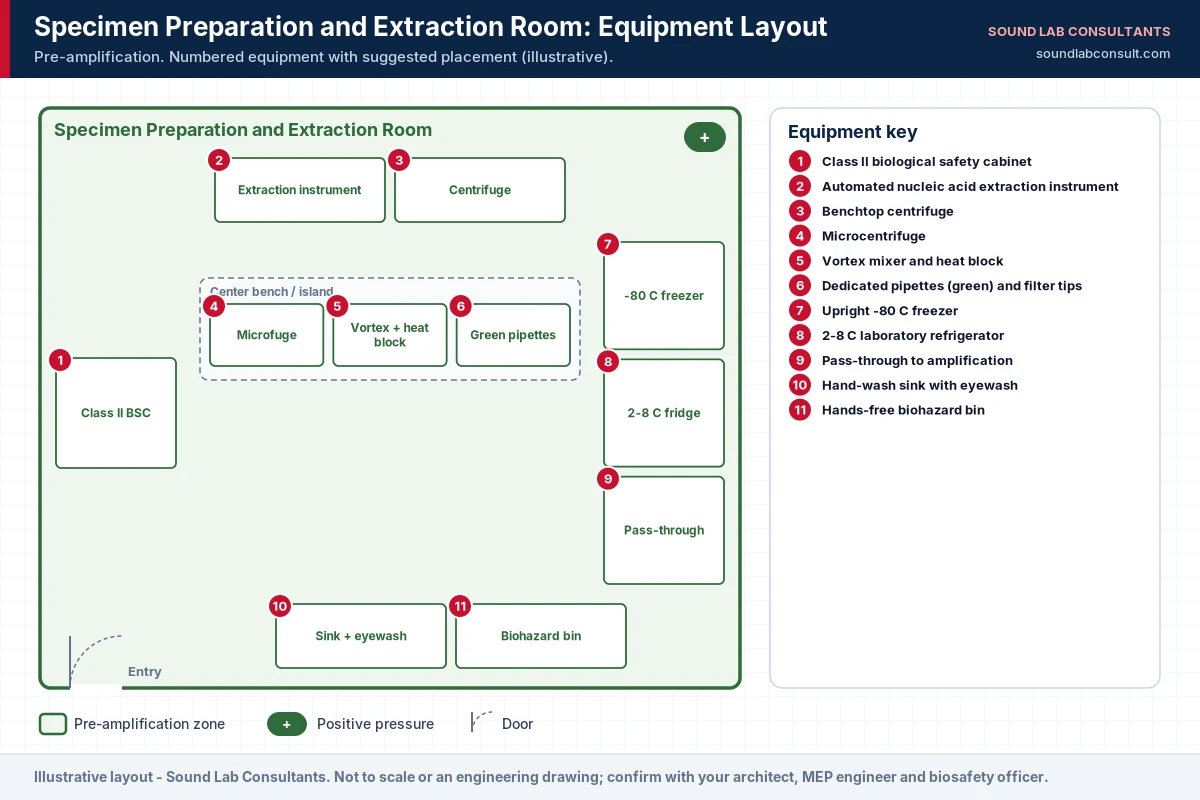
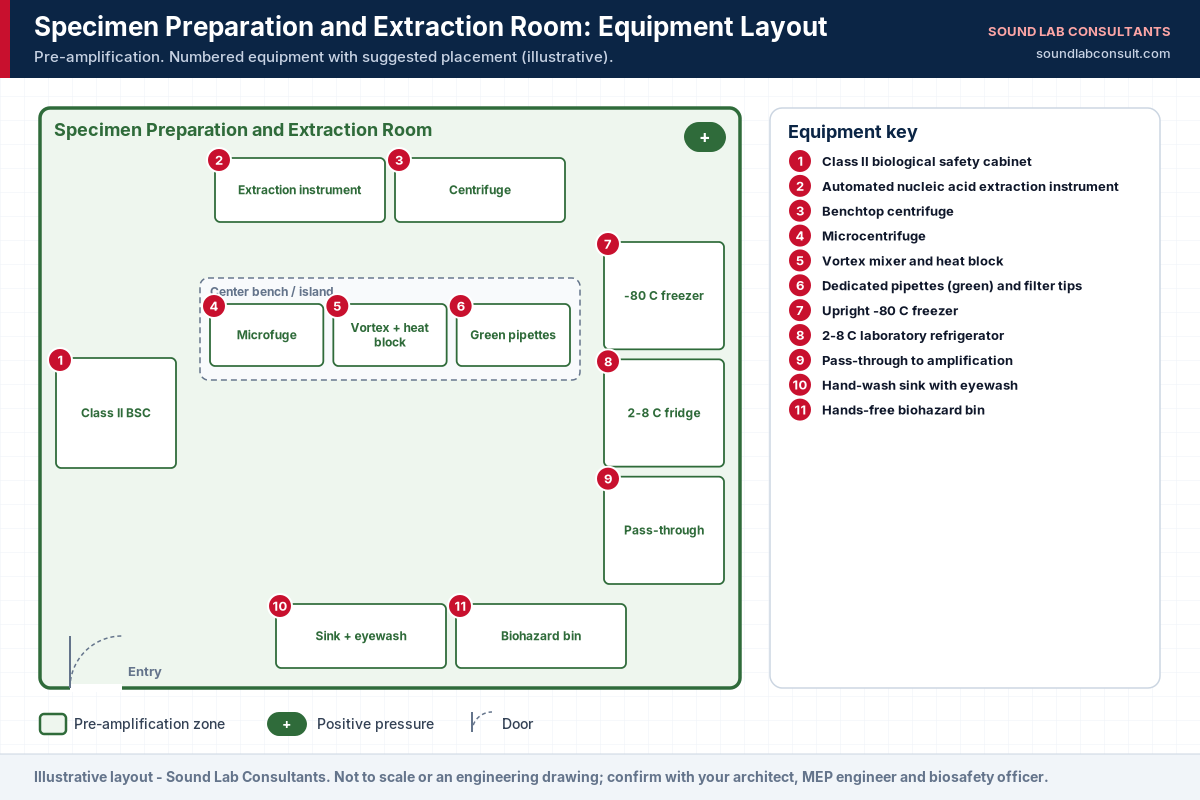
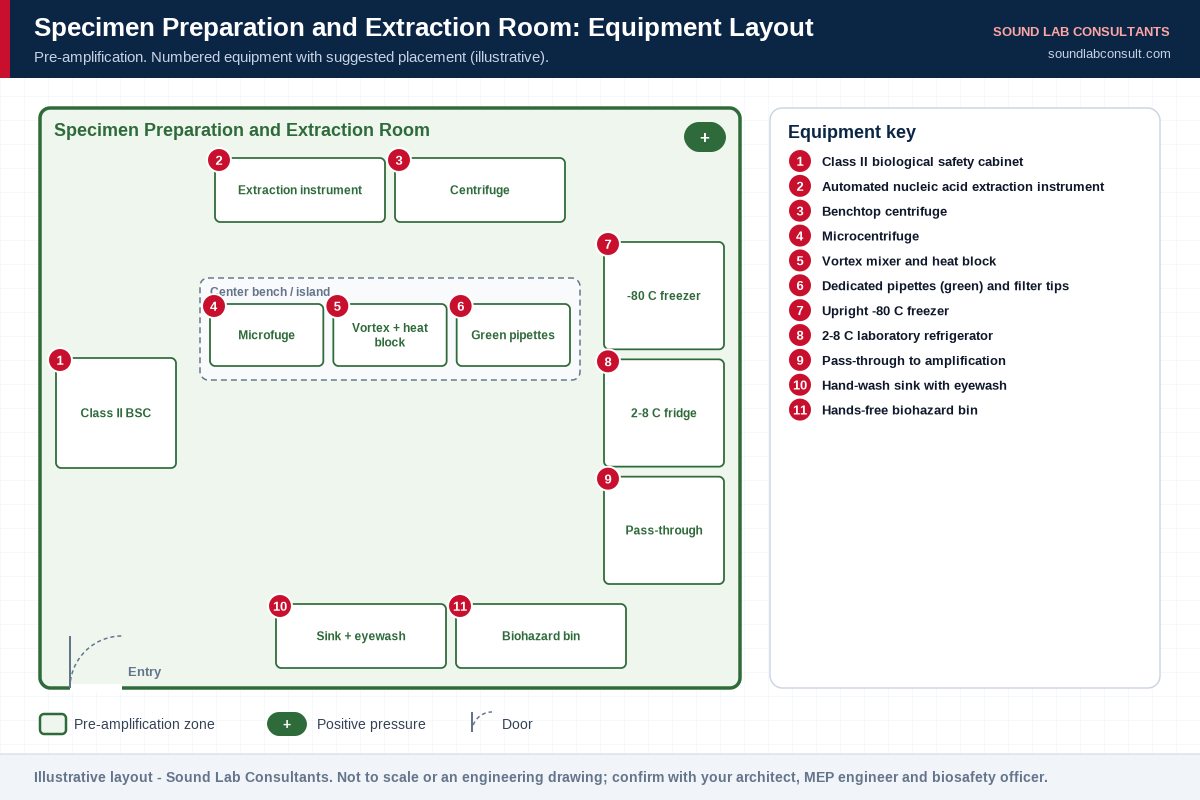
| # | Equipment | Purpose | Placement |
|---|---|---|---|
| 1 | Class II biological safety cabinet | Opening specimens and manual extraction | Along a wall away from the door |
| 2 | Automated nucleic acid extraction instrument | Walk-away extraction | Main bench with dedicated power |
| 3 | Benchtop centrifuge | Specimen spins | Main bench |
| 4 | Microcentrifuge | Quick spins before opening tubes | Main bench |
| 5 | Vortex mixer and heat block | Lysis and incubation | Main bench |
| 6 | Dedicated pipettes (green) and filter tips | Specimen and template pipetting | Stand on the bench |
| 7 | Upright -80 C freezer | Extract storage | Back wall on monitored power |
| 8 | 2-8 C laboratory refrigerator | Specimens awaiting extraction | Back wall |
| 9 | Pass-through to amplification | Sealed plates move forward only | Shared wall with the amplification room |
| 10 | Hand-wash sink with eyewash | Hand hygiene and eye flushing | By the exit |
| 11 | Hands-free biohazard bin | Specimen and tip waste | By the BSC |
All rooms: room-by-room equipment guide.
OSHA Bloodborne Pathogens
Employers whose staff may contact blood or other potentially infectious materials need an exposure control plan, engineering and work practice controls, PPE, hepatitis B vaccination availability, training and records under 29 CFR 1910.1030. Many facility features (sinks, sharps containers, cleanable surfaces) serve both biosafety and OSHA needs.
Combining BSL-2 With Molecular Separation
BSL-2 protects people; molecular separation protects results. A good design does both: BSC in specimen prep for infectious material, PCR workstation in reagent prep for clean master mix, and a post-amplification room that is not entered through the specimen room. See molecular lab design for the full picture.
How Sound Lab Consultants Helps
Biosafety design and program support for molecular labs: risk assessment, BSL-2 facility and practice review, BSC placement and certification planning, exposure control plan, waste management and training.
- Floor plan and workflow review before construction, not after a survey finding
- Independent of instrument, casework and construction vendors
- Written design memos, SOPs and validation plans your director can sign
- Remote and on-site support in all 50 states, from Chandler, Arizona
Design your lab right the first time
Sound Lab Consultants helps practices, hospitals, reference labs and diagnostic companies plan, build, validate and run molecular and NGS laboratories under CLIA, remotely or on site, in all 50 states.
Book a free consultationFrequently asked questions
Is a PCR lab BSL-2?
Most clinical molecular labs handling patient specimens use BSL-2 practices and containment for specimen processing, based on a risk assessment. Some agents or procedures require more.
Do I need a biosafety cabinet for molecular testing?
Use a certified Class II BSC for procedures with potentially infectious specimens that may generate aerosols or splashes, per your risk assessment.
Where should the sink be in a BSL-2 lab?
Near the exit of the laboratory so staff wash hands as they leave.
How often must a biosafety cabinet be certified?
At installation, after moves or major repairs, and at least annually, typically by a qualified certifier using NSF/ANSI 49 methods.
Sources
- CDC/NIH Biosafety in Microbiological and Biomedical Laboratories (BMBL), 6th edition
- OSHA Bloodborne Pathogens Standard, 29 CFR 1910.1030
- 42 CFR 493.1101, Facilities (unidirectional workflow)
- NIH Office of Research Facilities, Design Requirements Manual (laboratory design reference)
- U.S. EPA, Resource Conservation and Recovery Act (hazardous waste)
Related lab design guides
Diagrams and renders on this page are original illustrations by Sound Lab Consultants, not engineering drawings; final designs need a licensed architect and engineer and must meet local codes. Sound Lab Consultants is an independent laboratory consulting firm. We are not affiliated with or endorsed by CMS, FDA, CDC, NIH, CAP, COLA, The Joint Commission, CLSI, any state agency or any instrument manufacturer. This page is general information, not legal advice. Sound Lab Consultants, 25 Arizona Pl, Chandler, AZ 85225.