
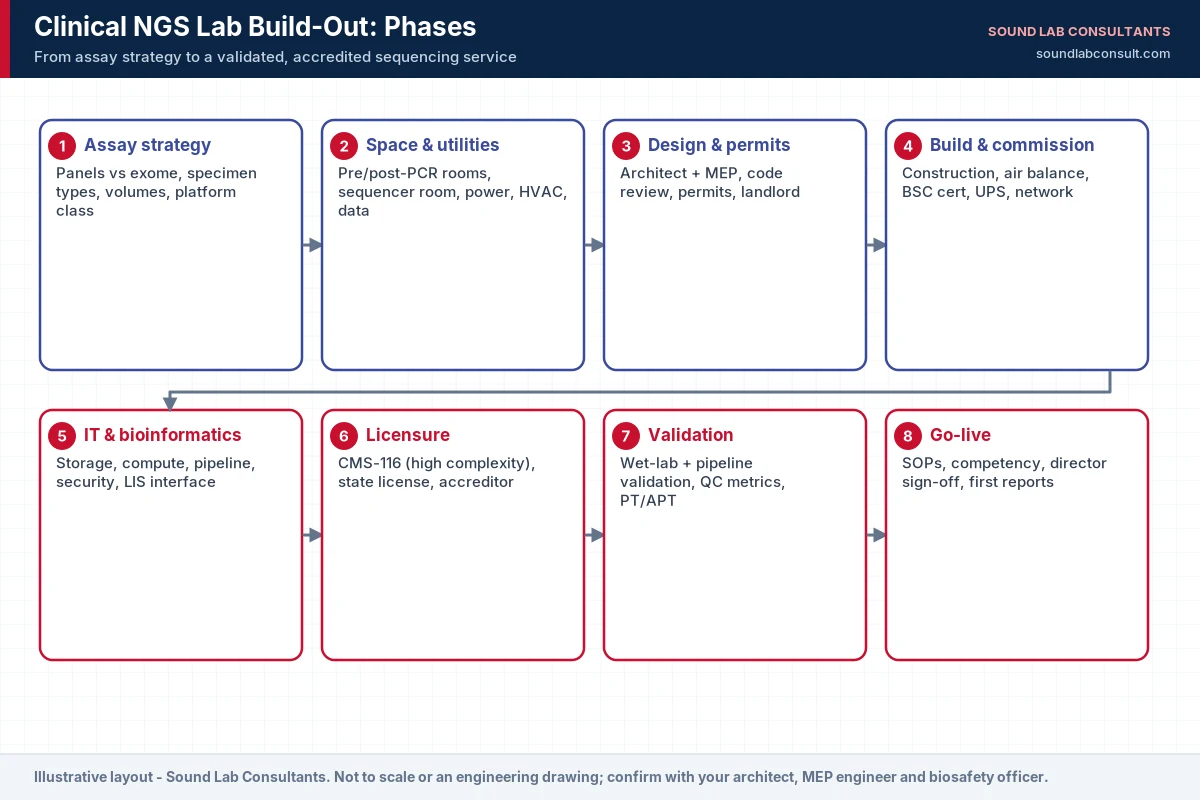
Short answer: Build a clinical NGS lab in eight phases: assay strategy (panel, specimens, volume, platform class); space and utilities (pre-PCR, post-PCR, sequencer room, power, HVAC, data); design and permits; build and commission (air balance, BSC certification, UPS, network); IT and bioinformatics (storage, compute, pipeline, security, LIS); licensure (CLIA high complexity, state license, accreditation); validation (wet lab plus pipeline, QC metrics, proficiency testing); and go-live.
Last reviewed November 25, 2026. Primary sources: 42 CFR 493.1101, CMS Form CMS-116, 42 CFR 493.1253.
The Eight Phases
1. Assay Strategy
- Intended use, gene content and variant types.
- Specimen types and input requirements.
- Volume and turnaround targets; batching model.
- Platform class and chemistry (amplicon or capture).
2. Space and Utilities
- Pre-PCR, post-PCR, sequencer, storage and data spaces.
- Pressure intent and gowning plan.
- Power, UPS, HVAC heat load, network for each instrument.
- Equipment list from the site preparation guides.
3. Design and Permits
- Architect and MEP engineer engaged with a written design intent.
- Code review, landlord approvals and permits.
- Drawing reviews at each stage against the intent.
Room-by-Room Equipment Guide
Plan equipment, power and bench space room by room. Each card opens a render, a numbered layout and a placement table.
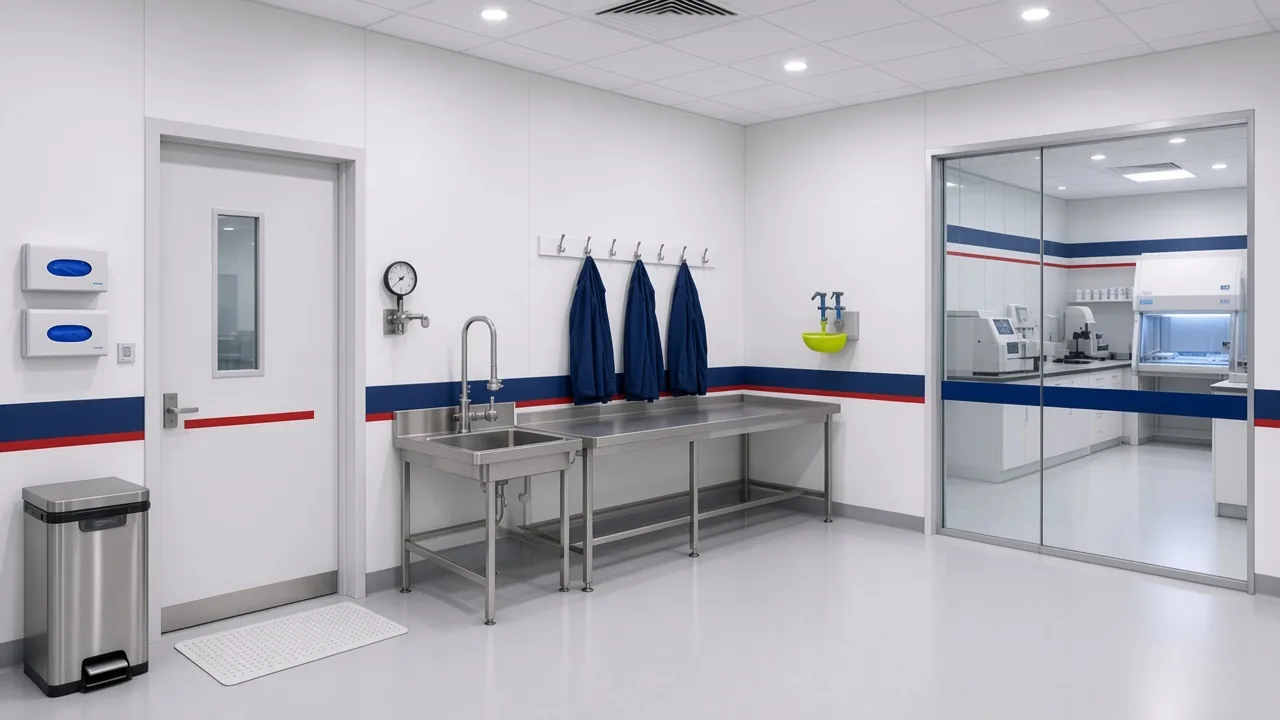 Gowning AnteroomEntry to clean rooms: 9 items with placement
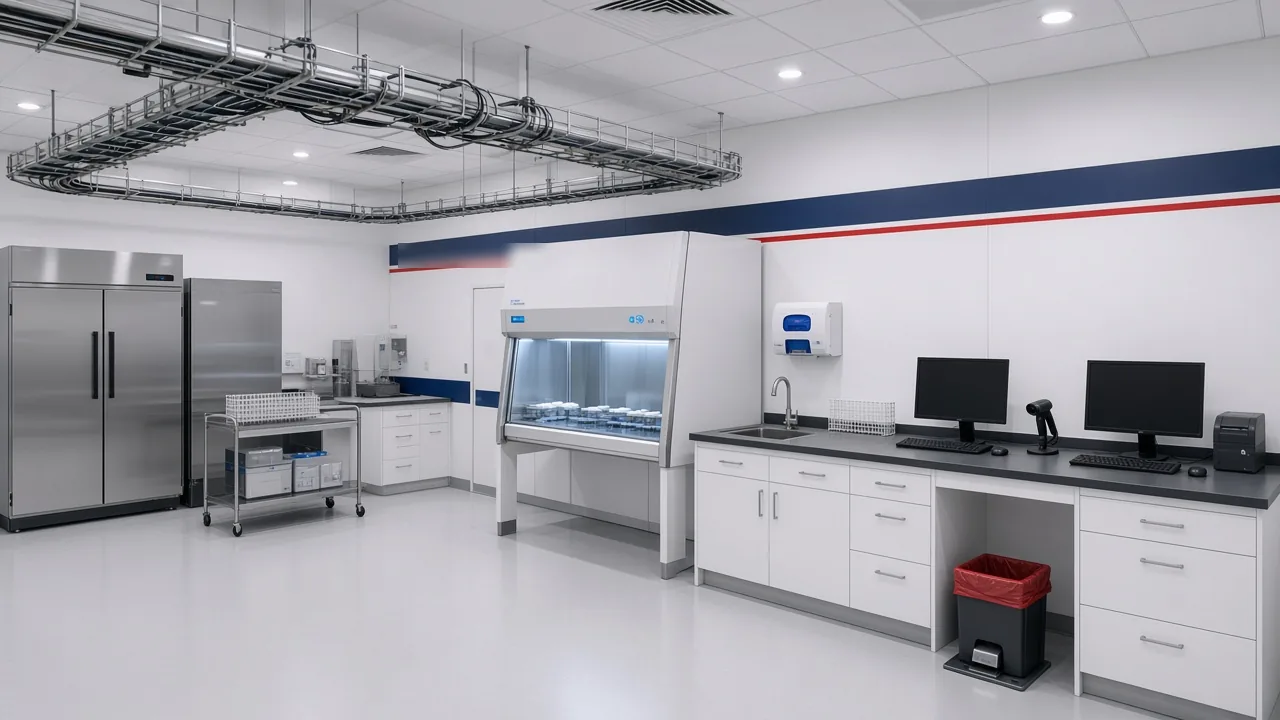 Sample Receipt and AccessioningPre-amplification entry (specimens only): 10 items with placement
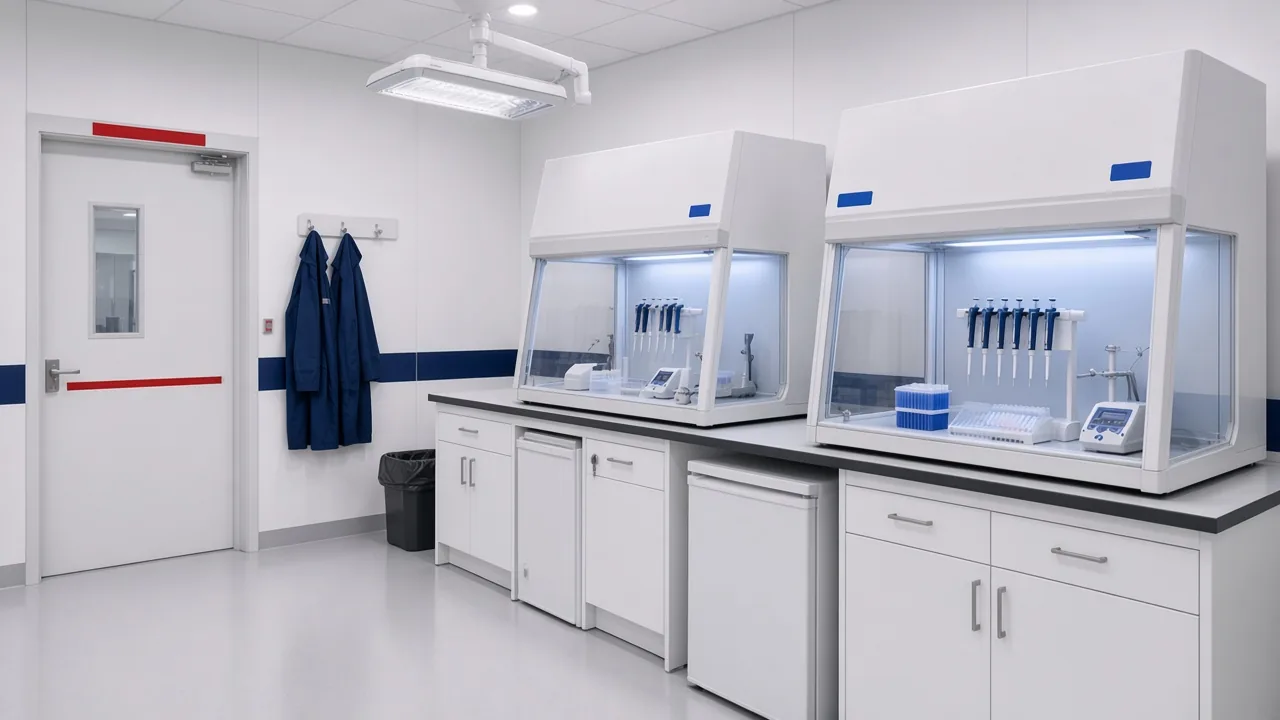 Reagent Preparation Clean RoomPre-amplification (cleanest room): 11 items with placement
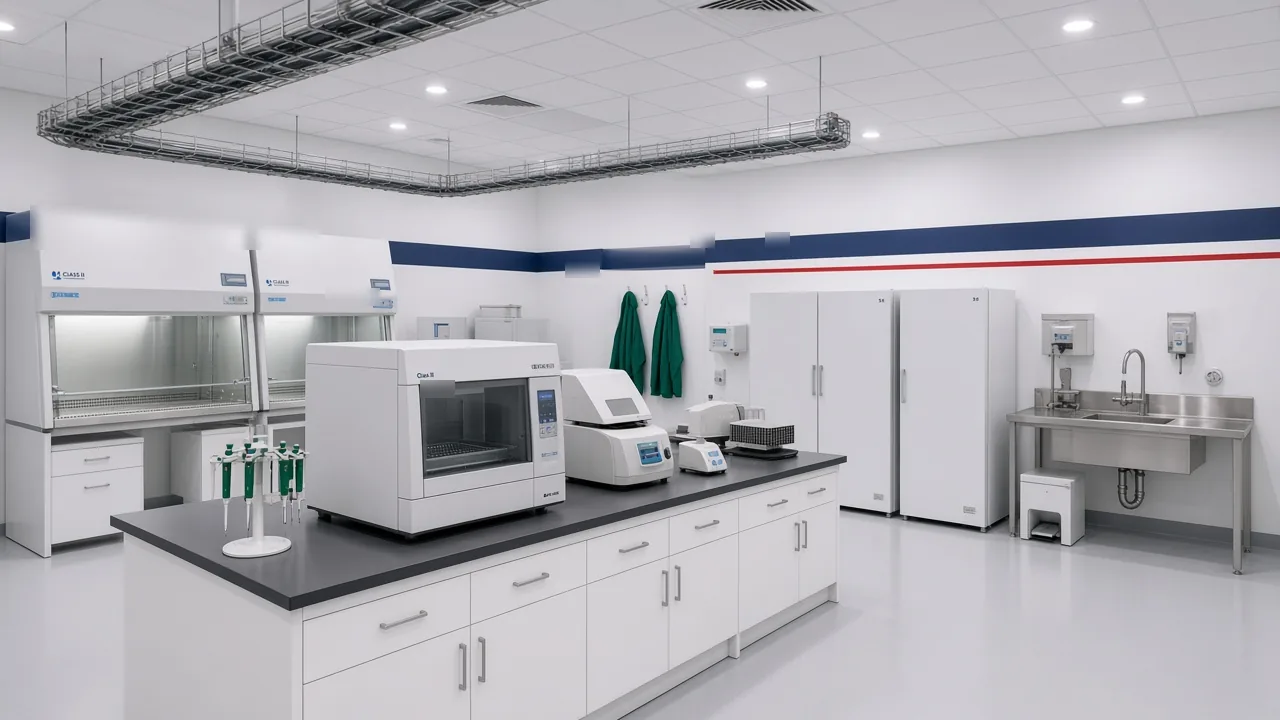 Nucleic Acid Extraction RoomPre-amplification: 12 items with placement
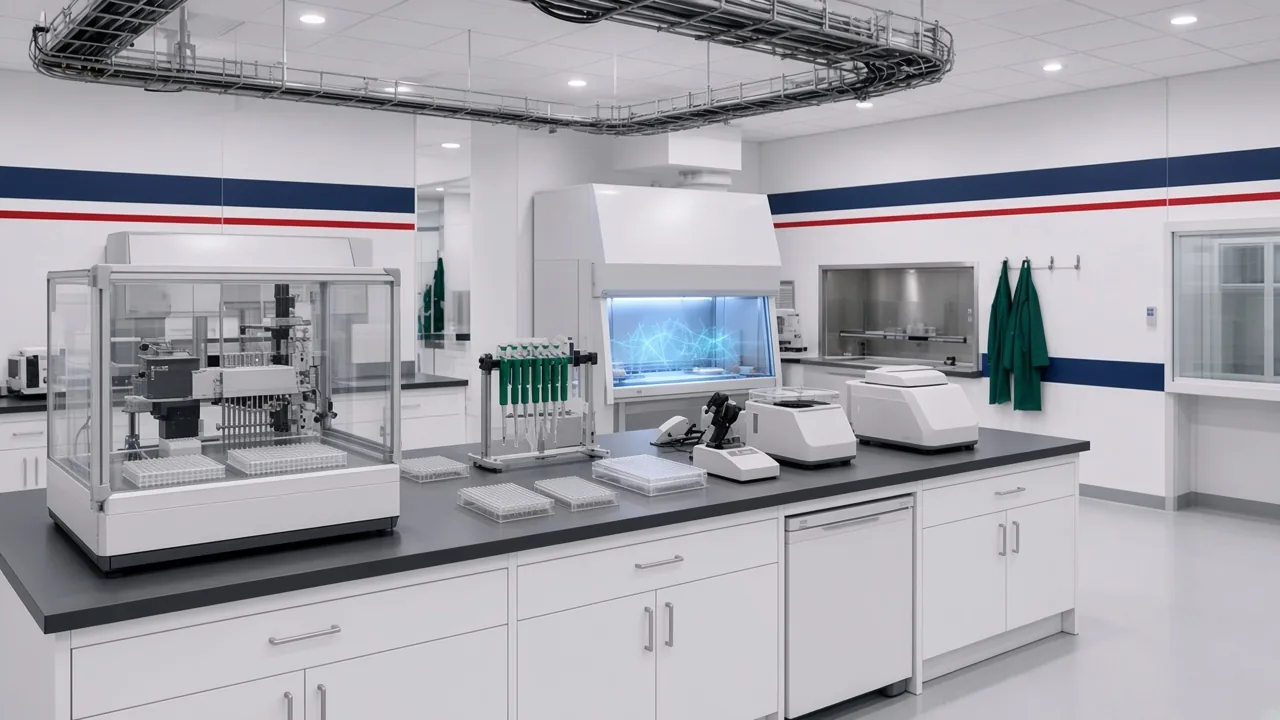 Library Preparation Room (Pre-PCR)Pre-amplification: 12 items with placement
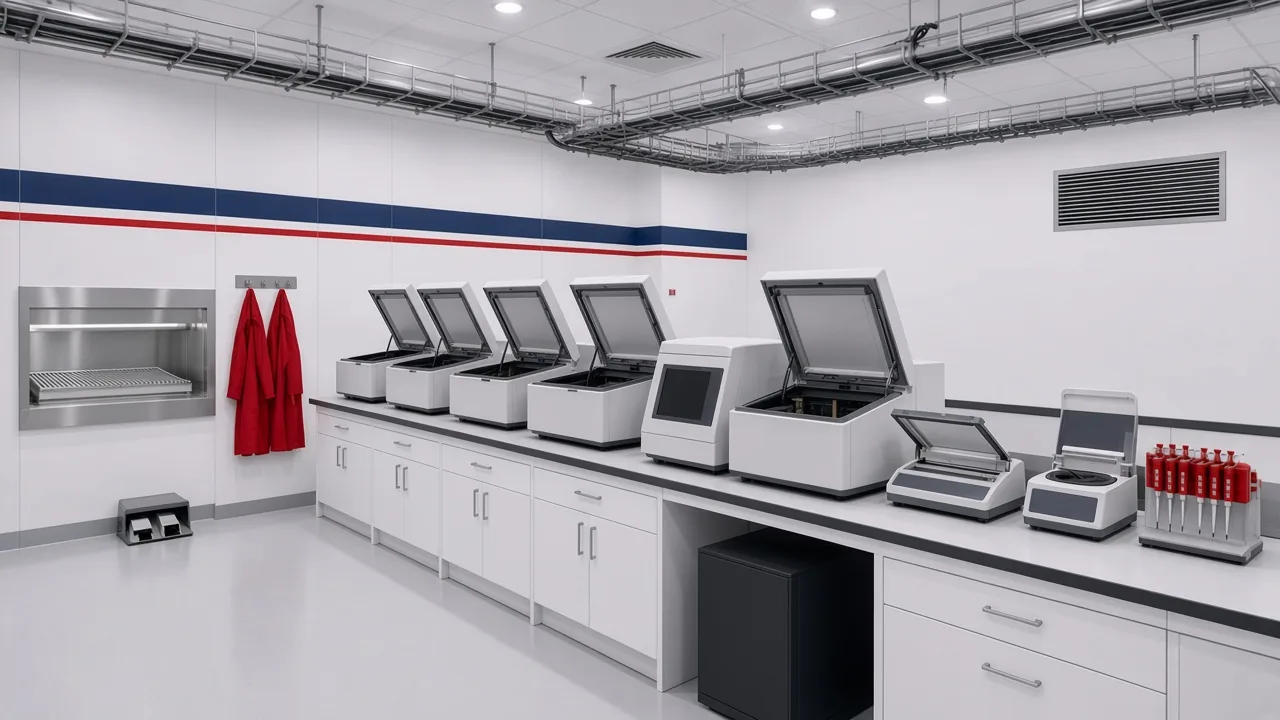 Amplification RoomAmplification: 10 items with placement
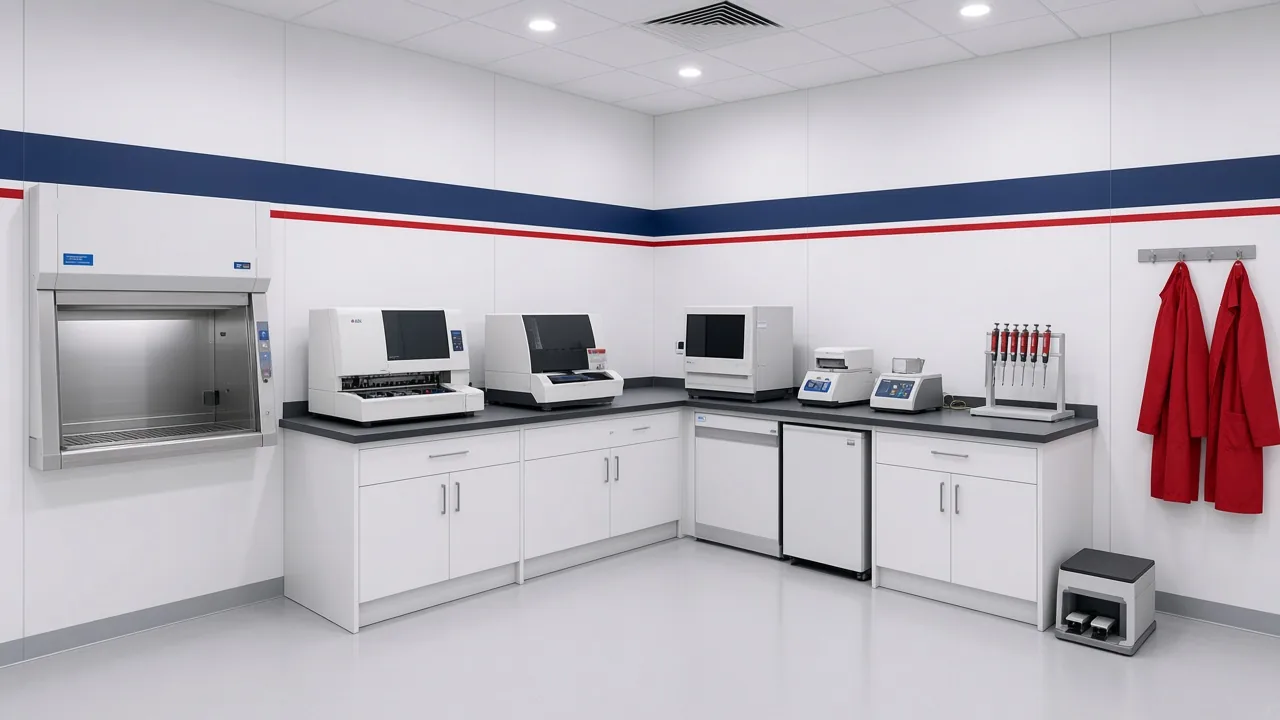 Post-PCR Library QC and Pooling RoomPost-amplification: 12 items with placement
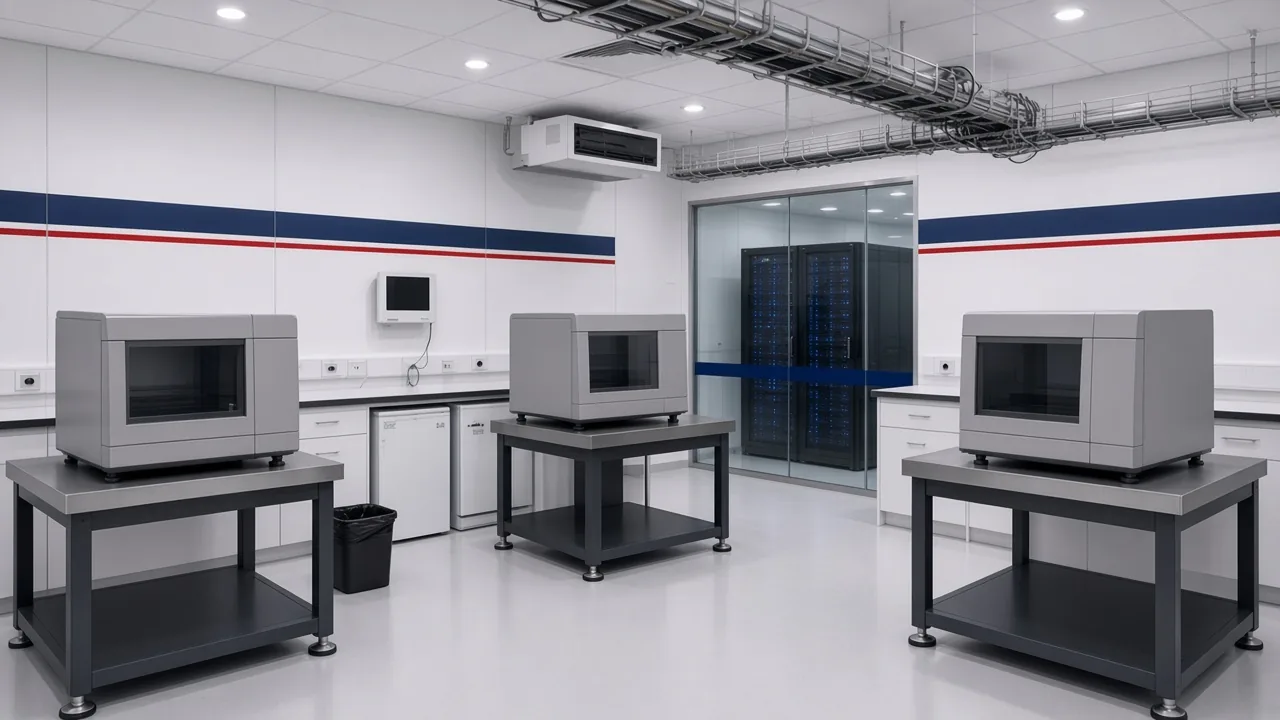 Sequencer RoomPost-amplification (instrument room): 9 items with placement
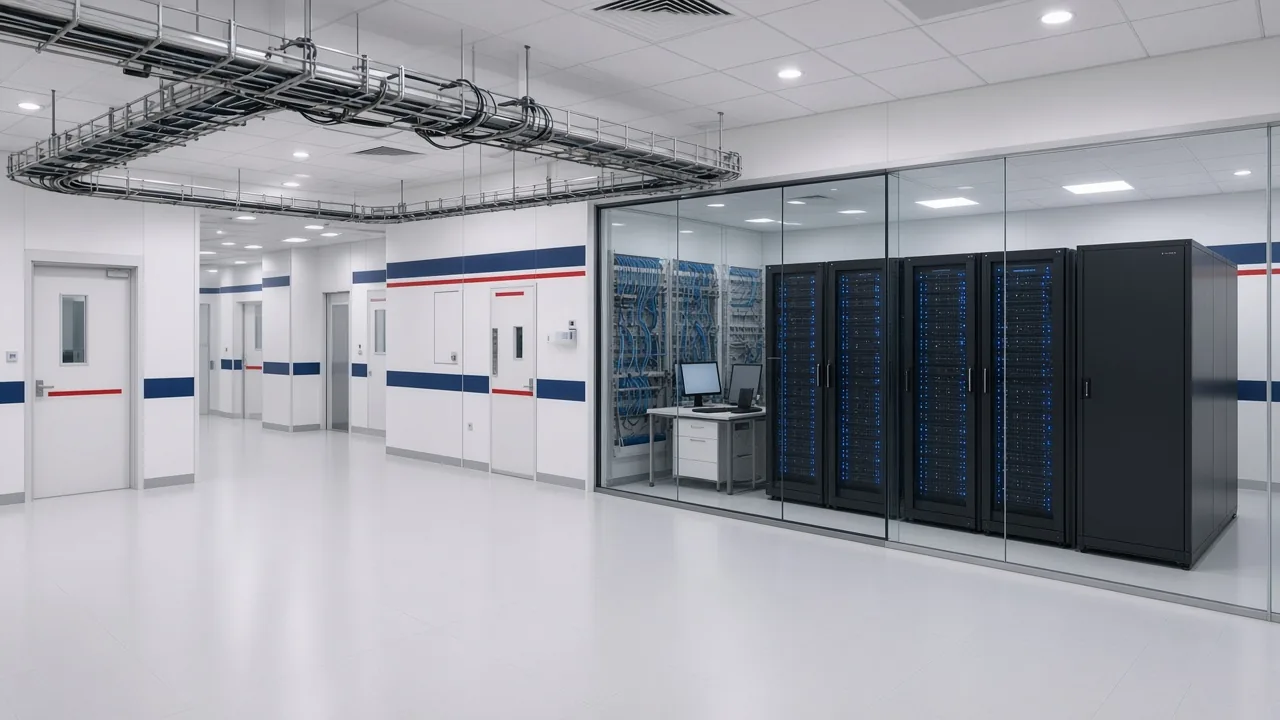 Data and Bioinformatics Server RoomData (no wet work): 8 items with placement
Planning a new lab or a renovation?
Send us your floor plan or test menu. Sound Lab Consultants reviews layouts against CLIA, accreditation and biosafety expectations before you build.
Book a free consultation4. Build and Commission
- Air balance and pressure verification.
- BSC certification; UPS and alarm tests.
- Network drops tested; freezers mapped.
5. IT and Bioinformatics
- Storage and compute provisioned.
- Pipeline installed with pinned versions.
- Security controls and BAAs in place.
- LIS interface built and tested.
See NGS bioinformatics infrastructure.
6. Licensure
NGS tests are high complexity; the director must meet 42 CFR 493.1443 and the lab needs the right CLIA certificate, any state license (for example for testing residents of states that license out-of-state labs), and accreditation if chosen.
7. Validation
Validate the wet lab and pipeline together under 42 CFR 493.1253: accuracy, precision, analytical sensitivity and specificity, reportable range and QC metrics, using AMP/CAP recommendations as a reference. See NGS assay validation under CLIA.
8. Go-Live
- SOPs approved; competency complete.
- Proficiency testing or alternative assessment in place.
- First reports reviewed end to end.
How Sound Lab Consultants Helps
End-to-end NGS lab build-out support: assay and platform strategy, design review, commissioning and IT checklists, CLIA high-complexity and state licensure, validation plans and reports, SOPs, competency and accreditation preparation.
- Floor plan and workflow review before construction, not after a survey finding
- Independent of instrument, casework and construction vendors
- Written design memos, SOPs and validation plans your director can sign
- Remote and on-site support in all 50 states, from Chandler, Arizona
Design your lab right the first time
Sound Lab Consultants helps practices, hospitals, reference labs and diagnostic companies plan, build, validate and run molecular and NGS laboratories under CLIA, remotely or on site, in all 50 states.
Book a free consultationFrequently asked questions
How do you set up a clinical NGS lab?
Define the assay strategy, design separated pre-PCR and post-PCR space with a sequencer room and data infrastructure, build and commission it, obtain CLIA high-complexity certification and any state license, validate the wet lab and bioinformatics pipeline, and go live with SOPs and competency.
What CLIA certificate does an NGS lab need?
A Certificate of Compliance or Certificate of Accreditation for high complexity testing, with personnel meeting the high-complexity requirements.
What is validated in an NGS test?
The full test: wet-lab steps and bioinformatics pipeline together, establishing performance specifications such as accuracy, precision, sensitivity, specificity and reportable range.
Sources
- 42 CFR 493.1101, Facilities (unidirectional workflow)
- CMS Form CMS-116, CLIA application for certification
- 42 CFR 493.1253, Establishment and verification of performance specifications
- 42 CFR 493.1443, Laboratory director qualifications (high complexity)
- Jennings LJ, et al. Guidelines for Validation of NGS-Based Oncology Panels (AMP/CAP), J Mol Diagn 2017
- Roy S, et al. Standards and Guidelines for Validating NGS Bioinformatics Pipelines (AMP/CAP), J Mol Diagn 2018
- CDC and APHL Next Generation Sequencing Quality Initiative
Related lab design guides
Diagrams and renders on this page are original illustrations by Sound Lab Consultants, not engineering drawings; final designs need a licensed architect and engineer and must meet local codes. Sound Lab Consultants is an independent laboratory consulting firm. We are not affiliated with or endorsed by CMS, FDA, CDC, NIH, CAP, COLA, The Joint Commission, CLSI, any state agency or any instrument manufacturer. This page is general information, not legal advice. Sound Lab Consultants, 25 Arizona Pl, Chandler, AZ 85225.